
🎧 Listen to this article (full narration)
Last Updated: November 7, 2026
Quick Summary
Dead sea salt comes from a hypersaline lake where evaporation concentrates minerals, while Atlantic salt is evaporated from less concentrated seawater. Both are mostly sodium chloride, so neither delivers a meaningful mineral dose per serving, and labels and third-party testing matter as much as origin.
- Dead Sea salt comes from a hypersaline lake, concentrated by evaporation.
- Atlantic salt is evaporated from seawater, a far less concentrated source.
- Per-serving mineral amounts are milligram-scale, too small to meet daily needs.
- Check that dead sea salt is labeled food-grade before using it in cooking.
- Both salts carry a similar sodium load, so switching salts won't reduce sodium.
Table of Contents
- Dead Sea Salt vs Atlantic Salt: How They Differ at the Source
- How Many Minerals Are in Sea Salt, Really?
- Mineral Content Per Realistic Serving
- What Salt Has the Most Minerals? Comparing the Options
- Dead Sea Salt Safety and Uses: Eating, Bathing and Labels
- Choosing Between the Two for Your Own Mineral Intake
- Frequently Asked Questions
Dead Sea Salt vs Atlantic Salt: How They Differ at the Source
If you are shopping for a mineral-rich salt, you have probably seen dead sea salt sold next to Atlantic sea salt and wondered whether one is the better choice. At Ormusminerals, we get this question often, and the honest answer starts with where each salt comes from. Dead Sea salt comes from a hypersaline lake, where evaporation concentrates dissolved minerals. Atlantic salt is evaporated from seawater, a far less concentrated source. That difference in origin explains most of what separates the two products, including their mineral profiles and how they are used.
Here is the practical takeaway: the source sets the ceiling on what a salt can contain, but it does not guarantee what you will actually consume. Labels, processing and third-party testing matter as much as geography.
How Many Minerals Are in Sea Salt, Really?
Sea salt is mostly sodium chloride. The trace minerals that marketing often highlights, including magnesium, calcium, potassium and iron, make up a small fraction of the total weight. The total amount of these minerals remains modest compared with the sodium that dominates every crystal.

Atlantic sea salt varies widely. Its mineral content depends on the evaporation site, weather, and whether the salt is refined, so two bags labeled "Atlantic sea salt" can differ meaningfully. That sourcing variability is one reason to check specific product labels rather than assume a region guarantees a mineral profile.
Mineral Content Per Realistic Serving
Mineral claims look impressive per kilogram and much less impressive per teaspoon. The reason is simple arithmetic: a typical pinch of salt weighs well under a gram, and even a full teaspoon of fine salt is only about 5 to 6 grams. Any mineral present at a fraction of a percent of total weight therefore arrives in milligram or sub-milligram amounts per serving.
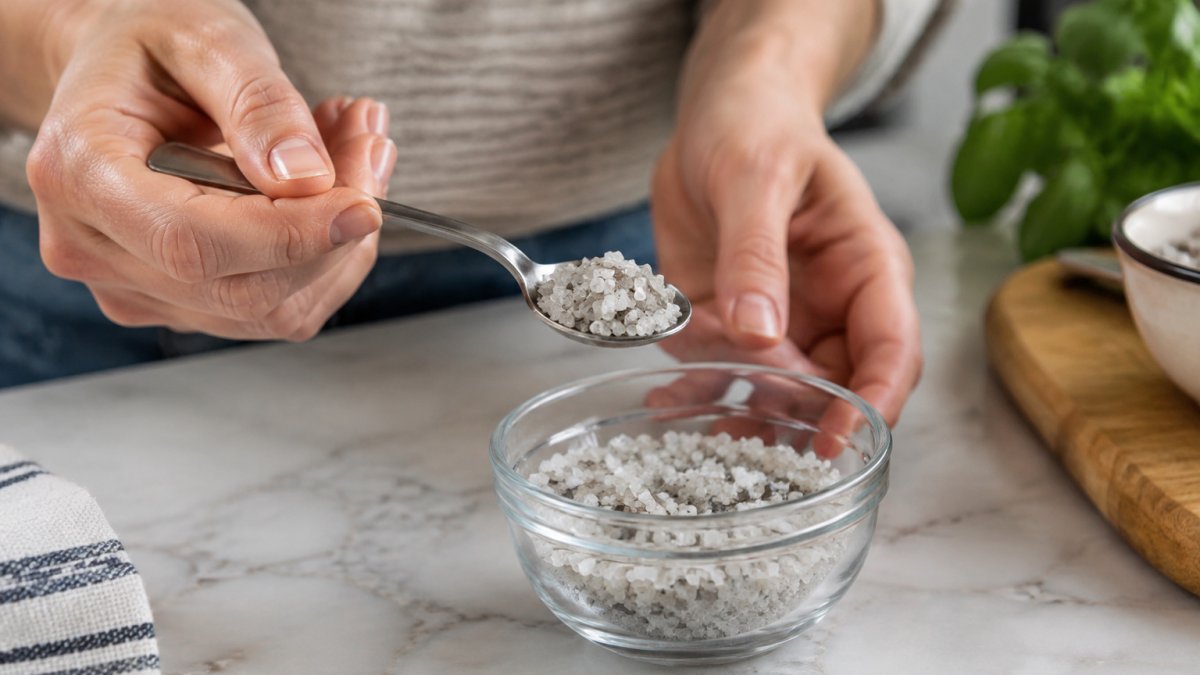
To make this concrete, read the nutrition label or certificate of analysis for the specific product. A label that lists magnesium at, say, a few percent by weight means a 1-gram pinch delivers tens of milligrams of magnesium at most, a small share of the 310 to 420 mg daily magnesium reference intake for adults published by the National Institutes of Health Office of Dietary Supplements. Potassium and calcium follow the same pattern: the percentages look large on a per-kilogram basis and shrink to modest milligram amounts per realistic serving.
A useful way to frame it is mineral density versus mineral dose. Gram for gram, the mineral amounts in any salt are small relative to its sodium content. But the dose you actually consume depends on how much salt you use, and most people use a gram or two at a time. At that scale, neither salt closes a meaningful gap in daily mineral needs.
Watch out: labels sometimes report mineral content per 100 grams, which can make a seasoning look like a supplement. Divide by the serving size you actually use before drawing conclusions.
Before relying on salt as a mineral source, compare the per-serving numbers against the Dietary Reference Intakes published by the National Institutes of Health Office of Dietary Supplements and treat salt as a seasoning, not a supplement.
Why Sodium Still Matters More for Most Diets
For most American adults, sodium intake is already higher than recommended, and that matters more than any trace mineral in a specialty salt. The Dietary Guidelines for Americans recommend limiting sodium, and the Centers for Disease Control and Prevention links high sodium intake to elevated blood pressure. Dead Sea salt and Atlantic salt both contain roughly the same sodium chloride foundation as table salt, so switching between them does little to reduce sodium. Teams trying to eat less salt usually get more benefit from cutting processed foods than from changing which salt sits in the shaker.

The per-serving numbers make the difference clear, so here is how the two salts compare on the factors the article covers.
| Factor | Dead Sea salt | Atlantic sea salt |
|---|---|---|
| Source | Hypersaline lake, concentrated by evaporation | Evaporated seawater, less concentrated |
| Mineral content | Varies by product and label | Varies widely by evaporation site and processing |
| Per-serving mineral dose | Small, milligram-scale per pinch | Small, milligram-scale per pinch |
| Main consideration | Check for food-grade labeling | Confirm it is unrefined |
| Sodium | Similar sodium chloride base | Similar sodium chloride base |
What Salt Has the Most Minerals? Comparing the Options
Among common options, unrefined sea salts generally contain more trace minerals by weight than heavily refined table salt. Refined table salt is often iodized, which matters for thyroid health, and most specialty salts are not a reliable iodine source. Keep that trade-off in mind if your diet already runs low on iodine.
Your pick depends on your goal. If you want flavor and texture for cooking, an unrefined sea salt is a practical choice. Expect any salt's minerals to contribute little to your daily totals.
Dead Sea Salt Safety and Uses: Eating, Bathing and Labels
Dead Sea salt is widely used in bath soaks and body scrubs, and that topical use is where many people encounter it first. The critical distinction is that bath and cosmetic products are not held to food-safety standards. A package sold for soaking may contain anti-caking agents, fragrance, dyes or higher levels of contaminants that would be unacceptable in a food product. Not every product sold as Dead Sea salt is labeled for eating.
Check whether a package is marked food-grade before using it in cooking. Look for an explicit edible or culinary designation on the label, a nutrition facts panel, and an ingredient statement that lists only salt. A bath product without a nutrition panel should never be assumed safe to ingest.
Watch out: some retailers sell the same Dead Sea salt for both bathing and cooking, but the packaging and labeling determine which use is supported. If the label does not state food-grade, treat it as a bath product.
Contaminants are another reason to buy from a seller who publishes testing. Salt can carry trace heavy metals and minerals from its source, and the Food and Drug Administration sets limits and enforcement standards for contaminants in food. A reputable food-grade product should be able to provide a certificate of analysis or third-party test results on request. Because salt is a mined or evaporated product, batch-to-batch variation is normal, so ask whether testing is done per lot.
If you are considering eating Dead Sea salt for minerals, look at our Dead Sea salt supplements evidence review. Also keep the sodium question in mind: any salt used in quantity adds sodium to your diet, so a person managing blood pressure or kidney health should talk with a clinician before increasing salt intake from any source.
Choosing Between the Two for Your Own Mineral Intake
Pick Dead Sea salt if you want a mineral-dense specialty salt for occasional finishing, or if you plan to use it in bathing. Pick Atlantic sea salt if you want a versatile culinary salt with a clean flavor and read the label to confirm it is unrefined. For most people, neither salt will meet mineral needs, so treat either as seasoning.
A simple approach is to buy for flavor and food safety first, and treat the mineral content as a bonus. Read labels carefully, keep your total sodium in view, and use a balanced diet rather than salt as your main mineral source.
Frequently Asked Questions
Is Dead Sea salt safe to eat?
Dead Sea salt sold as a food-grade product is generally considered safe in the amounts used for seasoning, but safety depends on the product. Check the label for food-grade or edible designation, confirm that third-party laboratory testing is available for contaminants such as heavy metals, and avoid bath-grade products for cooking. Because Dead Sea salt contains sodium chloride just like other salts, the same daily sodium limits apply. People with kidney disease, heart conditions or blood pressure concerns should check intake with a clinician before adding any salt-based mineral product to their diet.
How many minerals are in sea salt?
Sea salt contains sodium chloride as its main component, with smaller amounts of magnesium, calcium, potassium and other trace elements. The exact mineral count varies by source, harvesting method and processing, so no single number applies to all sea salts. Refined sea salts may contain fewer minerals than unrefined ones. Because the mineral amounts are small relative to sodium, a typical serving of seasoning salt supplies only modest amounts of these minerals, and food sources such as leafy greens, nuts and legumes usually contribute far more magnesium and calcium per serving.
Does Dead Sea salt provide meaningful minerals in a bath?
Dead Sea salt used in a bath is typically dissolved in warm water and absorbed through the skin only in very limited amounts, and the evidence that bathing meaningfully raises mineral levels in the body is limited. Bath-grade products are generally not intended for eating. If you use a Dead Sea product for bathing, choose one labeled for topical use and follow the packaging directions. For dietary mineral intake, a food-grade product or a balanced diet is the more reliable route.
Which salt has the most minerals?
Unrefined sea salts and mineral-rich salts such as Dead Sea salt generally contain more trace minerals by weight than heavily refined table salt, which is mostly sodium chloride. Still, the mineral content per gram remains small, and a teaspoon of any salt delivers mostly sodium. Comparing products requires looking at lab-tested mineral profiles rather than marketing claims. Keep sodium intake within recommended limits regardless of which salt you choose.

0 comments