
🎧 Listen to this article (full narration)
Last Updated: October 28, 2026
Quick Summary
To choose high quality supplements, read the label like a skeptic: check the serving size, potency and form on the Supplement Facts panel, and avoid vague proprietary blends. Look for third-party testing with a certificate of analysis, and ask the brand which lab it uses and whether it publishes lot-specific COAs.
- Supplement quality means a product contains what its label claims, in the stated form and potency, without contaminants or unlisted fillers.
- A capsule labeled 500 mg often means 500 mg across two or three capsules, not one.
- Magnesium oxide and magnesium glycinate are not interchangeable, and chelated minerals generally absorb differently than oxide salts.
- A seal means specific tests were run on a specific lot and does not transfer to another product from the same brand.
- Ask a brand which lab it uses, whether it publishes lot-specific COAs, and whether it will share one on request.
Table of Contents
- Why High Quality Supplements Start With the Label
- How to Read Supplement Labels Without Getting Fooled
- Third-Party Tested Supplements: What the Seal Actually Proves
- Supplement Quality Certifications Worth Checking
- Contamination, Adulteration, and Recalls: The Risks Labels Hide
- Questions to Ask Before Taking Supplements
- Matching a Supplement to Your Own Needs
- Choosing Your First Mineral Supplement
- Frequently Asked Questions
Why High Quality Supplements Start With the Label
Learning how to choose high quality supplements begins with a single skill: reading the label like a skeptic. At Ormusminerals, we offer mineral products sourced from authentic Dead Sea and Atlantic Ocean waters.
Supplement quality is the degree to which a product contains what its label claims, in the form and potency stated, without contaminants or unlisted fillers. Everything else, the marketing, the glowing testimonials, the alpine spring on the packaging, is decoration.
Most buyers scan the front of the bottle and stop there. The front is advertising. The back is where the actual product is disclosed.
The Supplement Facts Panel: Serving Size, Potency, and Form
The Supplement Facts panel is one place to review a supplement label.
Read it in three passes. First, find the serving size. A capsule that says "500 mg" often means 500 mg across two or three capsules, not one. Second, check potency: does the number match what you intended to take? Third, check form. Magnesium oxide and magnesium glycinate are not interchangeable, and chelated minerals generally absorb differently than oxide salts. How well a mineral is absorbed shapes whether it does anything at all, which is why bioavailability deserves a closer look before you compare potencies across brands.
How to Read Supplement Labels Without Getting Fooled
When reviewing supplement labels, look at what is listed and what is not. A label that names ingredients and states amounts per serving provides information to review. A label that uses a "proprietary blend" may provide less detail about quantities.
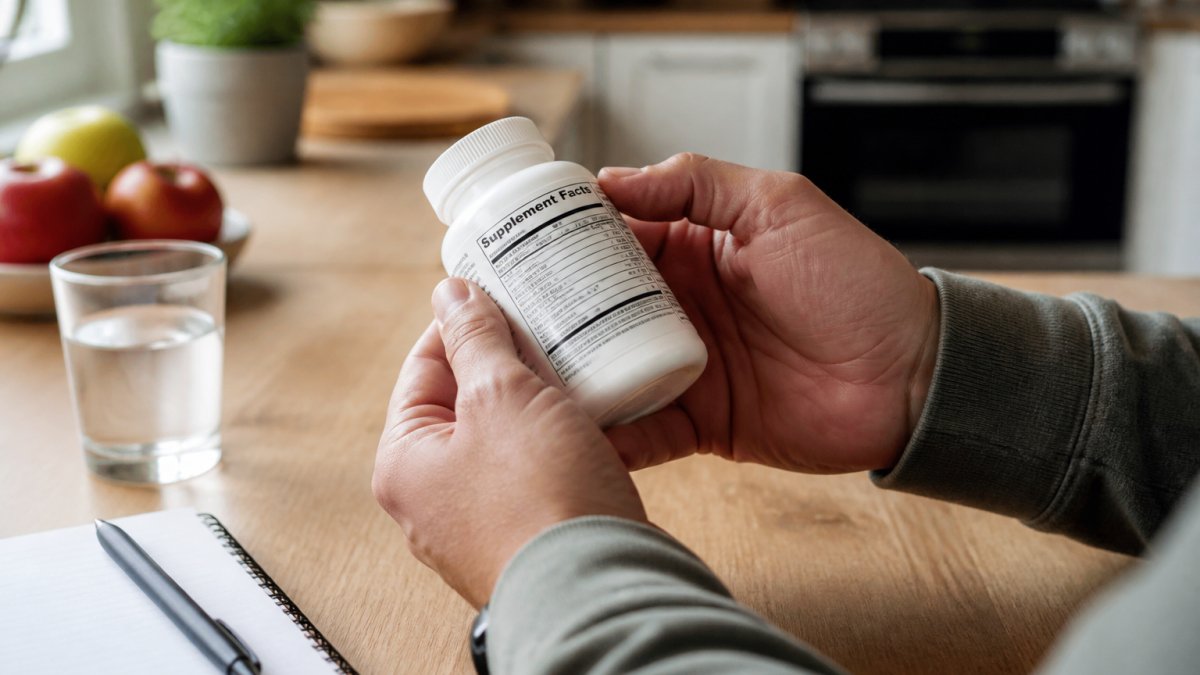
Use this checklist every time you pick up a bottle:
- Serving size matches the dose you actually plan to take
- Every active ingredient has a milligram amount listed
- No vague "proprietary blend" hiding the real quantities
- Plant or mineral source named where it matters
- Manufacturer name and address printed, not just a distributor
- Expiration date stamped clearly, not smudged or absent
- Allergen and "other ingredients" line reviewed
- Structure-function disclaimer present, with no disease claims
That last point matters more than most people realize. A product that promises to treat a disease is either breaking the rules or overselling. The FDA's guidance on dietary supplement labeling draws a firm line between supporting normal function and claiming to cure anything.
Third-Party Tested Supplements: What the Seal Actually Proves
Third-party testing refers to analysis by an outside laboratory. The scope and meaning of testing depend on what was tested and reported.
A certificate of analysis, or COA, is a document that may report laboratory testing. Review the information it provides, including the tests and results reported.
What 'Tested,' 'Certified,' and 'GMP-Compliant' Actually Mean
These terms refer to different kinds of claims.
- Tested indicates that an analysis was performed; the claim alone does not specify its scope.
- Certified indicates that a certification claim is being made; check the named program for its criteria.
- GMP-compliant is a claim about manufacturing practices. Check the relevant official source for current requirements.
How to Verify a Certification in Practice
To review a certification claim, note the certifying body named on the label and consult that organization's own information about its program. Check whether the product and form match the claim, and review any available lot-specific COA.
If you want to understand how reliable sources are verified in practice, this breakdown of purity and source reliability goes deeper than any seal can.
Ask a brand which lab it uses, whether it publishes lot-specific COAs, and whether it will share one on request.
Supplement Quality Certifications Worth Checking
Certifications are useful only when you know which standard each one enforces. Three carry real weight with informed buyers.
GMP refers to Good Manufacturing Practices. Consult the FDA for current information about applicable requirements.
USP verification and NSF certification are program claims. Consult the organizations for information about their current criteria.
Life Force Energy Fulvic Acid Minerals →
Ask a brand what lab it uses and whether it will share a certificate of analysis.
Contamination, Adulteration, and Recalls: The Risks Labels Hide
For information about recalls, consult the FDA's recall database.
Watch out: a product marketed for a condition rather than a nutrient is a red flag for adulteration. Legitimate supplements support normal function; they do not promise to replace treatment.
Questions to Ask Before Taking Supplements
Before taking a supplement, consider what you want to know about it, including its ingredients and whether it could interact with anything you take. If you take prescription drugs or have a sensitive stomach, ask a healthcare professional about the product. Our guide on how to take mineral supplements safely walks through timing and tolerance in more detail.
Matching a Supplement to Your Own Needs
When considering a supplement, it can help to identify what you want to address before you buy anything. For a comparison of full spectrum minerals versus standard supplements, see this guide.
Bucket 1: A Dietary Gap
If your diet reliably excludes a food group, no dairy, no oily fish, little sunlight, you may have a predictable shortfall. This is the most common and least controversial reason to supplement, and it is a nutrition question, not a medical one. The decision is usually about consistency and form rather than diagnosis.
Bucket 2: A Diagnosed Deficiency
A lab result changes the conversation. A confirmed deficiency is a clinical finding, and the dose, form, and duration should follow the guidance of the clinician who ordered the test, not a bottle's front label. Self-treating a suspected deficiency without testing is the most common expensive mistake in the category: you can spend months supplementing a nutrient you already had enough of, or take the wrong form for the deficiency you actually have.
Bucket 3: Medications and Interactions
If you take prescription drugs, ask a healthcare professional whether a supplement is appropriate for you. Bring the actual product, not a description.
Bucket 4: Life Stages and Increased Demand
If you are pregnant, older, training heavily, or following a restricted diet, ask a clinician who knows your history about your nutritional needs.
| Your situation | What to prioritize | What to skip |
|---|---|---|
| Frequent muscle cramps, hard training | Absorbable magnesium, transdermal options | Mega-dose multivitamins |
| Brain fog, low energy | Full-spectrum trace minerals | Stimulant-heavy blends |
| Poor sleep | Magnesium timing, evening routine | High-dose B vitamins late in the day |
| Already on several medications | Pharmacist review first | Anything unlisted or unlabeled |
| Confirmed lab deficiency | Clinician-guided dose and form | Front-label dosing |
Our guide on how to take mineral supplements safely walks through timing and tolerance in more detail.
Choosing Your First Mineral Supplement
When choosing a mineral supplement, consider the product information available and what you want to evaluate.
Our Life Force Energy Fulvic Acid Minerals is a fulvic acid mineral formula priced at $15.00.

Frequently Asked Questions
How do I know if my vitamins are good quality?
Start with the label. Review the ingredients, amounts, forms, and serving size listed. If a label uses a proprietary blend, note that it may provide less detail about quantities.
How can I check whether a supplement has been independently tested?
If a bottle displays a testing or certification seal, consult the named organization's information about its program. A certificate of analysis may report laboratory testing; review the tests and results it includes.
Are third-party tested supplements better?
Testing claims should be considered in light of what was tested and reported. A seal alone does not establish whether a product is appropriate for your needs.
What questions should I ask before taking a new supplement?
Consider what you want to know about the product, including its ingredients and whether it could interact with anything you take. If you take prescription drugs, are pregnant, or manage a chronic condition, ask a healthcare professional about the product.
How do I compare supplement ingredients and dosages?
Compare the form and amount, not just the ingredient name. Review the serving information and the price per serving when comparing products.
How should I store supplements so they stay potent?
Most supplements degrade faster with heat, light, and humidity, so keep bottles in a cool, dry cabinet rather than the bathroom shelf or above the stove. Keep the lid tight, leave the desiccant packet inside, and never transfer pills into an unlabeled container. Check the expiration date and watch for changes in color, smell, or texture, which can signal degradation. Liquid mineral products should be stored as the label directs and shaken before use.
Choosing well takes more effort than most bottles deserve. The work is in the label, the certificate, and the questions you ask before the first dose. If you want a mineral supplement that survives that scrutiny, start with Ormusminerals: full-spectrum mineral elements, a documented 15-year precipitation process, and free US shipping on orders over $50. Get started with Ormusminerals and give your cells the minerals they have been missing.

0 comments