
Table of Contents
- Natural vs Synthetic Vitamins: Core Differences
- Food-Based Vitamins vs Isolated Nutrients
- Food-Derived Vitamin C and Other Bioactive Forms
- Safety, Interactions, and Concentrated Natural Products
- How to Choose the Best Natural Alternative for Your Needs
- Frequently Asked Questions
Last Updated: October 10, 2026
Natural vs Synthetic Vitamins: Core Differences
A natural alternative to synthetic supplements draws its nutrients directly from whole foods or food-derived concentrates, while synthetic versions are chemically manufactured in a lab to replicate specific vitamin or mineral structures. The distinction matters because your body processes them differently.
Natural nutrients come packaged with cofactors, enzymes, and bioactive compounds your body evolved to recognize. Synthetic nutrients are isolated molecules that lack these supporting elements.
How Your Body Processes Each Form
Natural vitamins arrive with supporting compounds that aid absorption and use. Synthetic vitamins are standalone molecules your liver and kidneys must work harder to process. Your cells recognize natural forms more readily, while synthetic forms require conversion, which doesn't always happen efficiently.
Bioavailability and Absorption Rates
Natural nutrients show higher bioavailability because they arrive with cofactors intact. Vitamin C from whole foods includes bioflavonoids that enhance absorption; ascorbic acid alone absorbs less efficiently. Natural alternatives to multivitamins often require lower doses to achieve similar results.
Food-Based Vitamins vs Isolated Nutrients
Food-based vitamins deliver nutrients within their original matrix, providing cofactors and synergistic compounds. A food-derived vitamin C supplement includes plant compounds that enhance absorption; isolated ascorbic acid requires your system to provide what the food matrix already contained.
The Whole-Food Matrix Advantage
The whole-food matrix is a delivery system your digestive system recognizes and processes efficiently. Each nutrient arrives with companion compounds that enhance absorption and enable cellular use.
Nutrient-Dense Foods as Your Foundation
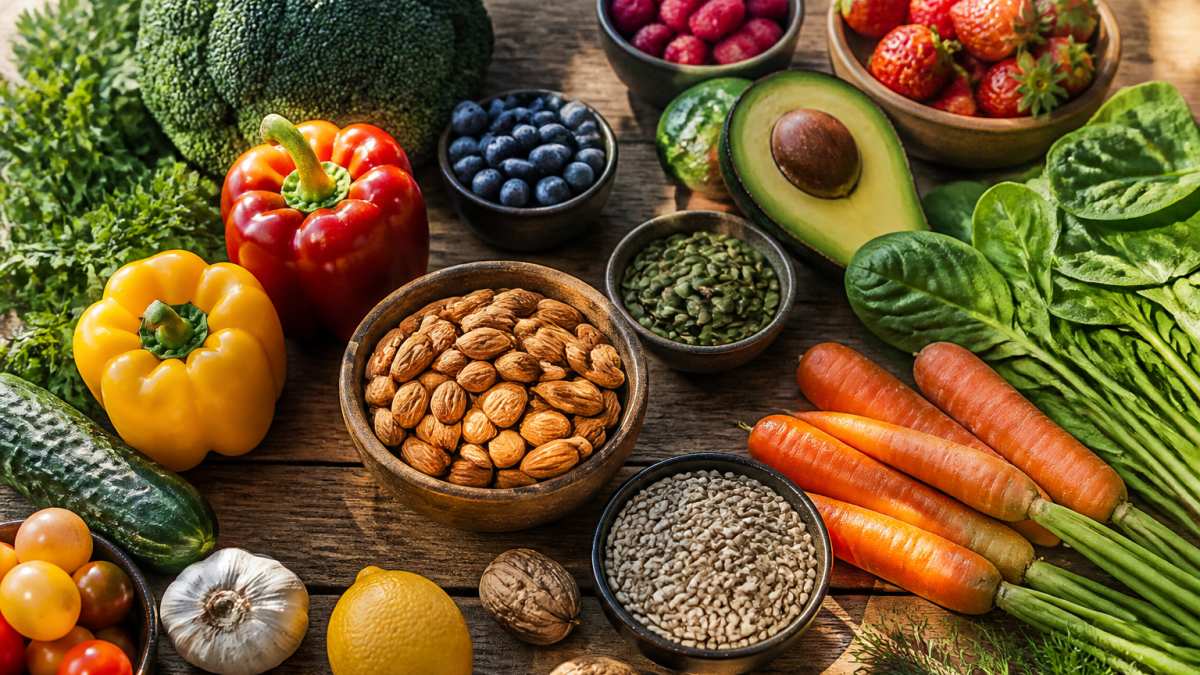
Whole foods like leafy greens, colorful vegetables, nuts, seeds, and legumes deliver complete nutrient profiles with supporting compounds intact. A single serving of kale provides more bioavailable minerals than most synthetic multivitamins. Build your foundation on whole foods; use supplements to fill specific gaps.
Full-Spectrum Mineral Supplements
Full-spectrum mineral supplements deliver multiple minerals in their natural relationships, unlike synthetic multivitamins with isolated minerals at arbitrary ratios. Ormusminerals delivers full-spectrum mineral support through products like the Golden Trinity Ormus Supplement and Ormus Brain Supplement, which contain over 72 trace minerals sourced from Dead Sea salt and Atlantic Ocean water.


Food-Derived Vitamin C and Other Bioactive Forms
Natural and synthetic nutrient forms differ significantly by nutrient type. Some show measurable absorption or efficacy differences; others show little practical distinction. Understanding which nutrients benefit from food-derived forms, and which don't, helps you invest in alternatives where they matter most.
Vitamin C: Plant-Based vs Ascorbic Acid
Plant-based vitamin C sources (rosehips, kakadu plum, camu camu) deliver vitamin C with bioflavonoids and polyphenols. A 2019 review in Nutrients found whole-food vitamin C produces greater antioxidant activity than equivalent doses of synthetic ascorbic acid alone.
Folate and Methylfolate: Where Form Matters Most
Naturally occurring folate in leafy greens, legumes, and asparagus differs from synthetic folic acid, which your body must convert to active methylfolate. For most people, folic acid converts adequately. However, individuals with the MTHFR gene variant (30-50% of the population) convert folic acid less efficiently; for them, methylfolate or food-derived folate is the stronger choice. If you have a history of neural tube defects, elevated homocysteine, or suspected methylation issues, use methylfolate or food-derived folate.
Vitamin D2 vs D3: The Clearer Distinction
Vitamin D2 (ergocalciferol) is synthetic or derived from irradiated mushrooms. Vitamin D3 (cholecalciferol) comes from animal sources or is synthesized to match the form your skin produces from sunlight. A meta-analysis in the American Journal of Clinical Nutrition found D3 supplementation produced 70-100% greater increases in serum vitamin D than D2. If you supplement vitamin D, D3 is the more effective form.
Vitamin B12: Cyanocobalamin vs Methylcobalamin
Cyanocobalamin is the synthetic form; methylcobalamin is the active form your cells use directly. For most people, cyanocobalamin converts adequately. However, older adults, people with pernicious anemia, and those taking metformin may absorb or convert it less effectively. If you have documented B12 deficiency or absorption issues, use methylcobalamin or food sources (fatty fish, beef, fortified plant-based products).
Iron: Heme vs Non-Heme Forms
Heme iron from animal sources absorbs 15-35% efficiently; non-heme iron from plants and synthetic supplements absorbs only 2-20%. For iron-deficiency anemia, food sources like beef or oysters provide more usable iron than synthetic ferrous sulfate. Pair plant-based iron with vitamin C (citrus, tomatoes, peppers) to increase absorption.
Calcium: Whole-Food vs Supplemental Forms
Calcium from dairy, leafy greens, and fortified plant milks absorbs efficiently with cofactors like vitamin K and magnesium. Supplemental calcium citrate absorbs better than carbonate, especially for older adults. Aim for 500 mg or less per dose; your body absorbs larger amounts less efficiently.
| Nutrient | Natural/Food Form | Synthetic Form | Evidence for Difference | Recommendation |
|---|---|---|---|---|
| Vitamin C | Rosehips, camu camu, kakadu plum | Ascorbic acid | Higher bioavailability and tissue retention with food sources | Choose food-derived if budget allows |
| Folate | Leafy greens, legumes, asparagus | Folic acid | Matters for MTHFR variants; equivalent for most people | Use methylfolate if MTHFR variant or pregnancy |
| Vitamin D | Fatty fish, egg yolks, sunlight | D2 or D3 | D3 raises serum levels 70-100% more effectively | Choose D3 over D2 |
| Vitamin B12 | Beef, fish, fortified products | Cyanocobalamin or methylcobalamin | Methylcobalamin better for absorption issues | Use methylcobalamin if deficiency or absorption problems |
| Iron | Beef, oysters, poultry | Ferrous sulfate, ferrous bisglycinate | Heme iron absorbs 15-35%; non-heme 2-20% | Choose food sources or bisglycinate form; pair with vitamin C |
| Calcium | Dairy, leafy greens, fortified milks | Calcium carbonate or citrate | Food sources absorb better; citrate better than carbonate | Prioritize food sources; use citrate if supplementing |
Folate, vitamin D, and iron show meaningful differences between natural and synthetic forms. Vitamin C and B12 show advantages for food-derived or active forms in specific populations. Calcium benefits from whole-food sources but synthetic forms work adequately if you choose the right type. Match your choice to the evidence for each nutrient.
Safety, Interactions, and Concentrated Natural Products
Concentrated natural products carry the same interaction risks as synthetic supplements. A concentrated herbal extract or mineral supplement can interact with medications just as powerfully as a synthetic version. Natural alternatives to synthetic supplements require the same caution around medication interactions. Consult your healthcare provider before starting any concentrated supplement, especially if you manage a health condition or take medications.

How to Choose the Best Natural Alternative for Your Needs
Choosing a natural alternative to synthetic supplements requires matching your actual nutritional gap to the evidence for that nutrient, your life stage, and your dietary pattern.
Assess Your Actual Deficiency Risk
Common deficiency risks by dietary pattern:
Life Force Energy Fulvic Acid Minerals →
Vegan and vegetarian diets lack reliable B12, may run low on iron, and often lack adequate zinc and iodine. Supplement B12 (methylcobalamin or cyanocobalamin); use bisglycinate iron if ferritin is low; cover iodine with iodized salt or kelp supplement; get zinc from pumpkin seeds or supplemental bisglycinate.
Ketogenic and low-carb diets often restrict vegetables, creating gaps in magnesium, potassium, and micronutrients. A full-spectrum mineral supplement or deliberate inclusion of low-carb vegetables (leafy greens, cruciferous vegetables, avocados) addresses this. Magnesium glycinate (300-400 mg daily) supports sleep and muscle function.
Elimination diets (autoimmune protocol, low-FODMAP, etc.) remove entire food groups, creating multiple gaps. Work with a registered dietitian to identify missing nutrients. Common gaps include fiber (psyllium husk), magnesium, zinc, and vitamin D.
Standard American diet high in processed foods typically runs low on magnesium, potassium, folate, and vitamin D. Targeted supplementation for vitamin D (especially in winter), magnesium (for sleep or stress), and folate (if you don't eat leafy greens) is more cost-effective than a multivitamin.
Life Stage and Nutrient Needs
Pregnancy and lactation increase needs for folate, iron, calcium, and choline. Prenatal vitamins are standard care; choose one with methylfolate if you have MTHFR concerns.
Older adults (65+) often have reduced stomach acid, impairing absorption of B12, calcium, and iron. Vitamin D needs increase as skin synthesis declines. Supplement vitamin D3 (1,000-2,000 IU daily) and B12 (methylcobalamin or cyanocobalamin, especially if taking metformin).
Athletes and active individuals deplete minerals faster through sweat. A full-spectrum mineral supplement or deliberate electrolyte replacement prevents cramping and fatigue. Low ferritin impairs oxygen transport and endurance.
Menopause increases bone loss risk and may worsen sleep and mood. Calcium and vitamin D become critical for bone health. Magnesium supports sleep and mood. Phytoestrogen-rich foods (soy, flaxseed) may ease hot flashes for some women.
Cost and Convenience Trade-Offs
Food sources are cheaper per nutrient than supplements when you buy in bulk and plan meals strategically.
Supplements are convenient for nutrients difficult to obtain from food (vitamin D in winter, B12 on a vegan diet, iodine without iodized salt) or for people with time or mobility constraints.
Full-spectrum mineral supplements are cost-effective if you have multiple mineral gaps or absorption issues. Generic multivitamins are cheaper but often contain nutrients you don't need and miss nutrients you do.
Practical strategy: Build your foundation on whole foods. Identify one to three genuine gaps (vitamin D in winter, B12 if vegan, magnesium if you have sleep issues). Supplement those gaps with targeted, evidence-backed products.
Evaluating Quality and Verifying Claims
Quality matters enormously with natural supplements. Not all "natural" products are equal. Some are diluted, some are contaminated, and some contain far less of the claimed nutrient than the label states. Third-party testing verifies what's actually in the bottle.
Look for products tested by independent labs. NSF International, USP (United States Pharmacopeia), and ConsumerLab are reliable certifiers. Check the label for:
- Serving size and nutrient amount: A supplement claiming "1,000 mg of mineral" but with a serving size of 1 teaspoon may deliver only 100 mg. Compare nutrient density across products.
- Source transparency: Products from pristine ocean water, mineral-rich regions, or certified organic farms carry lower contamination risk than those from industrial sources.
- Extraction method: Products using alkaline precipitation preserve nutrient integrity.
- Absence of fillers and additives: Check the ingredient list. Unnecessary binders, colorants, or flow agents suggest lower quality.
- Expiration date and storage: Natural supplements degrade faster than synthetic ones. Ensure the product is fresh and stored properly.
Frequently Asked Questions
What makes a natural alternative to synthetic supplements actually better?
Natural alternatives work with your body's existing systems. Food-based vitamins and full-spectrum minerals arrive with cofactors and bioactive compounds that enhance absorption. Synthetic isolates bypass this, forcing your body to work harder. The difference shows up in sustained energy, clearer thinking, and better sleep quality, not just lab numbers. Whole-food sources and mineral concentrates like Dead Sea salts deliver nutrients your cells recognize and use efficiently.
Are food-based vitamins more bioavailable than synthetic ones?
Yes, generally. Food-based vitamins exist within a complex matrix that includes enzymes, cofactors, and other compounds that facilitate absorption. Synthetic isolates lack this context. For example, food-derived vitamin C works alongside bioflavonoids that enhance cellular uptake. Your intestinal lining recognizes food-matrix nutrients more readily. Studies show whole-food concentrates produce measurable improvements in nutrient status faster than equivalent synthetic doses.
Can I get all my nutrients from food alone without supplements?
In theory, yes. In practice, modern soil depletion and food processing make it difficult. A nutrient-dense diet of whole foods, fruits, vegetables, and quality proteins provides a strong foundation. However, specific needs, mineral deficiency, athletic recovery, cognitive support, or restorative sleep, often require concentrated natural sources. Full-spectrum mineral supplements bridge this gap without synthetic fillers or isolates. Most practitioners recommend food first, then targeted natural supplementation for specific goals.
How do I know if a supplement is truly natural and not synthetic?
Check the ingredient label for sourcing transparency. Natural supplements list whole-food sources (Dead Sea salt, ocean minerals, plant extracts) rather than chemical names. Look for third-party testing certifications and avoid vague terms like 'natural flavoring.' Reputable brands disclose their extraction methods and sourcing. Full-spectrum mineral concentrates should specify ocean or mineral source. If the label doesn't explain where ingredients come from or how they're processed, it's likely synthetic or heavily processed.
What is the best natural alternative for athletes and active individuals?
Athletes need fast mineral replenishment and bioavailable forms. Full-spectrum mineral concentrates sourced from Dead Sea salt provide magnesium, potassium, calcium, and trace elements in their most absorbable state. These support muscle recovery, reduce cramping, and restore electrolyte balance. Pair with whole-food protein and nutrient-dense carbs.
0 comments