
Last Updated: November 15, 2026
Quick Summary
Ormus vs fulvic acid for energy: neither has strong human evidence showing a boost in energy. Fulvic acid is a defined naturally occurring compound, while Ormus is a seller-defined mineral concentrate whose composition varies by product.
- Fulvic acid is a naturally occurring compound from decomposed organic matter, while Ormus is a mineral concentrate sold under a specialized label.
- Direct human evidence measuring energy outcomes from fulvic acid or Ormus is scarce for both products.
- Ormus has no standardized scientific definition, so composition differs from one product to another.
- Look for independent lab testing, heavy-metal results and a stated source before buying either product.
- Track sleep, activity and energy for two to three weeks before and after starting any supplement.
Table of Contents
- Ormus vs Fulvic Acid: What Each One Actually Is
- Quick Comparison: Ormus vs Fulvic Acid at a Glance
- What the Research Says About Fulvic Acid Benefits and Energy
- Ormus for Energy: Claimed Effects and What Is Missing
- Safety, Side Effects and the Dangers of Fulvic Acid
- Fulvic Acid vs Shilajit and How to Choose a Fulvic Acid Supplement
- Choosing Between Ormus and Fulvic Acid by Your Goal
- Frequently Asked Questions
Ormus vs Fulvic Acid: What Each One Actually Is
Ormus minerals and fulvic acid are often mentioned together, but they are not the same thing. Fulvic acid is a naturally occurring compound, while Ormus is a mineral concentrate sold under a specialized label. Understanding each one is the first step toward judging whether either supports your energy goals.
What fulvic acid is and where it comes from
Fulvic acid is a component of humic substances that form as organic matter breaks down in soil, peat and water. It is typically sold as a liquid or powder supplement. Fulvic acid is often described as a carrier of minerals, though the strength of that claim in humans is still being studied, and the NIH Office of Dietary Supplements overview of dietary supplements is a useful starting point for understanding how these products are regulated and evaluated.
What Ormus products contain and how they are defined
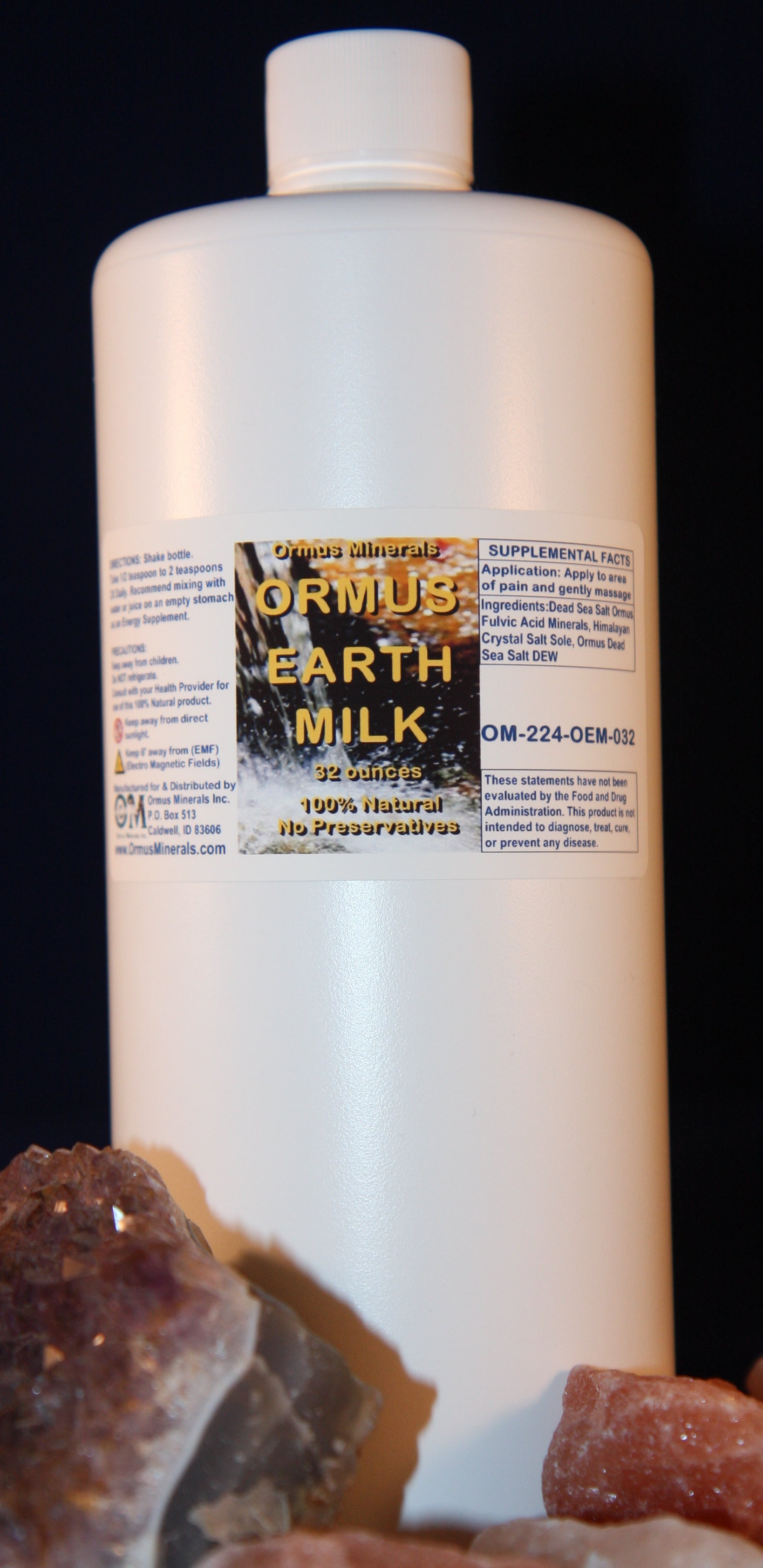
Ormus products are liquid concentrates made from Dead Sea salt and Atlantic Ocean water. Ormus is a term used in the supplement market, not a standardized scientific category, so its meaning varies by seller. Our Ormus Earth Milk line lists its ingredients as Ormus concentrate from Dead Sea salt, Atlantic Ocean water, other salts and Earth Milk, and it is sold in sizes from 4oz to 128oz. Check each label, because definitions and ingredient lists differ across brands.
Quick Comparison: Ormus vs Fulvic Acid at a Glance
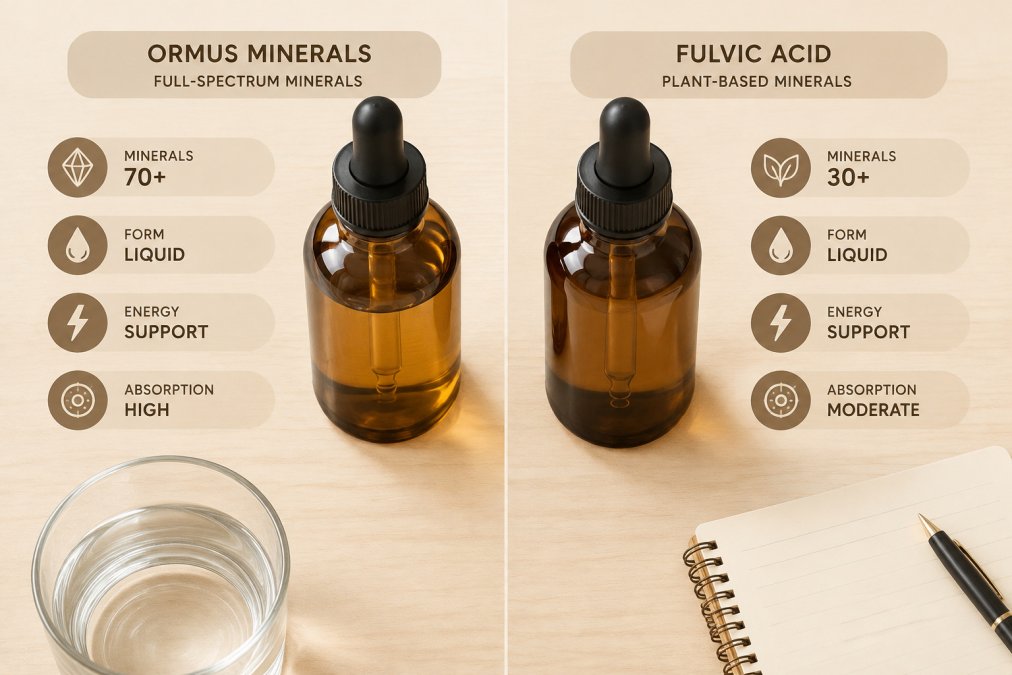
The core difference is simple. Fulvic acid is a single, defined class of compound. Ormus is a broader mineral concentrate whose composition depends on the product.
| Factor | Ormus | Fulvic Acid |
|---|---|---|
| Source | Dead Sea salt, Atlantic Ocean water | Decomposed organic matter |
| Form | Liquid concentrate | Liquid or powder |
| Defined composition | Varies by product | More consistent by definition |
| Human energy evidence | Limited | Limited |
| Typical price (our line) | $27 to $120 | Varies by brand |
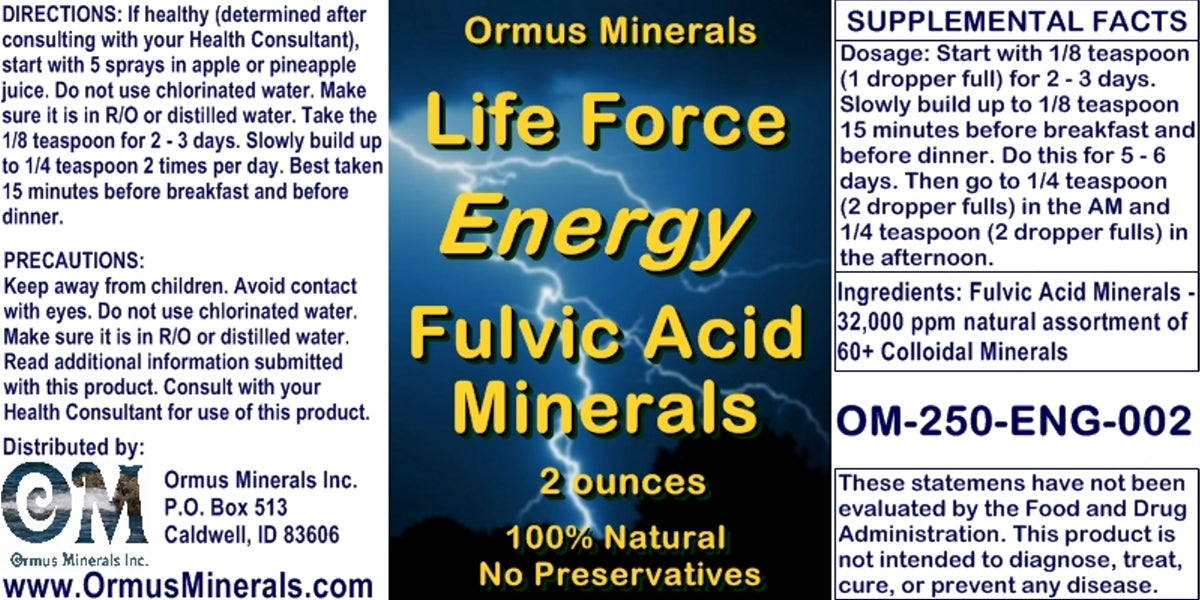
For a fuller look at the Life Force line, see our Life Force Energy Fulvic Acid Minerals product, which pairs fulvic acid with Ormus minerals.
What the Research Says About Fulvic Acid Benefits and Energy
Fulvic acid benefits are widely promoted, yet the evidence is thinner than the marketing suggests. The most useful way to read the research is to sort it into three tiers: laboratory and animal work, small human studies that measure something other than energy, and human studies that actually measure fatigue or vitality. Almost everything sold as an energy benefit sits in the first tier.
What the lab and animal work actually shows
Cell and animal studies describe fulvic acid as an antioxidant and anti-inflammatory agent, and some work suggests it can influence how cells handle minerals and oxidative stress. These are proposed mechanisms, not demonstrated energy outcomes. A mechanism in a petri dish does not tell you whether a healthy adult will feel more alert after a dose. The same caution applies to Ormus: sellers describe mineral-transport and cellular-energy theories, but those are hypotheses, not results.
Human evidence on energy outcomes
Direct human evidence measuring energy outcomes from fulvic acid or Ormus is scarce. When human studies of fulvic acid exist, they tend to focus on specific clinical populations, mineral status, or tolerability rather than on fatigue or daily energy in healthy adults. Ormus has even less controlled human research behind it.
This is where most articles blur the line. Testimonials and marketing copy get repeated as if they were findings. A useful rule is to ask three questions of any claim: Was it measured in people? Was energy the outcome, or something else? Was there a comparison group? If the answer to any of those is no, treat the claim as unproven.
How to track your own trial
If you decide to try either product, treat it as a personal experiment rather than a proven fix. Record sleep hours, activity, mood and perceived energy for two to three weeks before you start, then keep recording after. A common pattern is that people notice a change in the first week and then it fades, which is why a baseline matters. Watch out: if you change dose, brand and diet at the same time, you will not be able to tell what, if anything, made the difference. Read how to take mineral supplements safely before starting.
The comparison the marketing skips
Side by side, fulvic acid has the advantage of being a more defined class of compound, so research on it is easier to interpret. Ormus is a broader, seller-defined mineral concentrate, which makes both research and label-to-label comparison harder. Neither wins on human energy evidence, because that evidence is largely absent for both. The practical takeaway is to judge each product on transparency and testing, not on which one has the more confident marketing.
Ormus for Energy: Claimed Effects and What Is Missing
Ormus marketing often cites energy, mental clarity and vitality. These are claims, not established outcomes. The missing piece is controlled human research on Ormus specifically. Without it, no one can say how much, if any, energy benefit to expect. Until controlled research clarifies whether Ormus affects energy, comparing its claims with evidence on related mineral-rich substances such as shilajit and Autophagy Nutrition can help keep expectations grounded.
Many buyers also face a practical gap. The term "M-state" and "monatomic" minerals lacks a standard scientific definition, so comparing one Ormus product with another is difficult. Look for published lab testing and clear ingredient disclosure before buying.
Safety, Side Effects and the Dangers of Fulvic Acid
Supplements are not risk-free, and the safety picture differs between these two product categories. Fulvic acid products can vary in purity, and contamination with heavy metals is a documented concern across mineral supplements. Ormus products carry a related but distinct set of questions, because they are concentrated mineral liquids with seller-defined compositions. Buy from sellers who publish third-party lab results, and read the safety section of each product as carefully as the benefits.
Fulvic acid: what to watch for
Products vary in concentration and source, so serving sizes are not interchangeable between brands. Because fulvic acid is often marketed as a mineral carrier, the mineral content itself matters: a product sourced from soil or peat can carry whatever the source material carried. Ask for a certificate of analysis that covers heavy metals, and check whether the fulvic acid content is stated on the label rather than implied.
Ormus: the composition problem
Ormus is harder to assess because there is no standardized definition. Read the Ormus side effects guide to see what to watch for. The term 'M-state' and 'monatomic' minerals lack a standard scientific definition, so two products labeled Ormus may contain different things. That makes safety evaluation product-by-product. A concentrate made from Dead Sea salt and ocean water will carry the minerals of its source, and concentration steps can also concentrate contaminants if the source or process is not controlled. Look for published lab testing, clear ingredient disclosure and a stated source before buying.
Side-by-side testing checklist
Use the same standard for both categories:
- A certificate of analysis from an independent lab, not just a brand statement.
- Heavy-metal testing results that name the metals tested and the limits.
- A clear serving size and fulvic acid or mineral content on the label.
- A named source and, for Ormus, a stated composition rather than a trademarked term alone.
- Batch numbers so you can match a lab report to the bottle you bought.
Watch out: a lab report that covers only one batch, or that tests microbial counts but not heavy metals, does not answer the contamination question.
Interactions and who should be cautious
Talk with a doctor before starting any mineral product if you take medications or have kidney or heart conditions. Mineral concentrates can interact with how the body handles other minerals, and kidney function affects how minerals are cleared. Start with a low dose and increase only if it is well tolerated, and stop and seek medical advice if you notice unusual symptoms. The FDA does not evaluate most supplements before they reach the market. The FDA guidance on dietary supplements explains what that means for buyers, and the NIH Office of Dietary Supplements overview of dietary supplements is a useful starting point for understanding how these products are regulated and evaluated.
The safety comparison in one line
Fulvic acid is the more defined product, so its risks are easier to check. Ormus is the less defined product, so its risks depend more heavily on the individual seller's testing and disclosure. In both cases, the deciding factor is not the category but the documentation behind the specific bottle.
Fulvic Acid vs Shilajit and How to Choose a Fulvic Acid Supplement
Shilajit is a resin that also contains fulvic acid, so many people compare the two. Shilajit is a traditional product with its own sourcing and quality issues. Choosing either comes down to transparency: ask for a certificate of analysis, a clear serving size and a documented source.
When you shop for a fulvic acid supplement, check four things: the label lists the fulvic acid content, a lab report is available, the source is named, and the serving instructions are clear. The best fulvic acid supplement for you is the one that meets these standards at a price you can sustain.
Choosing Between Ormus and Fulvic Acid by Your Goal
If your goal is a general mineral supplement with a defined composition, fulvic acid products may suit you better, provided they publish testing.
If your main goal is more energy, the honest answer is that neither has strong human evidence yet. Our Ormus Earth Milk 32oz Fulvic Acid is a common choice for buyers who have already decided on Ormus and want a larger size.
Ormusminerals sells Dead Sea and Atlantic Ocean sourced mineral concentrates, with free US shipping on orders over $50. Choose the strength and size that fits your routine, and keep a simple log so you can judge the results for yourself.
Frequently Asked Questions
Can Ormus or fulvic acid help boost energy levels?
Neither has strong human evidence showing a measurable increase in energy levels. Fulvic acid has been studied mostly in laboratory and animal settings, and the human trials that exist are small and often industry-funded. Ormus is a term used for monatomic mineral concentrates, and independent studies of its energy effects are essentially absent. Energy complaints such as fatigue can have causes like low iron, poor sleep or thyroid problems, so a blood test from a clinician is a better first step than any supplement.
Are Ormus supplements safe to take?
Ormus concentrates are sold as dietary supplements in the United States and are not evaluated by the FDA for safety or effectiveness before sale. Their mineral content can vary between batches, and the products are labeled as not intended to diagnose, treat, cure or prevent any disease. People who are pregnant, nursing, taking prescription medication or managing a condition such as kidney disease should check with a healthcare provider before starting any mineral product.
What are the dangers of fulvic acid?
Because quality varies widely, look for third-party lab reports that test for heavy metals and microbes. Stop use and seek medical advice if you notice digestive upset, rash or any unusual symptom, and check with your pharmacist about spacing doses away from prescription drugs.
What should you look for in a fulvic acid supplement?
Start with the source and the testing. A quality fulvic acid product should state where the fulvic material comes from, list its concentration, and provide a recent third-party certificate of analysis covering heavy metals and microbial limits. Check the serving size against the stated dose, and avoid products that make disease claims. Price per serving is a more useful comparison than price per bottle, and a short trial of one product is more informative than switching brands every week.

0 comments