
🎧 Listen to this article (full narration)
What Is Agricultural Ormus?
Agricultural Ormus refers to the application of ORMUS — orbitally rearranged monatomic elements — to plants, soil, and crops. Farmers, gardeners, and permaculture enthusiasts have been experimenting with Ormus in growing environments for decades, reporting remarkable results in plant vitality, yield size, root development, and overall crop resilience.
How Does Ormus Benefit Plants?
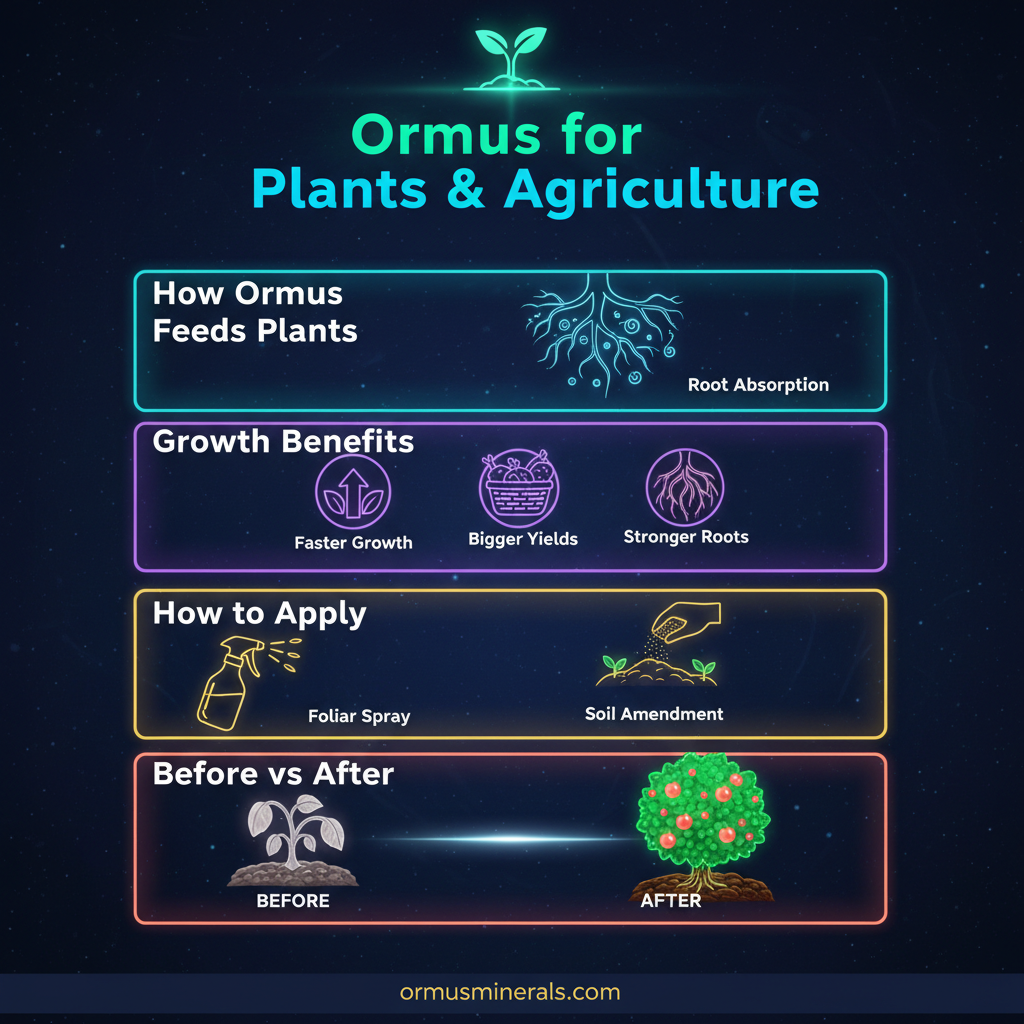
Plants absorb minerals through their root systems and leaf surfaces. Ormus minerals, existing in a unique m-state form, are believed to be more bioavailable to plant cells than conventional mineral supplements. This means even small quantities can have an outsized effect on cellular energy production, photosynthesis efficiency, and nutrient uptake.
Key reported benefits in agricultural applications include:
- Faster germination — seeds treated with Ormus water germinate more quickly and with higher success rates
- Stronger root systems — roots grow deeper and more extensively, improving drought resistance
- Larger yields — many growers report 20–50% increases in fruit and vegetable size
- Enhanced flavor and nutrient density — produce grown with Ormus is often described as more flavorful and nutritionally rich
- Greater disease resistance — plants appear more resilient to fungal infections, pests, and environmental stress
The Famous Ormus Orange Tree Experiments
One of the most cited examples of agricultural Ormus in action is the orange tree experiments conducted by early ORMUS researchers. Trees treated with Ormus-enriched water produced fruit that was noticeably larger, more abundant, and sweeter than control trees grown under identical conditions. These results sparked widespread interest in Ormus as an agricultural supplement.
How to Apply Ormus to Your Garden
There are several effective methods for using Ormus in agricultural settings:
- Soil drench — dilute Ormus concentrate in water and apply directly to soil around plant roots
- Foliar spray — mix Ormus with water and spray directly onto leaves for rapid absorption
- Seed soak — soak seeds in diluted Ormus water for 4–8 hours before planting to boost germination rates
- Compost enhancement — add Ormus to compost piles to accelerate decomposition and enrich the final product
Recommended Dosage for Plants
Less is more when it comes to Ormus in the garden. A common starting ratio is 1–2 teaspoons of Ormus concentrate per gallon of water for soil application, and half that for foliar spraying. Overuse can sometimes stress plants, so it's best to start conservatively and observe plant response before increasing frequency or concentration.
Why Ormus Is Not a Conventional Fertilizer
It's important to understand that Ormus is not a replacement for standard NPK fertilizers. It does not supply nitrogen, phosphorus, or potassium in meaningful quantities. Rather, Ormus works at a more subtle level — enhancing the plant's ability to absorb and utilize the nutrients already present in the soil, and supporting cellular processes that drive growth and vitality. Think of it as a biological amplifier rather than a nutrient source.
Getting Started With Agricultural Ormus
If you're new to using Ormus in your garden, start with a small test plot or a few container plants. Apply Ormus-enriched water weekly and observe changes over 4–6 weeks. Most growers begin noticing differences in vigor, color, and growth rate within the first two to three weeks of consistent application.
Enhancing Soil Microbial Activity with Ormus Minerals
In addition to feeding plant roots directly through mineral absorption, agricultural Ormus plays a vital role in stimulating soil biology and active subterranean microbial ecosystems. Beneficial soil microorganisms, including mycorrhizal fungi, actinomycetes, and nitrogen-fixing bacteria, thrive in mineral-dense soil environments enriched with natural ocean trace elements. When ocean-derived monatomic minerals are applied to garden beds, they provide microscopic mineral catalysts that dramatically increase microbial metabolic rates and encourage rapid colonization across root zones. This flourishing subterranean ecosystem active in the rhizosphere continuously breaks down complex organic matter, transforming locked soil nutrients into highly bioavailable forms that plant roots can readily absorb across all vegetative and flowering growth stages. As a direct result of enhanced soil microbial activity, long-term soil structure and fertility improve naturally without requiring chemical additives or synthetic treatments.
Foliar Spraying vs. Root Drenching in Agricultural Applications
To maximize the agricultural impact of Ormus in commercial crop production, organic farms, and home gardens, growers often alternate between root drenching and direct foliar spraying methods. Root application encourages deep, expansive root branching, increases drought tolerance, and improves long-term soil structure and moisture retention capacity in dry topsoil. On the other hand, foliar spraying allows plant leaves to directly absorb m-state sea minerals through open stomatal pores, delivering immediate bio-energetic support to active photosynthetic tissues during key vegetative spikes. For detailed, step-by-step instructions on diluting liquid concentrates and setting ideal seasonal application schedules, review our detailed usage guide for complete agricultural success across every season.
Integrating Ocean Minerals into Sustainable Organic Farming
Modern organic agriculture relies heavily on restoring natural mineral balances without relying on synthetic chemical fertilizers, artificial hormones, or harsh pesticide sprays. Ocean-derived minerals represent a pristine, sustainable source of full-spectrum trace nutrition that enhances natural soil resilience and long-term crop fertility. Incorporating natural mineral precipitates into regular irrigation cycles supports ecological soil management while producing highly nutrient-dense crops with superior flavor, rich aroma, and extended storage stability. Explore our specialized botanical formulations in the Ormus for Plants section and browse our full Ormus collection to support your sustainable farm, market garden, or home greenhouse operations.