
🎧 Listen to this article (full narration)
Understanding Rubidium (Rb) gives you a clearer picture of why the complete ocean mineral spectrum in Ormus produces results that no single-mineral supplement ever can.
Rubidium is a naturally occurring trace mineral in plant biology. While not classified as essential for every plant species, Rubidium is consistently present in the ocean mineral environment that plants evolved alongside — and research documents its beneficial role at trace concentrations.
What Rubidium Does For Your Plants — The Potassium Analog
Rubidium is taken up through potassium transport channels and can activate some potassium-dependent enzymes, potentially serving as a potassium backup in marginal soils. It also competes with and excludes more toxic cesium from plant uptake.
Rubidium Deficiency — What to Watch For
Not classified as essential.
The Real-World Benefit of Rubidium in Ormus
Rubidium provides a natural potassium backup function in Ormus — supporting enzyme activity in crops grown in potassium-marginal soils.
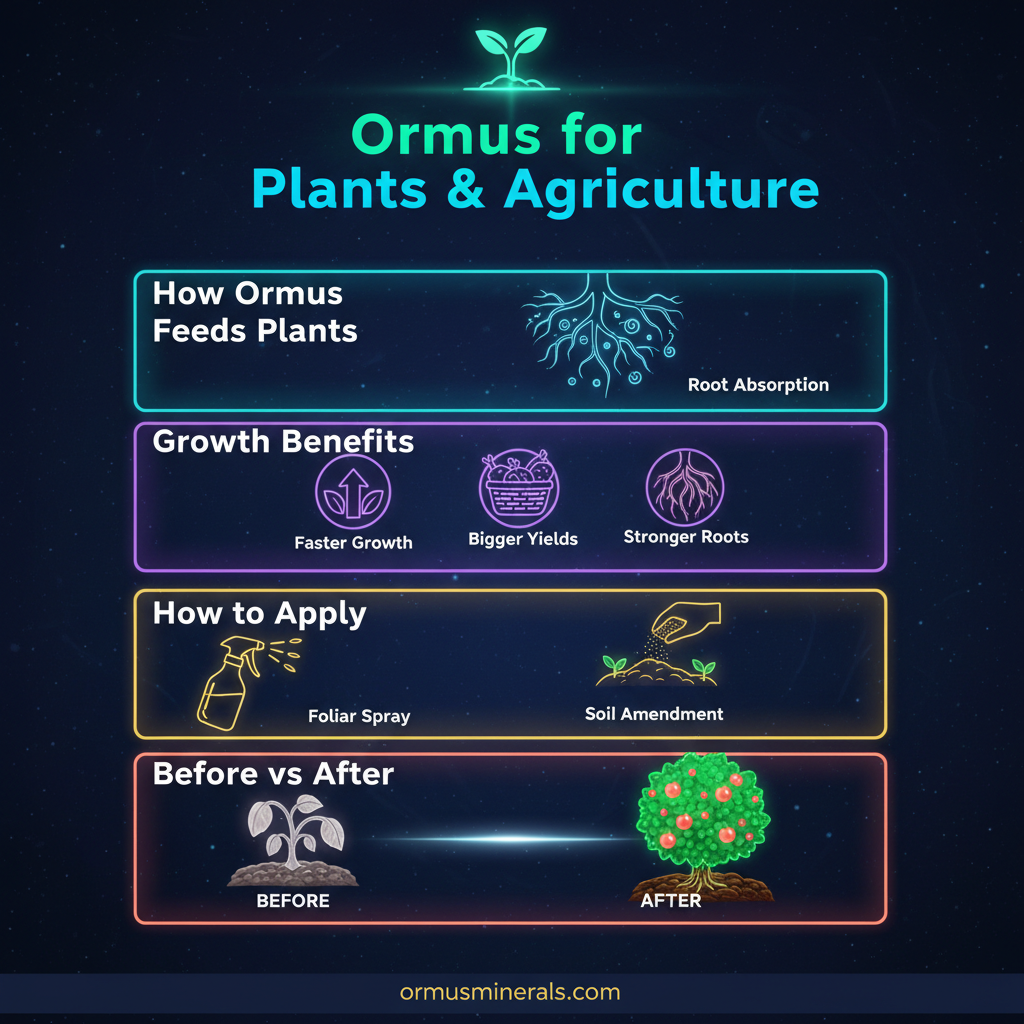
How to Apply Ormus Rubidium to Your Plants
- Delivered through standard Ormus application. Soil drench 1 tbsp/gal weekly.
- Soil drench: 1 tbsp Ormus per gallon — water thoroughly at root zone
- Foliar: 1–2 tsp Ormus per gallon — apply in early morning or evening
- Apply consistently throughout the growing season
The Bigger Picture — Complete Spectrum Plant Nutrition
Rubidium is one of over 84 naturally occurring minerals in every application of Ormus ocean minerals — macronutrients, micronutrients, rare earth elements, and m-state platinum group elements all working together in the same naturally balanced ratios that plants evolved to thrive in.
No single-mineral supplement and no conventional fertilizer program delivers this. That is the Ormus difference — and it is why the documented agricultural results are so consistently extraordinary.
Feed your plants the complete mineral spectrum. Start with Ormus.
How to Apply Ormus Rubidium to Your Garden
Ormus minerals can be applied to plants in several ways depending on your goals and growing situation. Soil drenching — diluting liquid Ormus and applying it directly to the root zone — is the most common method and delivers minerals where plant roots can absorb them most readily. For faster results, foliar spraying — misting diluted Ormus directly onto plant leaves — allows mineral uptake through leaf stomata and can produce visible changes within days. Seed soaking before planting is another effective technique that enhances germination rates and early seedling vigor.
The Role of Soil Microbiome
Ormus Rubidium does not work in isolation — it works in partnership with the living soil ecosystem. Beneficial soil bacteria and mycorrhizal fungi play a critical role in making minerals available to plant roots. When soil mineral levels are optimized with Ormus supplementation, the microbial community that supports plant nutrition also thrives, creating a virtuous cycle of improving soil health and plant vitality over successive growing seasons.
Signs of Rubidium Deficiency in Plants
Plants communicate their mineral needs through visible symptoms. Depending on the mineral involved, deficiency signs may include yellowing or browning of leaves, poor stem strength, reduced flowering, small or misshapen fruit, or increased susceptibility to disease and pest pressure. If your plants are showing any of these signs, a full-spectrum Ormus application is an excellent first step toward restoring the mineral balance your garden needs.
Long-Term Soil Health
One of the most significant benefits of regular Ormus mineral application is the progressive improvement in soil health over time. As mineral levels build in the soil and the microbial community strengthens, plants become more self-sufficient, more disease-resistant, and more productive season after season. Many experienced gardeners who use Ormus regularly report that their soil becomes noticeably more alive and their plants more vigorous with each passing year.
Unlock your garden's full mineral potential. Explore our Ormus for Plants collection today.
✦ Ready to experience it? ✦
Start with our most popular formula
Purpose-formulated for plants — bigger yields, stronger roots, better nutritional density.
🚚 Free US shipping on orders over $50 · Use code ORMUS10 for 10% off your first order
Rubidium Synergy with Potassium in Osmotic Regulation
Rubidium is an alkali trace element that closely mimics potassium in cellular transport mechanisms. Because of its atomic properties, rubidium assists in balancing cellular osmotic pressure and maintaining electrical potential across plant cell membranes. When present in trace quantities alongside full-spectrum ocean minerals, rubidium enhances enzyme activation and speeds up the movement of carbohydrates from photosynthetic leaves into developing root systems. Vegetable growers utilizing our Ormus for Plants note improved root crop development in carrots, radishes, and beets.
This trace element synergy ensures that vital metabolic processes continue smoothly even when primary macronutrients experience temporary fluctuations, providing a natural buffer against environmental stresses.
Revitalizing Depleted Garden Soil with Trace Sea Minerals
Continuous harvesting gradually depletes garden soil of ultra-trace minerals like rubidium that are rarely replaced by standard commercial fertilizers. Replenishing soil beds with sea-derived monatomic elements restores ancient mineral equilibrium, empowering beneficial soil bacteria to thrive and support complex plant root networks. Healthy, mineral-rich soil produces nutrient-dense crops with enhanced flavor profiles and longer post-harvest shelf life.
Discover our full spectrum of ocean mineral concentrates in the Ormus collection. For detailed instructions on soil drenching and seasonal bed preparation, read our easy-to-follow usage guide.