

Excellent question. The concept of "best" minerals for plants isn't about a single magic ingredient, but about understanding that plants need a complete and balanced diet, just like humans do.
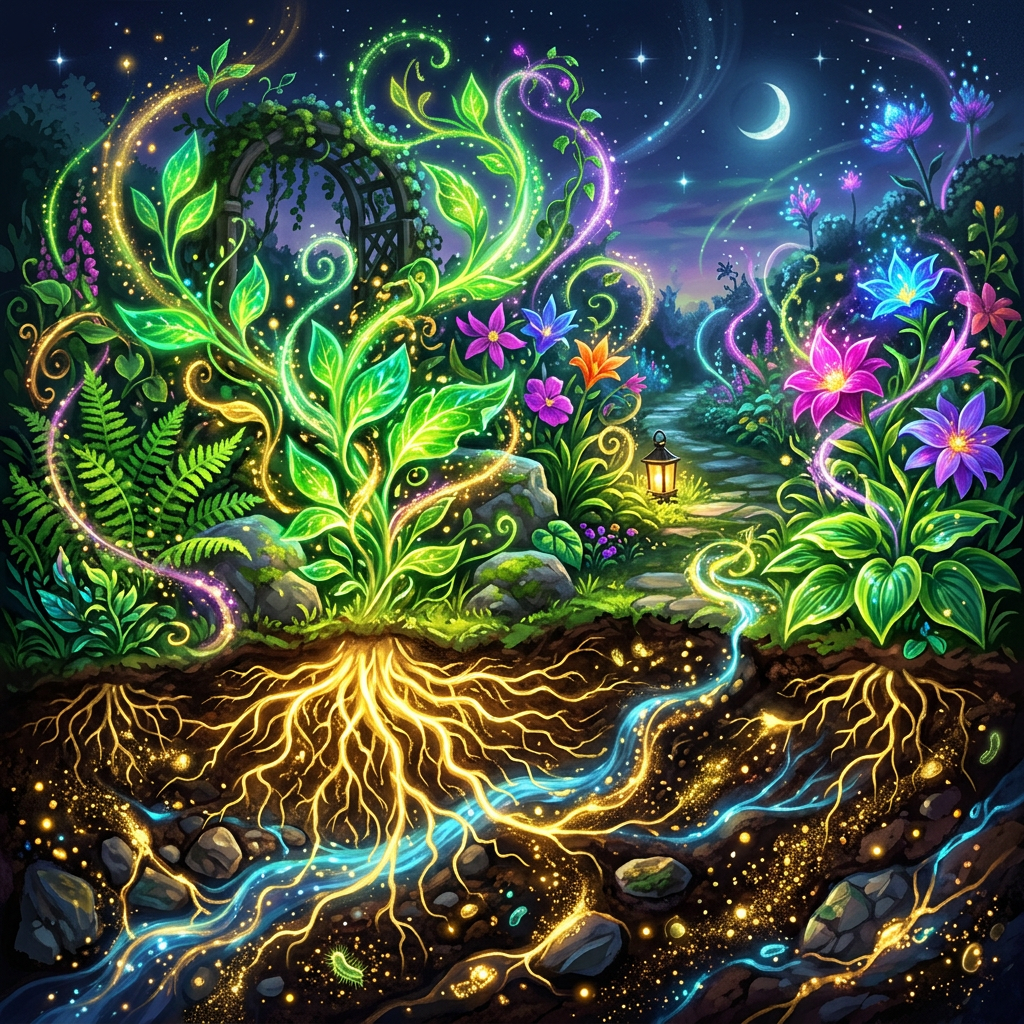
This diet is broken down into two main categories: Macronutrients (needed in large amounts) and Micronutrients (needed in tiny, trace amounts).
A great way to think about it is building a house:
- Macronutrients are the bricks, lumber, and concrete. You need tons of them.
- Micronutrients are the nails, screws, and special tools. You don't need a lot, but without them, the whole structure falls apart.
Here is a breakdown of the most important minerals in each category.
The Heavy Lifters: The 6 Essential Macronutrients
These are the absolute "best" in the sense that they are required in the largest quantities and are the foundation of all plant life.
The Big Three (NPK) - The Primary Macronutrients
You'll see these three numbers on every bag of fertilizer (e.g., "10-10-10").
1. Nitrogen (N) - "The Leaf Maker"
- Role: The single most important mineral for creating lush, green, leafy growth. It's the primary component of chlorophyll (the green pigment that captures sunlight) and amino acids (the building blocks of protein).
- Result: Abundant leaves, strong stems, and vibrant green color. A plant without enough nitrogen will be small and yellow.
2. Phosphorus (P) - "The Root and Flower Maker"
- Role: The powerhouse for energy transfer (ATP), strong root development, and, critically, the formation of flowers, fruits, and seeds.
- Result: A robust root system, abundant blossoms, and high-quality fruit and seed production.
3. Potassium (K) - "The General Manager"
- Role: The regulator of the plant's entire internal system. It manages water movement, activates enzymes, and strengthens the plant against stress, disease, and cold.
- Result: A sturdy, hardy plant that can withstand stress and produce high-quality fruit.
The Secondary Macronutrients
Still needed in large amounts, just not as much as NPK.
4. Calcium (Ca) - "The Bone Builder"
- Role: The primary component of cell walls. It provides structural integrity, making the plant strong and rigid. Think of it as the plant's "skeleton."
- Result: Strong stems and resistance to diseases that attack weak cell walls. Prevents issues like blossom-end rot in tomatoes.
5. Magnesium (Mg) - "The Heart of Photosynthesis"
- Role: The central atom in every single chlorophyll molecule. Without magnesium, the plant cannot capture energy from the sun.
- Result: Healthy, green leaves capable of maximum energy production.
6. Sulfur (S) - "The Protein and Flavor Maker"
- Role: A key component of several essential amino acids and vitamins. It's also responsible for giving many plants, like onions and garlic, their distinct flavor and aroma.
- Result: Healthy overall growth and development, and enhanced flavor profiles.
The Specialists: The Essential Micronutrients (Trace Elements)
These are needed in minuscule amounts, but are absolutely critical. A deficiency in any one of them can cause catastrophic failure.
1. Iron (Fe) - The Chlorophyll Synthesizer
- While not part of the chlorophyll molecule itself, Iron is essential for the process of making it. A lack of iron is a common cause of "chlorosis" (yellow leaves with green veins).
2. Boron (B) - The Reproductive Specialist
- Absolutely vital for flowering, pollen germination, and fruit/seed development. Many plants can flower but will fail to produce fruit without enough boron.
3. Zinc (Zn) - The Growth Regulator
- Critical for activating enzymes and creating auxins, which are the hormones that regulate growth. A zinc deficiency leads to stunted growth.
4. Manganese (Mn) - The Photosynthesis Assistant
- Plays a key role in the process of photosynthesis, helping to split water molecules.
5. Copper (Cu) - The Activator
- Essential for activating several key enzymes and plays a role in respiration and photosynthesis.
6. Molybdenum (Mo) - The Nitrogen Key
- Allows the plant to use nitrogen. Without it, the plant can be surrounded by nitrogen and still be unable to absorb it.
The Most Important Concept: The Law of the Minimum
So, which mineral is truly the "best"?
The answer is: The one your plant is missing.
This is explained by "Liebig's Law of the Minimum," which uses the analogy of a wooden barrel. The barrel's capacity to hold water is limited not by the tallest stave, but by the shortest stave.
In plant nutrition, it doesn't matter if you have perfect levels of Nitrogen and Phosphorus if you have a complete deficiency of Boron. The plant's growth will be limited by its lack of Boron.

Therefore, the "best" approach is to ensure a balanced and complete supply of all essential minerals, as any single deficiency can bring the entire system to a halt.
0 comments