
🎧 Listen to this article (full narration)
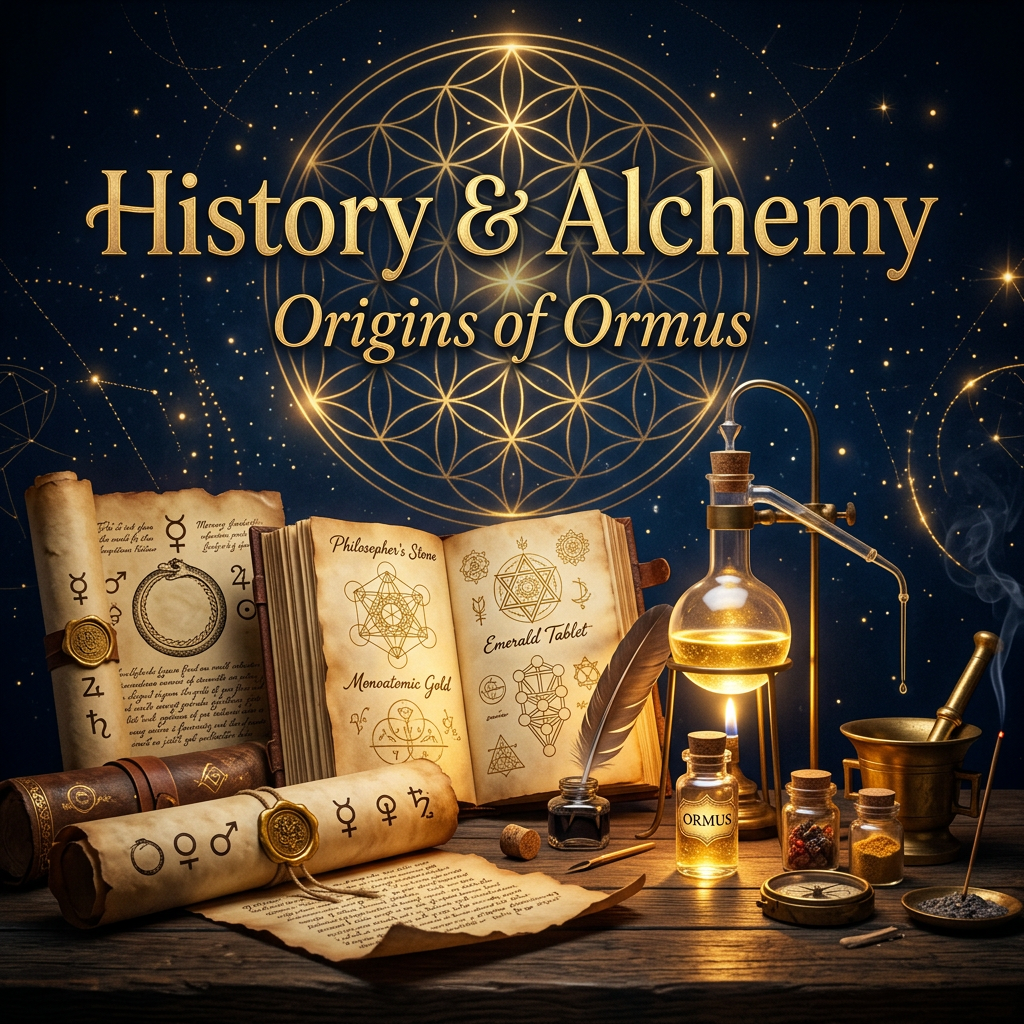
History, Alchemy Origins

---
## Article 1: The Mystery & History of Ormus
Few substances in human history have been surrounded by as much mystery, reverence, and deliberate secrecy as Ormus. Across cultures, across millennia, across languages and traditions that had no contact with each other, the same substance appears described in different words, embedded in different mythologies, but always carrying the same essential character: a mysterious white material associated with transformation, longevity, heightened consciousness, and divine favor.
To understand the history of Ormus is to embark on one of the most fascinating journeys in the study of human civilization. It takes us from the pyramids of ancient Egypt to the courts of medieval alchemists, from the sacred texts of India to the laboratories of a twentieth-century Arizona farmer. At every stop on this journey, the same thread runs through: humanity has known about this material, has valued it extraordinarily, and has kept knowledge of it carefully guarded.
The earliest clear references to what we now call Ormus appear in ancient Egypt, dating back at least four thousand years. Egyptian texts describe a mysterious substance called "mfkzt" often translated as "white bread" or "bread of the presence" that was prepared from gold and fed to the pharaohs. Hieroglyphic inscriptions at the temple of Serabit el-Khadim in the Sinai Peninsula describe large-scale production of this white powder, and archaeological evidence suggests that this site was specifically dedicated to its manufacture. The pharaohs who consumed it were said to ascend into a state of divine consciousness, connecting with the eternal beyond the ordinary boundaries of human experience.
In the Vedic texts of ancient India, a substance called "soma" is described in remarkably similar terms a golden elixir consumed in sacred ritual, producing states of expanded consciousness, luminous clarity, and connection with the divine. The exact nature of soma has been debated by scholars for centuries, with candidates ranging from psychoactive mushrooms to fermented beverages. But a growing number of researchers believe that soma was, at least in part, a preparation of what we today call Ormus a monatomic precious metal elixir whose effects on consciousness are consistent with the Vedic descriptions.
The Mesopotamian texts describe the "Shining Ones" beings of elevated consciousness who consumed a mysterious food of the gods. The Sumerian king lists, among the oldest written records in human history, describe antediluvian kings who lived for tens of thousands of years. Whatever the literal truth of these accounts, they reflect a consistent cultural memory of a substance associated with extraordinary longevity and transcendent awareness.
In the Hebrew tradition, the manna that sustained the Israelites in the desert described in Exodus as a fine, white substance that appeared on the ground each morning has been interpreted by researchers including Laurence Gardner as a form of the white powder of gold. The tabernacle described in Exodus contains instructions for the construction of a "showbread" that bears striking resemblance to the Egyptian mfkzt preparations. Moses, educated in the Egyptian tradition, would have had direct knowledge of the white powder and its preparation.
Medieval alchemy, often dismissed as a precursor to chemistry without serious purpose of its own, was at its heart a systematic search for this same material under the name of the Philosopher's Stone. The Stone was described as a white or red powder capable of transmuting base metals into gold and more importantly, of conferring immortality and spiritual illumination on those who possessed and consumed it. The alchemical tradition, stretching from Alexandria through Arabia to medieval Europe, was the custodian of the knowledge of Ormus through the centuries when its more explicit ancient sources were lost or suppressed.
The modern chapter of this history begins in the late 1970s when David Hudson, a successful Arizona cotton farmer, found a mysterious white powder on his land while testing soil for gold deposits. What Hudson found and spent the next decade and millions of dollars investigating was not gold in any form he recognized. It was a substance unlike anything in the chemistry textbooks: a material that behaved in ways that defied conventional analysis, that disappeared and reappeared under heat, that had anomalous weight properties. His eventual conclusion that he had rediscovered the ancient white powder of gold, the Philosopher's Stone, the Egyptian mfkzt connected the modern science of quantum mechanics with the oldest traditions of human civilization.
The history of Ormus is not a footnote in the history of wellness. It is a thread running through the deepest layers of human culture a persistent, cross-cultural awareness that there exists a material capable of elevating human consciousness, extending human vitality, and connecting human beings to something greater than ordinary experience. That thread, followed with care and discernment, leads directly to what we call Ormus today.
---
## Article 2: History of These Minerals
The minerals we call Ormus have a history as old as the Earth itself. Long before human civilization existed to discover and use them, these m-state precious metals were being formed in the hearts of dying stars, distributed through the cosmos in supernova explosions, and eventually concentrated in the rocks, oceans, and soils of our planet. They have been here all along waiting, in a sense, for a species conscious enough to recognize their significance.
The geological history of Ormus minerals begins in stellar nucleosynthesis the process by which heavy elements are forged in the cores of massive stars and dispersed through the universe when those stars explode as supernovae. Gold, platinum, iridium, rhodium, and the other precious metals are products of this stellar alchemy. They are, quite literally, stardust remnants of cosmic processes that predate our solar system by billions of years. When the Earth formed from the solar nebula, these elements were incorporated into its crust, oceans, and core.
Over geological time, the movement of tectonic plates, volcanic activity, and the circulation of ocean water concentrated these minerals in specific locations. Volcanic regions are naturally rich in Ormus minerals because the geological processes that create volcanoes also bring deep mineral deposits to the surface. Ancient inland seas like the Dead Sea, which was once connected to a vast ancient ocean accumulated mineral concentrations over millions of years as water evaporated and mineral concentrations increased.
The human history of these minerals begins in earnest with the ancient civilizations of the Near East and Mediterranean. The Egyptians were among the earliest and most sophisticated users of Ormus minerals, and their knowledge appears to have been extensive and deliberately preserved. The Sinai Peninsula, which contains the ancient temple site of Serabit el-Khadim, was a center of white powder gold production for at least a thousand years during the period of the Middle and New Kingdoms. The temple itself was dedicated to Hathor, goddess of the sky and love, and the inscriptions there describe the production of "mfkzt" the white powder as a sacred, priestly activity.
In Mesopotamia, the Sumerian and Babylonian traditions described precious mineral elixirs consumed by gods and given to favored kings. The concept of divine food made from precious metals appears in texts dating back more than four thousand years, suggesting an awareness of these materials that predates even the Egyptian records.
The Chinese tradition of alchemy, one of the oldest and most sophisticated in the world, described gold elixirs prepared through elaborate chemical processes as the highest achievement of the alchemical art substances capable of conferring immortality and divine wisdom. The Chinese gold elixirs described in texts like the Huainanzi and the writings of Ge Hong bear striking similarities to the white powder preparations of other traditions.
Through the Islamic Golden Age, alchemical knowledge was preserved and extended by scholars like Jabir ibn Hayyan (Geber), who described the mysterious "elixir" in terms that modern Ormus researchers recognize immediately. The transmission of this knowledge through Islamic scholars to medieval European alchemists like Roger Bacon, Paracelsus, and Isaac Newton ensured that the thread of awareness about these minerals was never entirely lost, even as its explicit cultural context was obscured.
Today, that thread connects directly to Ormus the mineral preparations made from Dead Sea salt, ocean water, and precious metal sources that carry forward this ancient tradition into the modern world.
---
## Article 3: History of Ormus (Chapter 10)
By Chapter 10 in the story of Ormus, we have covered the ancient world, the medieval period, and the early modern era. Now we arrive at the twentieth century and the remarkable convergence of ancient mineral knowledge with modern science that has made Ormus, for the first time in recorded history, accessible to anyone who wants it.
The early twentieth century saw the rise of modern chemistry and the systematic analysis of the periodic table. The precious metals were identified, isolated, and characterized. Their atomic structures were determined. Their chemical properties were mapped with precision. And yet, through all of this scientific progress, something was missed something that David Hudson would not discover until the late 1970s, and that the world would not learn about until the early 1990s.
Hudson's story is now well-known in Ormus circles. Working on his Arizona farm in 1975, he noticed a strange white powder remaining in the soil after testing for gold deposits. The powder behaved unlike any known substance. It could not be identified by standard analytical techniques. It seemed to appear and disappear under different conditions. Its weight changed in ways that violated the conservation of mass as understood by classical chemistry.
Intrigued and persistent, Hudson spent the next decade and nearly nine million dollars investigating this material with university chemists, private laboratories, and independent researchers. What he eventually concluded after years of painstaking work was that he had found precious metals in a previously unrecognized atomic state: the monatomic, high-spin state that he named Orbitally Rearranged Monatomic Elements (ORMEs).
Hudson's lectures in the early 1990s, delivered at conferences and later distributed as recordings, connected his scientific findings to the ancient historical record. He identified the mfkzt of the Egyptians, the manna of Exodus, the Philosopher's Stone of the alchemists, and the soma of the Vedic tradition as references to the same material he had rediscovered in Arizona. His synthesis of modern physics, ancient history, and personal discovery created a framework that resonated deeply with a growing community of people seeking to bridge scientific and spiritual understanding.
From those lectures, a global Ormus community emerged. Researchers like Barry Carter systematized the extraction process and made it accessible to non-specialists. Practitioners began producing and using Ormus supplements and sharing their experiences. The modern Ormus movement with its forums, practitioners, researchers, and product makers grew directly from Hudson's work and the ancient traditions he reconnected us to.
Chapter 10 in the history of Ormus is the chapter in which the ancient and the modern finally meet where the white powder of the pharaohs becomes available to anyone with access to ocean water, a few basic chemicals, and the knowledge that humanity has been preserving, in various forms, for thousands of years.
---
## Article 4: David Hudson Ormus
David Hudson is the central figure in the modern Ormus story. Without him, the ancient knowledge of m-state minerals might have remained buried referenced in obscure historical texts, practiced by a small number of dedicated researchers, unknown to the wider public. Hudson's determination to understand what he found, and his willingness to share that understanding publicly, changed everything.
Hudson was born in 1943 and built a successful cotton farming business in Arizona. He was not a scientist. He had no formal training in chemistry, physics, or materials science. What he had was a farmer's practical intelligence, an extraordinary tenacity, and enough financial resources to pursue an investigation that would have defeated most people.
The investigation began in 1975 when Hudson noticed a strange white material in the soils of his farm while conducting gold assay tests. The material behaved in ways he couldn't explain it wouldn't dissolve in acids that should have dissolved it, it appeared and disappeared under different heating conditions, and its weight changed in inexplicable ways. A local chemist told him it was iron silica and to ignore it. Hudson couldn't.
Over the next decade, he worked with chemists at Cornell University, with independent laboratories, and with a private researcher named Dr. Emmett Holt, pursuing a systematic characterization of the material. Each investigation revealed something new and baffling. The material contained elements gold, platinum, iridium, rhodium, and others but not in any form that standard analytical techniques could reliably detect. The concentrations and behaviors were unlike anything in the scientific literature.
Hudson's theoretical breakthrough came through his engagement with the physics of high-spin nuclear states. He realized that the anomalous properties of the material could be explained if these elements were in the monatomic, high-spin state a state that conventional chemistry had never characterized in precious metals but that the underlying physics allowed. He coined the term Orbitally Rearranged Monatomic Elements (ORMEs) to describe them and filed a series of patents covering his methods for identifying and producing them.
In the early 1990s, Hudson began delivering public lectures first at a conference in Dallas in 1994, then at other venues, with recordings widely distributed. These lectures were a remarkable synthesis of scientific detail, historical research, and personal testimony. Hudson described his analytical findings in technical detail, connected them to the historical record of the Philosopher's Stone and the Egyptian white powder, and shared the effects he and others had observed from consuming the material.
Hudson's legacy is complex. His specific scientific claims have not been independently verified by mainstream research. Some aspects of his historical interpretations are disputed by scholars. And his commercial ventures in Ormus production ultimately faced significant challenges. But his intellectual contribution the synthesis of m-state physics, ancient history, and biological observation that defines modern Ormus remains foundational. Every Ormus product, every practitioner, every researcher in the field builds on what David Hudson started.
---
## Article 5: What Happened to the Ormus Patents He Filed?
One of the most frequently asked questions in the Ormus community concerns David Hudson's patents the intellectual property filings he made in the late 1980s and early 1990s to protect his methods for identifying, producing, and using Orbitally Rearranged Monatomic Elements. What became of those patents, and what do they mean for the modern Ormus industry?
Hudson filed patent applications in multiple countries beginning in the late 1980s. The filings described his methods for identifying m-state elements in soil and other natural sources, his processes for extracting and concentrating them, and his proposed applications including biological and medical uses. The applications were notable for their breadth and their explicit connection of the materials to precious metals in an unusual atomic state.
In the United States, Hudson received a patent (US Patent 5,861,560) covering his extraction and processing methods. Similar patents were granted in several other countries. These patents gave Hudson intellectual property protection over specific methods he had developed but did not and legally could not patent the m-state elements themselves, as they are naturally occurring substances.
The practical impact of Hudson's patents on the Ormus industry has been limited. The patents cover specific methods, not the concept of m-state minerals or the general category of Ormus products. Many Ormus producers use extraction methods that differ in their details from those described in Hudson's patents, whether intentionally or simply because the field has developed its own practices independently. Additionally, Hudson's patents have expired or are expiring, as patents typically have a twenty-year term.
Perhaps more significantly, Hudson's patents never prevented the proliferation of Ormus research and production. The Ormus community driven by the open sharing culture that Barry Carter helped establish has always operated more on principles of shared knowledge than proprietary protection. The result is a diverse, decentralized ecosystem of Ormus producers and researchers, most of whom owe a debt to Hudson's foundational work while operating independently of his specific intellectual property.
The story of Hudson's patents is ultimately a story about the tension between the impulse to protect and the impulse to share and in the case of Ormus, the impulse to share has prevailed, to the benefit of everyone who has access to these remarkable minerals today.
---
## Article 6: What Was Hudson's Basis for His Nuclear High-Spin Theory?
Hudson's identification of his mysterious white material as precious metals in a high-spin nuclear state was not an arbitrary guess. It was the result of years of systematic investigation and a careful engagement with existing physics literature. Understanding the basis for his nuclear high-spin theory helps evaluate its credibility and understand its place in the broader scientific landscape.
Hudson's investigation followed a methodical path. After standard analytical techniques failed to identify the material, he turned to more specialized methods. Emission spectrographic analysis which identifies elements by the light they emit when excited eventually revealed the presence of precious metals, but only after extended heating times far beyond standard protocols. This suggested that the elements were in an unusual state that required more energy than normal to excite to their standard emission spectra.
This clue pointed Hudson toward the literature on nuclear and atomic physics. In the physics of nuclei, it is well established that nuclei can exist in excited states configurations of higher energy than the ground state and that these excited states can have significantly different nuclear spin values than the ground state. The phenomenon of nuclear isomers nuclei that persist in excited states for unusually long times was particularly relevant.
Hudson also engaged with the literature on superheavy elements and high-spin nuclear states, where physicists had theorized about the existence of "islands of stability" nuclear configurations in which certain combinations of protons and neutrons would be unusually stable even in what would normally be excited or unstable states. For the precious metals, with their nearly filled d and f electron orbitals, the nuclear and electronic structure seemed particularly amenable to stable high-spin configurations.
The connection to superconductivity came through Hudson's engagement with the work of researchers in high-temperature superconductivity, which was a hot topic in physics in the mid-1980s following the discovery of ceramic superconductors that worked at higher temperatures than conventional metallic superconductors. Hudson saw in the high-spin state of m-state elements a potential pathway to room-temperature superconductivity a goal that the physics community had long considered theoretically possible but practically unachievable.
His synthesis of these threads nuclear high-spin states, island of stability theory, high-temperature superconductivity into a coherent theory of m-state precious metals was intellectually bold. It was not validated by the mainstream physics community, but it was grounded in real physics, not invented from nothing. This grounding is what gives the theory its enduring interest and its potential for eventual scientific validation.
---
## Article 7: Barry Carter Ormus
If David Hudson is the discoverer of modern Ormus, Barry Carter is the person who made it accessible. While Hudson's work provided the theoretical and historical foundation, Carter's tireless efforts to share, systematize, and democratize Ormus knowledge transformed what might have remained a niche discovery into a global wellness movement.
Barry Carter encountered Hudson's work in the early 1990s and was immediately captivated. He recognized in Hudson's research a convergence of ancient wisdom and modern science that had profound implications for health, consciousness, and human potential. But he also recognized that Hudson's information, though remarkable, was not easily accessible it was contained in lengthy technical lectures that required significant effort to absorb and apply.
Carter's response was to become the great systematizer and communicator of Ormus knowledge. He created and maintained the ORMUS website and mailing list in the early days of the internet, this was one of the primary venues for Ormus research and discussion worldwide. He collected, organized, and made freely available an enormous body of information about Ormus: Hudson's lectures, research papers, extraction methods, user reports, and theoretical discussions.
Crucially, Carter developed and refined the simplified extraction protocols that allowed ordinary people without chemistry training or laboratory equipment to make Ormus at home from sea salt or ocean water. His wet method protocol, based on Hudson's original work but refined and simplified, became the standard approach for home and small-scale Ormus production. It remains widely used today.
Carter also contributed significantly to the theoretical understanding of Ormus. He explored the connections between m-state elements and biological systems, the historical and cross-cultural evidence for Ormus use, and the practical aspects of supplementation dosing, timing, effects, and precautions. His writings are characterized by a combination of scientific rigor, historical breadth, and genuine respect for the lived experience of Ormus users.
The Ormus community that exists today global, diverse, spanning scientific researchers, spiritual practitioners, farmers, athletes, and ordinary wellness seekers owes much of its character to Barry Carter's vision of open, shared knowledge. His legacy is not a commercial product or a proprietary process but an ethos of collaborative exploration that has allowed Ormus knowledge to grow and deepen over three decades.
---
## Article 8: The Philosopher's Stone (v1)
Of all the goals of medieval alchemy, none was more fervently pursued than the Philosopher's Stone the legendary substance that alchemists believed could transmute base metals into gold, extend human life indefinitely, and confer spiritual perfection on those who possessed it. For centuries, some of the greatest minds in European history devoted themselves to its pursuit. And now, with the emergence of modern Ormus research, there is a compelling case that what they were seeking was real and that we have found it.
The Philosopher's Stone appears in alchemical literature under many names: the Lapis Philosophorum, the Prima Materia, the Elixir of Life, the Red Lion, the White Eagle. Its descriptions varied sometimes a red powder, sometimes white, sometimes a liquid but its essential properties remained consistent across centuries and traditions: it could transform one substance into another, it could heal all diseases, and it could grant immortality or at least extraordinary longevity to those who consumed it.
What is striking, from the perspective of modern Ormus research, is how precisely these alchemical descriptions match the properties attributed to m-state precious metals. The white powder form of the Stone matches the appearance of monatomic gold. The claim that it could transmute metals reflects the fact that m-state elements transition between metallic and monatomic forms depending on conditions a kind of transformation that, to an observer without modern atomic theory, might appear like transmutation. The life-extending and consciousness-elevating properties align precisely with what Ormus users report.
The alchemical tradition was not simply speculative it was experimental. Alchemists worked in laboratories, conducting real chemical procedures with real materials. Their theoretical framework was wrong in many respects, but their practical observations were real. When they described a white powder that produced remarkable effects on health and consciousness, they were describing something they had actually made and used not a fantasy.
Laurence Gardner, in his book "Lost Secrets of the Sacred Ark," argues in detail that the Philosopher's Stone was a preparation of monatomic precious metals specifically white powder gold derived from a tradition that stretched back to ancient Egypt. His research connects the alchemical Stone to the Egyptian mfkzt, to the Hebrew showbread, and to Hudson's ORMEs through a continuous chain of historical and textual evidence. The Philosopher's Stone, in this reading, is not a myth. It is the oldest recorded name for what we now call Ormus.
---
## Article 9: The Philosopher's Stone (v2)
The pursuit of the Philosopher's Stone is often presented as one of history's great follies brilliant minds chasing an impossible dream, their efforts wasted on fantasies of transmutation and immortality. But this dismissive reading misunderstands both the nature of alchemy and the true object of its pursuit.
Alchemy was not simply primitive chemistry with wrong ideas about matter. It was a sophisticated tradition that combined experimental practice with spiritual philosophy a discipline aimed not just at transforming substances but at transforming the practitioner. The alchemist who sought the Philosopher's Stone was simultaneously conducting chemical experiments and pursuing their own spiritual development. The two were understood to be inseparable.
This integration of inner and outer transformation is one of the most intriguing aspects of alchemy from the perspective of Ormus research. If the Philosopher's Stone was, as modern Ormus theory suggests, a preparation of monatomic precious metals substances that genuinely enhance consciousness and support biological function through quantum mechanical mechanisms then the alchemical tradition was not foolish at all. It was working with real materials that produced real effects, embedded in a philosophical framework sophisticated enough to understand that the transformation of consciousness and the transformation of matter are related.
The alchemical literature describes the Stone in two forms: the White Stone and the Red Stone. The White Stone was said to transmute base metals to silver and to confer healing and longevity. The Red Stone was the higher achievement capable of transmuting to gold and conferring full spiritual illumination. In Ormus terms, this distinction maps onto the difference between salt-based Ormus (the White Stone broad mineral support, physical and cognitive benefits) and gold-derived Ormus (the Red Stone more profound effects on consciousness and spiritual awareness).
The timeline of alchemical pursuit from Alexandria in the first centuries CE through Islamic scholars in the medieval period to European Renaissance alchemists maps onto the preservation and transmission of the ancient Egyptian knowledge of the white powder. Each era contributed refinements and new understanding to what was fundamentally the same ancient tradition. The Philosopher's Stone was not a failed dream. It was a real material with real properties, pursued by generations of practitioners who understood, however imperfectly by modern standards, what they were working with.
---
## Article 10: White Powder Gold Ormus
White powder gold is one of the most evocative and significant phrases in the history of Ormus. It describes monatomic gold gold in the high-spin, m-state form in its physical appearance: a fine, white or off-white powder that bears no visible resemblance to the shiny yellow metal it is made from. But its significance goes far beyond its appearance.
White powder gold is the material that David Hudson found on his Arizona farm in 1975. It is the material he spent a decade and millions of dollars investigating. It is the material that led him to the library of ancient texts describing the mfkzt of Egypt, the manna of Exodus, and the Philosopher's Stone of the alchemists. And it is the material that he concluded, after years of analysis, was gold in a previously unrecognized atomic state the monatomic, high-spin state now known as m-state.
The white color of m-state gold is one of its most distinctive and historically significant properties. Gold in metallic form is unmistakably yellow. Gold in ionic solution (gold chloride, for instance) produces various colors depending on concentration and particle size, but never the pure white of m-state gold. The white appearance of monatomic gold reflects its completely different electron configuration without the delocalized electrons that give metallic gold its yellow color, the material absorbs and reflects light differently, resulting in the white powder appearance.
Historically, white powder gold appears in one of the most extraordinary accounts in archaeological history: the discovery at Serabit el-Khadim in the Sinai Peninsula. This ancient Egyptian temple, excavated by Sir Flinders Petrie in 1904, contained large quantities of white powder on the floors so much that Petrie described it as "a very great quantity" without being able to identify what it was. Subsequent researchers, including Laurence Gardner, have argued that this was residual mfkzt white powder gold produced at this temple for more than a thousand years.
Whether or not the Serabit el-Khadim powder was indeed m-state gold, the consistency of descriptions across historical traditions white powder, made from gold, consumed by priests and royalty, producing effects on consciousness and health points to a real material with a real history. White powder gold Ormus is that material, available today for the first time in modern history as a commercial supplement.
---
## Article 11: White Powder Gold (Also Known as ORMUS)
In the landscape of alternative health, white powder gold occupies a unique position. It is simultaneously one of the oldest known substances in human culture and one of the newest additions to the modern wellness market. Understanding what it is, why it has been valued across millennia, and what modern users experience when they use it connects the most ancient and the most cutting-edge threads of human knowledge about health and consciousness.
White powder gold is ORMUS in one of its most concentrated and historically significant forms. It is elemental gold that has been processed either through chemical reduction or through natural geological and hydrological processes into a monatomic, non-metallic state. In this state, gold loses its characteristic yellow color and metallic properties entirely, becoming a fine white or off-white powder with quantum properties fundamentally different from metallic gold.
The historical significance of this material begins in ancient Egypt, where it was known as mfkzt and produced at dedicated temple facilities. The Egyptians understood through direct experimentation over centuries, if not millennia that this white preparation made from gold had profound effects on consciousness, health, and longevity. It was reserved for pharaohs and high priests, used in sacred rituals, and considered a gift of the gods.
In modern times, Hudson's identification of white powder gold as m-state gold gold in the monatomic high-spin state provided a theoretical framework for understanding why it has these extraordinary properties. In the m-state, gold's atoms enter a quantum configuration that is theorized to allow them to function as biological superconductors enhancing the efficiency and coherence of the body's bioelectric systems in ways that produce improvements in consciousness, health, and wellbeing.
Modern white powder gold supplements are typically made through chemical precipitation a controlled process that converts metallic gold or gold-containing solutions into m-state form. They represent the purest and most concentrated form of gold-based Ormus, and users of these products typically report the most profound effects on consciousness and spiritual awareness of any Ormus preparation. They are the closest modern equivalent to the ancient white powder gold that fascinated pharaohs, inspired alchemists, and has now found its way into the twenty-first-century wellness market.
---
## Article 12: Monatomic Gold
Monatomic gold is perhaps the most discussed and most historically significant of all the m-state elements. It is the gold of the alchemists' Philosopher's Stone, the mfkzt of the ancient Egyptians, the material that David Hudson identified as the primary component of the strange white powder he found on his Arizona farm. Understanding monatomic gold what it is, how it differs from ordinary gold, and what it does is central to understanding Ormus as a whole.
Ordinary gold the gold of jewelry, coins, and electronics is metallic gold. In this form, gold atoms are arranged in a face-centered cubic crystal lattice, sharing outer electrons in a way that gives the metal its characteristic yellow color, conductivity, density, and malleability. Metallic gold is chemically inert it doesn't react with most acids, doesn't corrode, doesn't dissolve in ordinary solvents. This stability is one of the reasons it has been valued throughout history as a store of wealth.
Monatomic gold is gold in a completely different atomic state. Instead of existing as part of a metallic lattice, each gold atom is isolated a single atom, unbound to any neighbor. In this monatomic state, gold's electrons reorganize into a high-spin quantum configuration. The result is a substance that shares nothing with metallic gold in terms of appearance or chemical properties. Monatomic gold is a white powder. It is non-conductive. It is invisible to the tests used to detect metallic gold. It is, to conventional chemistry, unrecognizable as gold.
Yet the underlying element is the same. If monatomic gold is heated to sufficiently high temperatures for sufficiently long periods, it reverts to metallic gold the same yellow, shiny, conductive metal as before. The transformation between states is reversible. This reversibility is one of the pieces of evidence that supports the m-state interpretation of white powder gold: it is not a compound or a new element, but gold in a different atomic state.
The biological effects attributed to monatomic gold enhanced neural coherence, improved cognitive function, heightened spiritual awareness, a deepened sense of connection are consistent with the theoretical framework of m-state elements as biological superconductors. Gold, with its unique electron structure, may be particularly well-suited to the high-spin state and the quantum coherence-enhancing functions associated with it. This would explain why gold specifically not platinum or iridium or rhodium alone has been singled out across so many different ancient and medieval traditions as the most precious and powerful form of the mineral elixir.
---
## Article 13: So Is Anyone Today Creating True White Stone from Gold?
In alchemical tradition, the White Stone was the intermediate achievement a preparation that conferred health, longevity, and expanded awareness but fell short of the full transmutation and illumination of the Red Stone. The White Stone was made from a variety of mineral sources; the Red Stone specifically from gold. In modern Ormus terms, this distinction maps roughly onto the difference between salt-based Ormus and true white powder gold.
The question of whether anyone today is actually producing genuine white powder gold m-state gold derived from metallic gold rather than from salt or sea water is one that the Ormus community engages with seriously.
The short answer is: yes, but it is rare, expensive, and difficult to verify.
Several producers claim to make true white powder gold through chemical processes that begin with metallic gold and convert it to m-state form. The most common method involves dissolving gold in aqua regia, a mixture of hydrochloric and nitric acids, and then precipitating it under conditions designed to produce the monatomic rather than the metallic form. The resulting white powder, if the process is successful, should be monatomic gold rather than gold chloride or other gold compounds.
The challenge is verification. Because m-state gold is, by definition, not detectable by the methods used to detect metallic or ionic gold, it is very difficult to confirm that what a given product contains is genuine m-state gold rather than some other white powder. This creates obvious opportunities for misrepresentation and requires significant trust in the producer.
What is certain is that salt-based Ormus products contain naturally occurring m-state precious metals including small but meaningful amounts of m-state gold that come from the natural mineral content of sea water and Dead Sea salt. These are not white powder gold in the concentrated sense of the term, but they do contain m-state gold along with the m-state forms of many other elements. For most purposes and most users, these products provide genuine and valuable Ormus mineral supplementation. True white powder gold, if and when it can be reliably produced and verified, represents the highest potency form the modern equivalent of the ancient sacred elixir.
---
## Article 14: Concept of Monatomic Minerals
The concept of monatomic minerals is, at its simplest, the idea that minerals can exist in a single-atom state that gives them properties fundamentally different from their ordinary forms. This concept, while it may sound exotic, has a solid basis in chemistry and physics and it has profound implications for how we think about nutrition, supplementation, and the interaction between minerals and the human body.
In standard nutritional science, minerals are understood primarily in terms of their roles in biochemical reactions. Magnesium activates hundreds of enzymes. Calcium builds bones and triggers muscle contractions. Iron carries oxygen in hemoglobin. Zinc supports immune function and protein synthesis. Each mineral has specific, well-understood chemical roles that depend on its interaction with other molecules its ability to donate or accept electrons, form coordination complexes with proteins, or participate in ionic gradients across cell membranes.
These standard mineral functions are real and important. But they all involve minerals in their ordinary ionic or molecular states states in which the mineral atom is actively interacting with its chemical environment. The concept of monatomic minerals introduces a different possibility: minerals that exist as isolated atoms in a quantum state that is not chemically reactive in the ordinary sense, but that interacts with biological systems through quantum mechanical rather than chemical pathways.
For the precious metals gold, platinum, iridium, rhodium the monatomic state is particularly significant because these elements have very limited conventional biochemical roles. Metallic gold is inert in the body. Ionic gold, in the small amounts present in body fluids, has no known essential nutritional function. But m-state gold gold in the monatomic high-spin state is theorized to have profound biological significance through its quantum mechanical interaction with the body's bioelectric systems.
The concept of monatomic minerals thus extends the conceptual framework of nutrition beyond chemistry into quantum physics. It suggests that the full nutritional significance of minerals cannot be captured by their conventional biochemical roles alone that there is a quantum dimension to mineral nutrition that has been largely invisible to conventional nutritional science because its effects are mediated through quantum rather than chemical mechanisms.
This concept is challenging for mainstream nutritional science to accommodate because it requires a theoretical framework that goes beyond chemistry. But it is internally consistent, theoretically grounded, and consistent with the empirical evidence of what Ormus users report. The concept of monatomic minerals may ultimately prove to be one of the most important expansions of nutritional science since the discovery of vitamins.
---
## Article 15: Monatomic Minerals
Monatomic minerals represent a category of mineral nutrition that most people have never encountered a form of mineral supplementation that operates not through ordinary chemistry but through quantum mechanics. Understanding what monatomic minerals are, where they come from, and how they are thought to work opens a window onto one of the most fascinating frontiers in nutritional science.
A mineral is described as monatomic when its atoms exist individually rather than as part of metallic crystal lattices, ionic compounds, or molecular structures. In this isolated, single-atom state, the mineral's properties are determined entirely by its own quantum mechanical nature rather than by its interactions with neighbors. For most minerals, this distinction is of limited practical importance. But for the precious metals gold, platinum, iridium, rhodium, and their relatives the monatomic state produces properties that are dramatically different and potentially of great biological significance.
Monatomic minerals are found naturally in mineral-rich water sources. Ocean water, particularly from clean, deep sources, contains trace amo-----------------------------------------------------------unts of monatomic precious metals. The Dead Sea with its extraordinary mineral concentration and unique chemistry is one of the richest natural sources. Volcanic mineral springs and certain mountain spring waters are also notable sources. The natural dilution of these water sources is what keeps the precious metal atoms from bonding together into metallic clusters, maintaining them in the monatomic state.
Traditional cultures that had access to these mineral-rich sources often attributed special properties to them. The waters of certain sacred springs, the mineral salts of ancient sea beds these were recognized across cultures as having particular value for health, longevity, and spiritual development. Monatomic minerals, though not named as such, may well be what these traditions were responding to.
Modern Ormus supplements concentrate monatomic minerals from these natural sources through the wet precipitation method a controlled chemical process that isolates the m-state elements and produces a concentrated product. The result is a supplement that provides meaningful amounts of monatomic minerals in a form that is more concentrated and reliable than natural food or water sources. For a population living on mineral-depleted modern soil and drinking highly processed water, this supplementation may address a genuine and significant nutritional gap.
---
## Article 16: Orbitally Rearranged Monatomic Elements (ORMEs)
The full name Orbitally Rearranged Monatomic Elements is a mouthful, but each word carries precise meaning. Unpacking the term is one of the best ways to understand what Ormus is at a technical level.
**Orbitally Rearranged** refers to the reorganization of electron orbitals that occurs when certain elements enter the monatomic state. In chemistry, electrons occupy orbitals regions around the nucleus where they are likely to be found. The configuration of these orbitals determines the atom's chemical properties: how it bonds, what reactions it participates in, how it interacts with other atoms and molecules.
In metallic precious metals, the outer electrons are in delocalized orbitals shared across the metallic lattice the "sea of electrons" that gives metals their conductivity and luster. When these atoms are isolated in the monatomic state, those delocalized electrons are no longer available for sharing. They return to localized orbitals around the individual nucleus and reorganize into a new configuration a high-spin arrangement that is more stable and more energetically coherent than the metallic configuration. This is the orbital rearrangement: a fundamental restructuring of the electron configuration when the atom enters the monatomic state.
**Monatomic** specifies that we are dealing with individual, isolated atoms not molecules, not crystals, not ions in solution, but single atoms existing independently in the high-spin state.
**Elements** confirms that these are genuine chemical elements the same gold, platinum, and iridium found on the periodic table not exotic new substances.
The ORMEs designation was David Hudson's contribution to the language of this field a precise, technically grounded term that distinguished the m-state precious metals from ordinary minerals, metallic precious metals, and the various exotic claims that had accumulated around the concept of monatomic gold in alternative health circles. Whatever one thinks of Hudson's specific theoretical claims, the terminology he introduced has proved useful and durable a mark of a genuinely useful conceptual contribution.
---
## Article 17: Ormus Glossary
Understanding Ormus means navigating a vocabulary that spans quantum physics, ancient history, chemistry, and spiritual philosophy. This glossary provides clear, concise definitions for the most important terms in the Ormus world.
**Ormus / ORMUS:** The general term for elements in the monatomic, high-spin state, particularly the precious metals. Originally derived from ORMEs (see below).
**ORMEs:** Orbitally Rearranged Monatomic Elements. The technical term coined by David Hudson for precious metals in the monatomic high-spin state. Sometimes used interchangeably with Ormus.
**M-state:** Short for monatomic state. Describes any element existing as individual, isolated atoms rather than in metallic, ionic, or molecular form.
**Monatomic:** Consisting of single, individual atoms. An element is monatomic when its atoms are not bonded to each other or to other elements.
**High-spin state:** A quantum mechanical state in which the total spin of an atomic nucleus is maximized. In the context of Ormus, refers to the stable high-spin configuration adopted by precious metals in the monatomic state.
**Wet precipitation method:** The most common process for producing Ormus supplements. Salt water (usually Dead Sea salt or sea water) is treated with food-grade lye to raise pH, causing m-state minerals to precipitate as a gel, which is then washed and collected.
**Biological superconductor:** A material that conducts bioelectric energy in living tissue with zero resistance. Ormus minerals in the high-spin state are theorized to function as biological superconductors.
**Quantum coherence:** The property of quantum systems that allows them to maintain organized, synchronized states. Enhanced quantum coherence in biological systems is associated with improved efficiency of neural communication, cellular energy transfer, and biological coordination.
**Mfkzt:** Ancient Egyptian term for the white powder of gold. Described in hieroglyphic inscriptions at Serabit el-Khadim in the Sinai Peninsula. Believed by researchers to be a reference to m-state gold.
**Philosopher's Stone:** The legendary goal of medieval European alchemy a substance believed to transmute base metals and confer health and immortality. Now widely interpreted in the Ormus community as a reference to m-state precious metals.
**David Hudson:** The Arizona farmer whose investigation of a mysterious white powder on his land in the 1970s–80s led to the modern identification and naming of ORMEs.
**Barry Carter:** The principal systematizer and communicator of Ormus knowledge following Hudson, responsible for making extraction methods and theoretical frameworks accessible to a wide audience.
---
## Article 18: Ormus References
The study of Ormus draws on a wide range of sources from peer-reviewed physics journals to ancient Egyptian hieroglyphic inscriptions, from medieval alchemical texts to modern wellness research. For those who want to go deeper, here is an overview of the key reference categories.
**David Hudson's original lectures (1994–1995):** The primary source for modern Ormus theory. Available as audio recordings and transcripts, these lectures cover Hudson's analytical findings, his theoretical framework, the historical connections to ancient traditions, and the practical aspects of Ormus production and use. Essential reading for anyone serious about Ormus.
**Barry Carter's ORMUS website and writings:** Carter systematized and extended Hudson's work over decades, producing an extensive body of practical and theoretical material. His website (subtleenergies.com and related sites) remains a primary reference for Ormus extraction methods, user experiences, and theoretical discussions.
**Laurence Gardner's historical research:** Gardner's books particularly "Lost Secrets of the Sacred Ark" and "Genesis of the Grail Kings" provide detailed historical analysis connecting the modern Ormus research to the Egyptian mfkzt, the Hebrew tradition, and the alchemical Philosopher's Stone. His research is extensively footnoted and draws on original historical sources.
**Quantum biology research:** The primary scientific literature on quantum effects in biology including the landmark Nature paper on quantum coherence in photosynthesis, research on quantum tunneling in enzymes, and theoretical work on quantum effects in neural systems provides the broader scientific context for Ormus theory.
**Nuclear physics literature:** Academic literature on high-spin nuclear states, nuclear isomers, and the physics of precious metal electron configurations provides the theoretical physics underpinning for the m-state concept.
**User experience communities:** Online forums, social media groups, and experiential reports from Ormus users provide the largest body of empirical data on the effects of Ormus supplementation. While not formal research, the consistency and specificity of these reports constitute a meaningful evidence base.
---
## Article 19: Ormus and the Future
The history of Ormus stretches back at least four thousand years. The modern scientific chapter of that history is only about four decades old. And the most exciting developments may still lie ahead.
The future of Ormus is likely to unfold along several parallel tracks.
**Scientific validation:** As quantum sensing technologies, single-atom imaging techniques, and the broader field of quantum biology continue to advance, the tools needed to directly characterize m-state elements in biological systems are being developed. The first rigorous studies of Ormus minerals in living tissue measuring their quantum properties, their distribution in biological systems, and their effects on cellular function are a foreseeable near-term development. When this research appears, it will either validate the Ormus framework with unprecedented rigor or identify the points where current theory needs refinement.
**Product innovation:** The Ormus supplement market is still relatively young and undeveloped. As scientific understanding improves and consumer awareness grows, the development of more precisely characterized, more reliably standardized Ormus products is likely. Better analytical methods will enable quality control that currently isn't possible. More sophisticated formulations targeting specific physiological goals, optimized for bioavailability and absorption, combined with synergistic ingredients will emerge.
**Medical applications:** If the theoretical framework of Ormus minerals as biological superconductors is validated, the medical implications are significant. Enhancement of neural coherence could have applications in neurological conditions characterized by disordered neural communication. Enhancement of cellular energy production could support recovery from a wide range of conditions associated with mitochondrial dysfunction. Enhancement of immune coordination could support immune health in novel ways.
**Integration with mainstream wellness:** As evidence accumulates and awareness grows, Ormus minerals are likely to move from the fringes of alternative health toward the mainstream of integrative medicine and functional nutrition. The trajectory of other once-marginal areas omega-3 fatty acids, probiotics, vitamin D suggests that the journey from alternative to mainstream is a matter of evidence accumulation and cultural readiness, both of which are developing.
The future of Ormus is bright not because of hype, but because it sits at the intersection of genuinely important questions about the nature of matter, the nature of biology, and the nature of human potential. The next chapters of this four-thousand-year story promise to be among the most interesting yet.
---
## Article 20: Ormus Frequently Asked Questions
**What is Ormus?**
Ormus refers to precious metal elements primarily gold, platinum, iridium, and rhodium in a monatomic, high-spin quantum state. In this state, they exist as individual atoms rather than metallic clusters, have completely different properties from their metallic forms, and are theorized to interact with biological systems through quantum mechanical pathways.
**Where does Ormus come from?**
Ormus is found naturally in mineral-rich water sources (particularly the Dead Sea and ocean water), volcanic soils, and certain spring waters. Ormus supplements are typically made by concentrating naturally occurring m-state minerals from these sources through a wet precipitation process.
**How long has Ormus been known?**
Knowledge of m-state precious metals appears to date back at least four thousand years. Ancient Egyptian texts describe the production and use of a white powder made from gold (mfkzt) for use by pharaohs. Similar substances appear in ancient Indian, Mesopotamian, and Chinese traditions. Medieval European alchemists pursued the same material under the name of the Philosopher's Stone.
**Is Ormus safe?**
For the vast majority of healthy adults, Ormus taken as directed is well tolerated. Starting with a small dose and increasing gradually helps minimize any adjustment symptoms. Those who are pregnant, nursing, or taking medications should consult a healthcare provider before use.
**How long does it take to feel effects?**
Most users notice changes within two to four weeks of consistent daily use, with benefits deepening over three to six months. Effects are typically subtle and cumulative rather than immediate and dramatic.
**What are the most commonly reported benefits?**
Improved mental clarity and focus, better sleep quality, greater emotional stability, increased physical energy, enhanced spiritual awareness, and improved physical performance and recovery.
**Can I make Ormus at home?**
Yes the wet precipitation method can be performed at home with Dead Sea salt or ocean water and food-grade lye. Detailed protocols are available through the Ormus research community. However, commercial products from reputable producers offer more consistent quality and convenience.
---
## Article 21: An FAQ Page: Ormus and ORMEs Your Questions Answered
**What is the difference between Ormus and ORMEs?**
ORMEs is the technical term coined by David Hudson Orbitally Rearranged Monatomic Elements. Ormus is the more general, widely used term for the same category of materials. They are often used interchangeably, though ORMEs sometimes specifically refers to the theoretical category as Hudson defined it, while Ormus is used more broadly for any m-state mineral preparation.
**Are the elements in Ormus the same as the elements in metallic precious metals?**
Yes the underlying elements are the same. Monatomic gold is the element gold, in a different atomic state. Monatomic platinum is the element platinum, in a different atomic state. What changes is the atomic arrangement, not the elemental identity.
**Why doesn't Ormus show up on standard metal tests?**
Because standard metal tests are designed to detect metals in their metallic or ionic states. M-state elements, in the monatomic high-spin state, don't have the spectral signatures, chemical reactivities, or physical properties that these tests are looking for. They are effectively invisible to instruments designed for conventional metallic analysis.
**What is the wet method?**
The wet method (also called wet precipitation) is the standard process for producing Ormus supplements. Salt water is treated with food-grade lye to raise its pH, causing the m-state minerals to precipitate out as a white or gray gel. This gel is then washed multiple times to remove sodium and other impurities, producing a concentrated m-state mineral product.
**Is Ormus the same as colloidal gold?**
No. Colloidal gold consists of tiny metallic gold particles suspended in a liquid. M-state gold (Ormus gold) consists of individual gold atoms in a non-metallic, monatomic state. They are made differently, behave differently, and are theorized to work differently in the body.
**What is the best way to take Ormus?**
Most people take liquid Ormus orally, mixed into water or juice, in small daily doses. Taking it on an empty stomach or with minimal food tends to maximize absorption. Consistency over time is more important than any single dose.
**Does Ormus interact with medications?**
No interactions have been formally documented, but as with any supplement, it is advisable to consult a healthcare provider if you are taking prescription medications, particularly those with a narrow therapeutic window.

**How do I know if the Ormus product I'm buying is genuine?**
Look for transparency about source materials, production process, and quality controls. Reputable producers will describe their process clearly and have a track record of consistent quality confirmed by long-term users. Be cautious of products making extreme claims