

Excellent query. You have pinpointed the technical term at the absolute heart of the Ormus theory. Understanding what "M-state" means is the key to the entire scientific model.
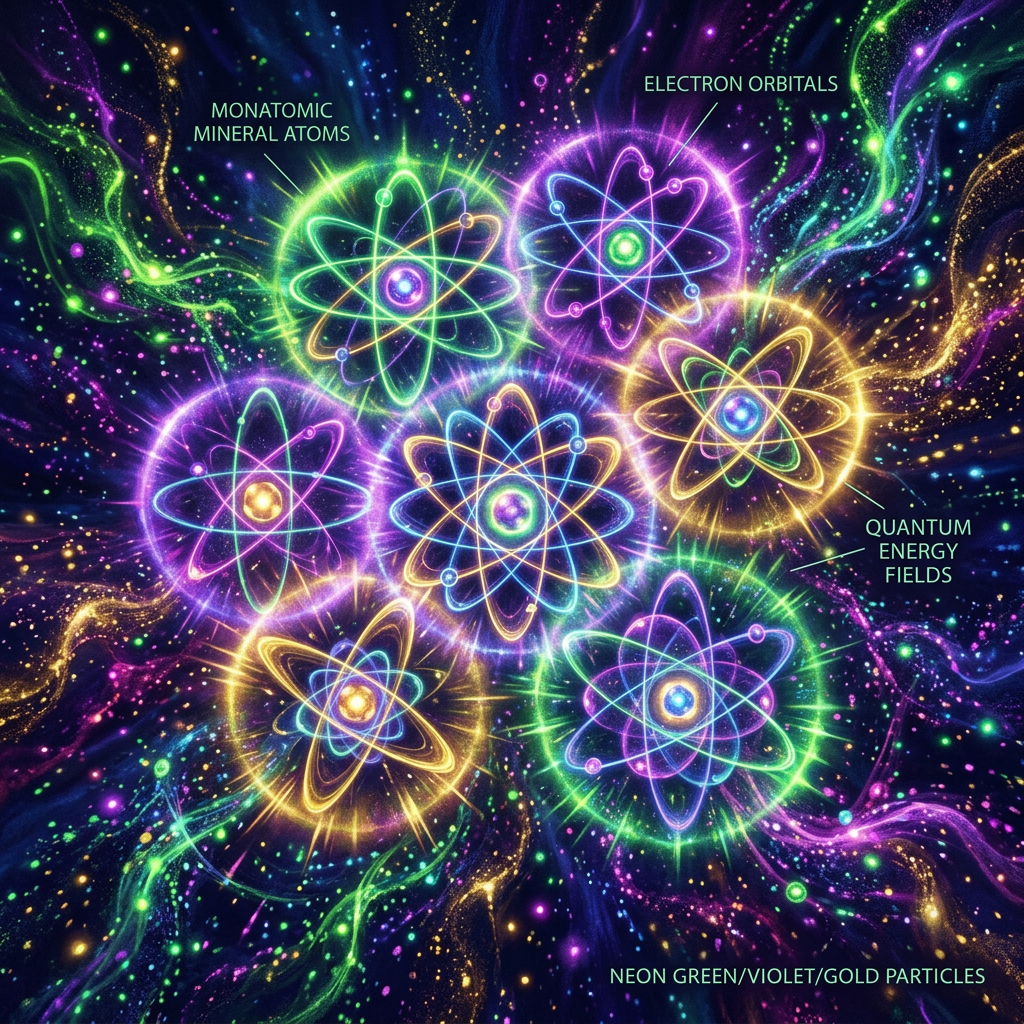
"M-state" is a term coined by David Hudson to describe a unique and exotic state of matter that certain elements are believed to be able to enter. It is the fundamental "what" of Ormus.
Here is a detailed breakdown.
The "M" in M-State: A Triple Meaning
The "M" is shorthand for several concepts that all describe the same thing:
- Monatomic (The Primary Meaning): This is the core scientific claim. It refers to atoms that exist individually, not locked together in a metallic grid.
- Mfkzt / Manna: It's a direct nod to the ancient mystery, suggesting that this is the same substance as the sacred Egyptian Mfkzt and the biblical Manna.
- Meissner Effect: It hints at the claimed superconductive properties of the material, as the Meissner effect is one of the definitive signs of a true superconductor.
The Core Concept: A Different Atomic Arrangement
The easiest way to understand M-state is to contrast it with the normal metallic state we are all familiar with.
| Feature | Normal Metallic State (e.g., a Gold Ring) | M-State (e.g., White Powder Gold) |
|---|---|---|
| Atomic Structure | Atoms are tightly packed in a rigid, crystalline lattice. They share electrons. | Atoms are individual (monatomic) or exist in small, two-atom clusters (diatomic). They do not share electrons in a metallic bond. |
| Appearance | Shiny, metallic, colored (e.g., yellow for gold). | A fine, ethereal, white powder that looks like flour. |
| Physical Properties | Dense, heavy, conductive, strong. | Very lightweight, non-conductive (in the normal sense), delicate powder. |
| Bio-availability | Chemically inert, non-reactive, and toxic if ingested in this form. | Chemically unique, bio-available, and able to be absorbed by living systems. |
| Quantum State | Normal state of matter. | Believed to be a "high-spin" state, leading to room-temperature superconductivity. |
The "High-Spin" Theory: The Physics Behind the M-State
So, what causes an atom to enter this strange state? David Hudson's theory proposed a specific quantum mechanical change:
- Deformed Nucleus: Through a specific process, the nucleus of the atom is theorized to become deformed, moving from a spherical shape to a more elongated, prolate shape.
- Enters "High-Spin": This deformation causes the nucleus to begin spinning much more rapidly, entering a "high-spin" state.
- Electron Pairing: This high-spin state dramatically changes the behavior of the electrons orbiting the nucleus. It causes them to form stable pairs known as Cooper pairs.
- Superconductivity: The formation of Cooper pairs is the scientifically understood mechanism for conventional, low-temperature superconductivity. Therefore, the theory claims that an M-state atom is, by its very nature, a single-atom room-temperature superconductor.
Which Elements Can Form M-states?
The theory posits that a specific group of elements, known as the "platinum group" and other "precious" metals, are uniquely suited to form the M-state. This is because their electron shells have specific properties that allow for this high-spin configuration.
The primary M-state elements are:
- Gold (Au)
- Silver (Ag)
-
The Platinum Group:
- Platinum (Pt)
- Rhodium (Rh)
- Iridium (Ir)
- Ruthenium (Ru)
- Palladium (Pd)
- Osmium (Os)
It is also believed that many other elements, including the magnesium and calcium abundant in sea salt, can also exist in a natural M-state form, which is what constitutes the bulk of foundational, salt-based Ormus.
In summary: M-state elements are the exotic, non-metallic, monatomic, high-spin, superconducting counterparts to the familiar metals we see on the periodic table. They are believed to be the fundamental "active ingredient" of Ormus, the substance that provides the "coxswain" effect on our biology.
0 comments