
🎧 Listen to this article (full narration)
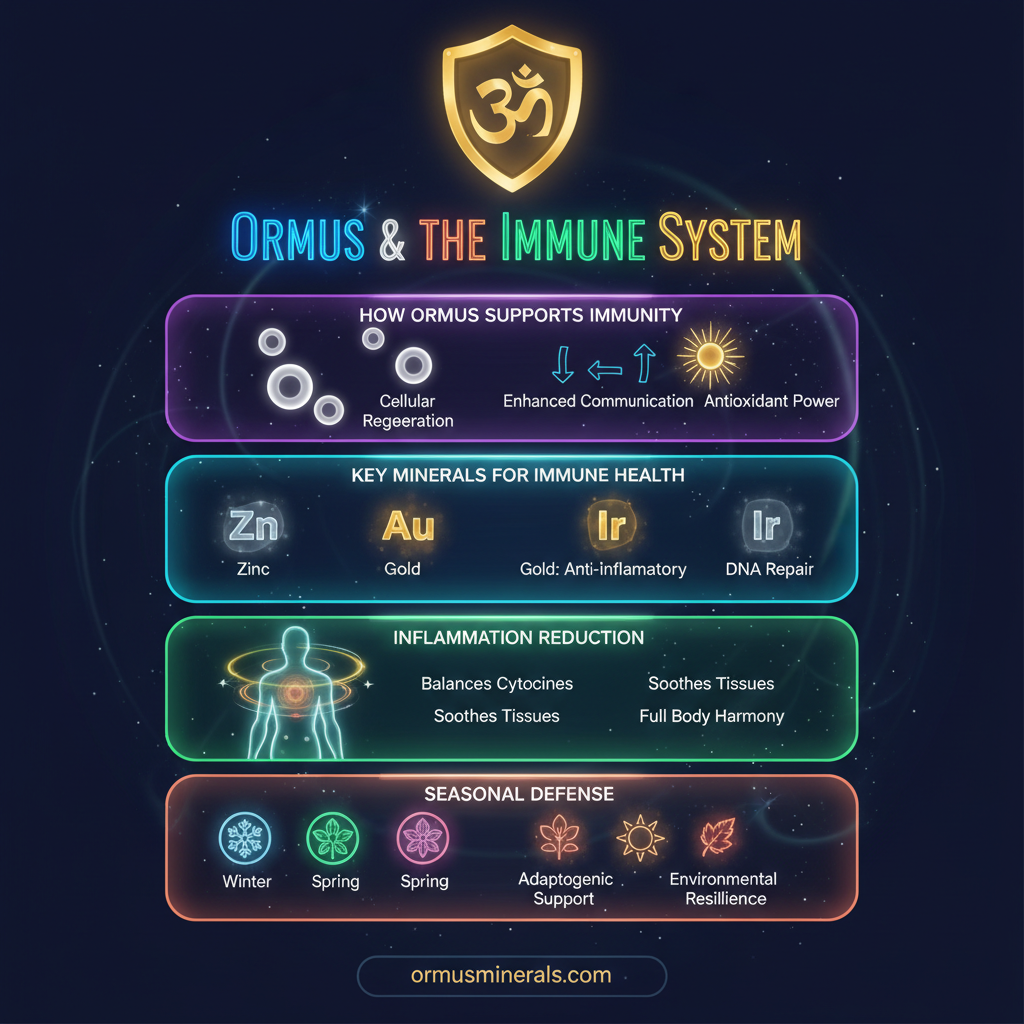
Ormus Minerals and Immune Function as You Age
As the years pass, the immune system undergoes a gradual process of change — a phenomenon researchers call immunosenescence. The immune response becomes slower, less precise, and more prone to chronic low-grade inflammation. This is why older adults are more susceptible to infections, slower to recover, and at greater risk from immune-related conditions.
Supporting immune function as you age is one of the most important things you can do for long-term health. Ormus minerals — derived from nutrient-dense ocean sources — offer a natural, mineral-based approach to supporting the cellular processes that keep the immune system functioning well.
Why the Immune System Weakens with Age
The aging immune system produces fewer new immune cells, has a reduced capacity to recognize novel threats, and relies increasingly on a pool of older, less effective cells. At the same time, chronic inflammation — often called "inflammaging" — becomes a background hum that taxes immune resources and contributes to a wide range of age-related diseases.
Much of this decline is linked to nutritional deficiencies. Zinc, selenium, magnesium, and copper are all essential for immune function — and all are commonly depleted in older adults due to reduced absorption, dietary gaps, and increased metabolic demand.
Key Minerals in Ormus That Support Immunity
Zinc is perhaps the most critical mineral for immune health. It is required for the development and function of immune cells including T-cells, B-cells, and natural killer cells. Zinc deficiency — extremely common in older adults — directly impairs immune response and increases susceptibility to infection.
Selenium supports the production of glutathione peroxidase, a powerful antioxidant enzyme that protects immune cells from oxidative damage during an active immune response. Adequate selenium levels are associated with stronger immunity and better outcomes from infections.
Magnesium regulates hundreds of enzymatic reactions involved in immune signaling and inflammation control. Low magnesium is associated with elevated inflammatory markers and impaired immune function.
Copper plays a key role in the function of neutrophils and macrophages — the frontline cells that identify and destroy pathogens. Ocean-derived Ormus minerals provide these elements in naturally balanced, bioavailable ratios.
Ormus and Cellular Energy for Immune Function
Immune cells are among the most energetically demanding cells in the body. An active immune response requires enormous amounts of cellular energy — primarily produced by the mitochondria. As mitochondrial function declines with age, immune cells have less fuel to do their job effectively.
Ormus minerals are believed to support mitochondrial efficiency and cellular energy production. By improving the energetic foundation of immune cells, Ormus may help maintain a more vigorous and responsive immune system well into older age.
Reducing Inflammaging with Mineral Support
Chronic low-grade inflammation is both a cause and a consequence of immune aging. The antioxidant minerals in Ormus — including selenium, zinc, and manganese — help neutralize the free radicals that drive inflammatory signaling. Regular supplementation may help reduce the background inflammatory burden and allow the immune system to respond more appropriately to real threats.
Building Immune Resilience Naturally
Ormus minerals work best as part of a comprehensive approach to immune health — complementing a whole-food diet, adequate sleep, regular movement, and stress management. But for many people, especially those over 50, mineral repletion through a bioavailable ocean-derived source like Ormus can make a meaningful difference in immune resilience and overall vitality.
Consistency matters. Most users report noticeable improvements in energy, recovery, and general wellbeing after 4 to 8 weeks of regular use as mineral levels stabilize and cellular function improves.
✦ Ready to experience it? ✦
Start with our most popular formula
Premium Dead Sea Ormus — crafted from Atlantic Ocean water, Dead Sea salt and Himalayan sole.
🚚 Free US shipping on orders over $50 · Use code ORMUS10 for 10% off your first order
0 comments