Energy & Vitality
The Science of Cellular Energy: Why You're Tired Even When You Sleep Enough
Sleep isn't the only thing your energy depends on.
You slept eight hours. You had your coffee. You've been eating reasonably well. So why do you feel like you're running on 40%?
If this sounds familiar, you're not alone — and it's not in your head. The answer lies not in how many hours you slept, but in what's happening inside your cells when you wake up.
How Your Body Actually Makes Energy
Energy doesn't come from coffee. It comes from mitochondria — the tiny organelles inside your cells that convert the food you eat and the oxygen you breathe into ATP (adenosine triphosphate), the molecule your body actually runs on.
This process — called cellular respiration — is extraordinarily complex and depends on a precise sequence of biochemical reactions. And almost every step of that sequence requires minerals as co-factors.
Magnesium is required for ATP synthesis itself — without it, the energy molecule can't even be produced. B-vitamin metabolism (which powers the Krebs cycle) depends on manganese and zinc. Iron is essential for the electron transport chain. Selenium protects mitochondria from oxidative damage. The list goes on.
In short: no minerals, no energy. It really is that direct.
Why Modern Life Depletes Your Mineral Reserves
Three forces are working against your mineral levels constantly:
Depleted food supply: Modern farming has stripped trace minerals from topsoil. Studies show that vegetables today contain up to 40% fewer minerals than the same vegetables grown 50 years ago.
Chronic stress: When cortisol is chronically elevated, your body burns through magnesium at an accelerated rate. The more stressed you are, the more minerals you lose — and the more tired you become.
Poor absorption: Even if you're eating mineral-rich foods, gut inflammation, processed food consumption, and certain medications can impair mineral absorption significantly.
The result is that most adults are running a chronic mineral deficit without knowing it. Sleep helps — but it can't solve a biochemical problem.
Signs Your Fatigue Is Mineral-Related
You feel tired even after a full night's sleep
Your energy crashes in the afternoon regardless of what you eat
You feel mentally foggy or slow to process information
Exercise leaves you more depleted than it used to
You feel more anxious or reactive than your circumstances warrant
Muscle cramps or restless legs at night
You need more caffeine than you used to just to feel baseline normal
How Ormus Minerals Support Cellular Energy
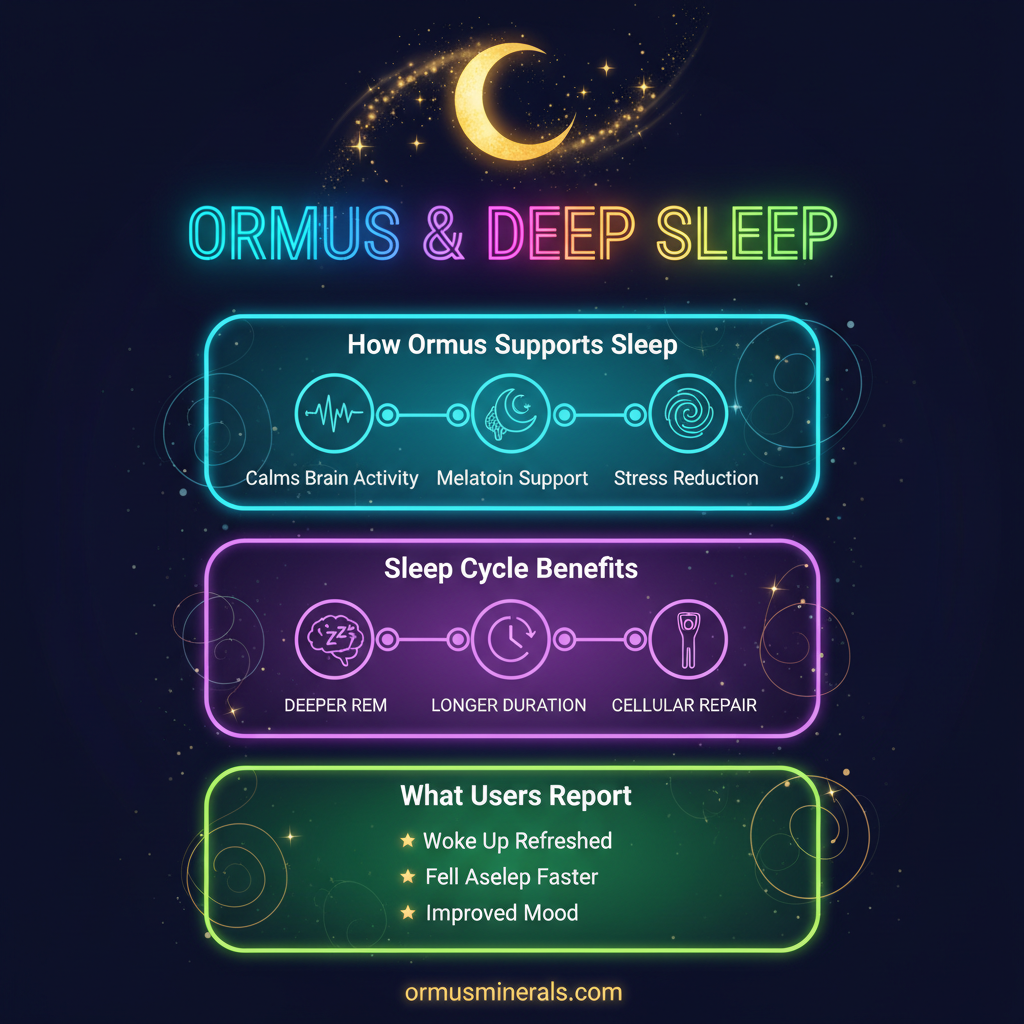
Ormus — ocean-sourced monatomic minerals in a highly bioavailable m-state form — delivers the full spectrum of trace elements your mitochondria need to produce energy efficiently. Unlike standard mineral supplements, which are often poorly absorbed, Ormus minerals are thought to cross cellular membranes more readily due to their unique atomic configuration.
Users
0 comments