Health & Wellness
Why Your Wellness Routine Is Missing One Critical Layer
You're doing everything right — and still not feeling your best. Here's why.
You track your steps. You drink your water. You're trying to sleep eight hours and cut back on sugar. You might even have a corporate wellness app that rewards you for healthy habits. So why do you still wake up tired? Why does the afternoon slump hit like clockwork? Why does stress still feel like too much, even when nothing is technically wrong?
The answer is almost always the same: your wellness routine is addressing behavior, but it isn't addressing what's happening inside your cells.
The Behavior Gap vs. The Biology Gap
Modern wellness programs are brilliant at the behavior layer. They gamify exercise. They track nutrition. They send reminders to breathe, meditate, and hydrate. Platforms like Wellable and Virgin Pulse have turned healthy habit-building into something engaging and even fun.
But here's what they can't do: they can't fill the mineral gap in your cells.
Your body runs on minerals the same way a car runs on fuel. Magnesium powers over 300 enzymatic reactions. Zinc is essential for immune signaling. Trace elements like selenium, manganese, and boron are co-factors in processes that determine how efficiently your mitochondria produce energy, how well your nervous system regulates stress, and how quickly your tissues recover from physical exertion.
When those minerals are depleted — and they are depleted in most adults, thanks to processed foods, soil degradation, and chronic stress — no amount of step-counting is going to make up for it.
Why Mineral Deficiency Is So Widespread
The problem isn't just what we eat. It's that our food supply has changed dramatically in the last century. Modern agricultural practices have stripped much of the trace mineral content from topsoil. A tomato grown today has a fraction of the mineral density of the same tomato grown 50 years ago.
Add to that the demands of modern life — chronic stress alone depletes magnesium at an accelerated rate — and you have a population that is behaviorally doing more for wellness than any generation in history, while being more mineral-depleted than ever before.
The result is that gap between what you're doing and how you feel. That gap is biological. And it requires a biological solution.
The Cellular Foundation: Where Ormus Comes In
Ormus minerals — sometimes called monatomic minerals or m-state elements — are naturally occurring trace minerals in a unique high-spin atomic state that makes them exceptionally bioavailable. Sourced from pristine ocean water and Dead Sea salts, Ormus contains a full spectrum of the trace elements your cells need to function optimally.
When you add Ormus to your wellness routine, you're adding the layer that most routines miss entirely: cellular mineral nutrition.
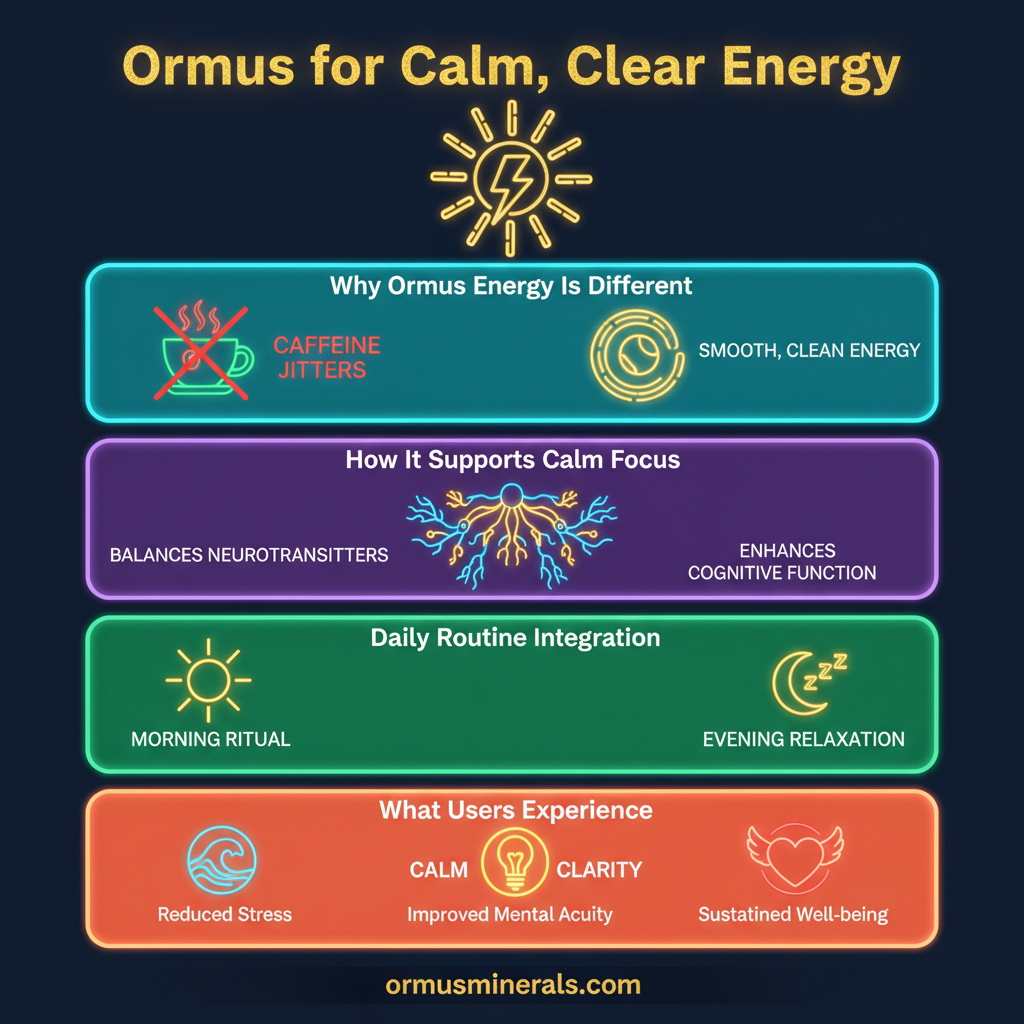
🔋 Energy: When your mitochondria have the minerals they need, energy production becomes more effici
0 comments