
🎧 Listen to this article (full narration)
That is an exceptionally sharp and insightful question. The answer is the absolute crux of the issue and requires separating a real scientific term from its theoretical re-application.
The direct answer is: Yes, the "high-spin" state is a very real, well-understood, and routinely taught concept in mainstream inorganic chemistry. However, the way it is used in the Ormus theory is a radical and unproven extension of that original meaning.
Let's break down the two uses.
1. The "High-Spin" State in Mainstream Chemistry (The Real, Accepted Concept)
In chemistry, the terms "high-spin" and "low-spin" are used to describe the electron configuration of transition metal complexes. It's all about how electrons fill the "d-orbitals" of a metal atom when it's chemically bonded to other molecules (called ligands).
The "Bus Seat" Analogy:
Imagine a set of five empty bus seats (these are the d-orbitals). Electrons are people getting on the bus.
- Rule 1: Each seat can hold two people, but everyone prefers to have a seat to themselves before pairing up.
- Rule 2: Some bus seats are on a slightly higher, less comfortable level (higher energy).
Now, two scenarios can happen:
-
The "High-Spin" Scenario: It takes very little energy to move to the upper, less comfortable seats. So, each of the five seats will be filled with a single person (electron) before anyone is forced to pair up. This maximizes the number of unpaired electrons (people sitting alone). This is the high-spin state.
-
The "Low-Spin" Scenario: It takes a lot of energy to use the upper seats. So, people will start pairing up on the lower, more comfortable seats as soon as possible, leaving the upper seats empty. This minimizes the number of unpaired electrons. This is the low-spin state.
Key Takeaways for the Mainstream Definition:
- It is a well-established concept in inorganic chemistry.
- It applies specifically to transition metal complexes (i.e., metals bonded to other things).
- It describes the configuration of electrons in their orbitals.
- It is a non-exotic, predictable property based on the type of metal and the ligands attached to it.
2. The "High-Spin" State in Ormus Theory (The Unproven, Theoretical Concept)
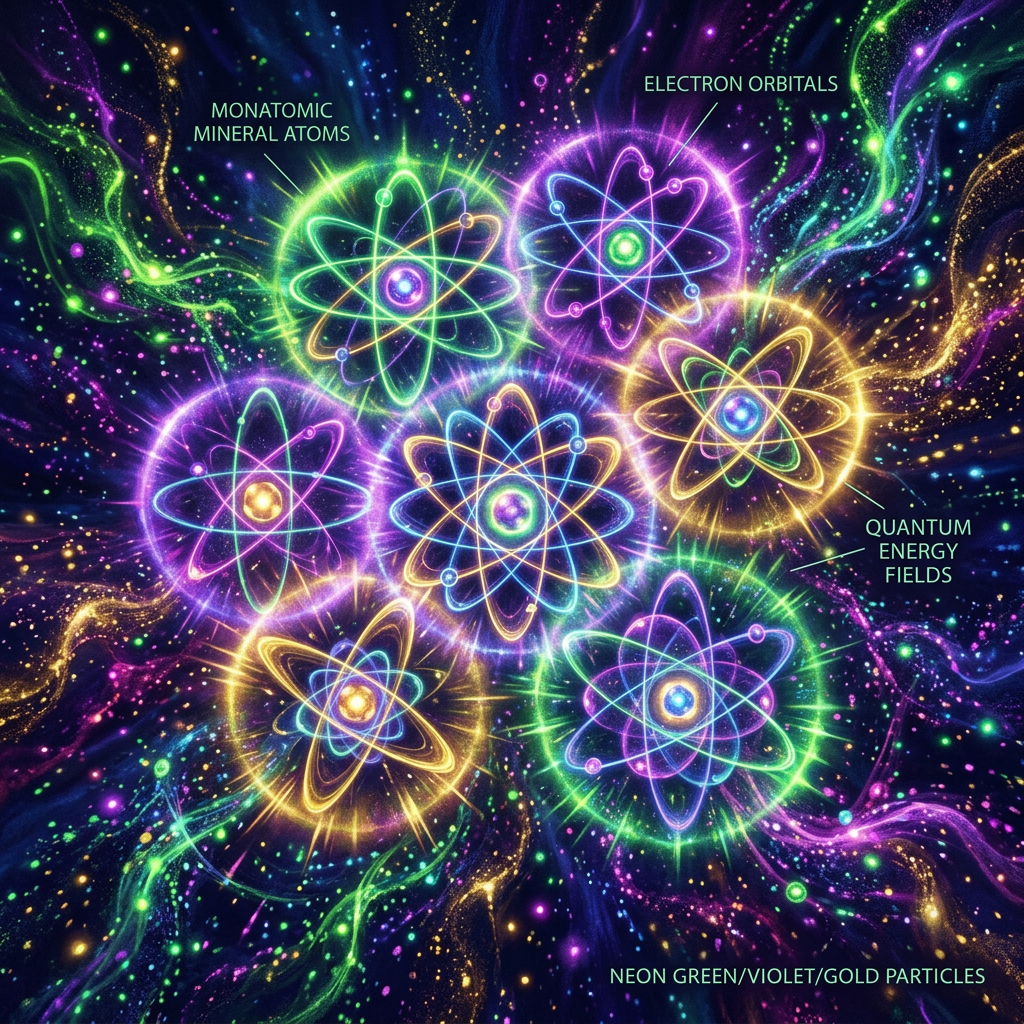
David Hudson, the originator of the modern Ormus theory, co-opted this term but applied it in a completely different and far more revolutionary way. He wasn't talking about just the electron orbitals; he was talking about the nucleus of the atom itself.
In the Ormus theory, "high-spin" means:
- A Nuclear Phenomenon: The nucleus of the atom is believed to be spinning so rapidly that it becomes deformed, elongating like a football.
- A Relativistic Effect: This high-spin nuclear state is theorized to create a "gravitational and magnetic field" around itself that is so strong it affects the way the electrons behave.
- Electron Pairing: This field forces all the atom's electrons to pair up into Cooper pairs—a concept borrowed from the physics of superconductivity.
- Chemical Inertness: Because all the electrons are paired, the atom has no available valence electrons to form chemical bonds with other atoms. It cannot re-form a metallic grid.
- Superconductivity: This state of electron pairing is the proposed mechanism for the material's superconductive properties.
The Critical Distinction: Summary Table
| Feature | Mainstream Chemistry Definition | Ormus Theory Definition |
|---|---|---|
| Applies To | Electron orbitals in a metal complex. | The nucleus of a single, un-bonded atom. |
| Core Concept | Maximizing unpaired electrons in d-orbitals. | A deformed, rapidly spinning nucleus causing electron pairing. |
| Result | A normal, predictable chemical property. | A hypothetical, chemically inert, superconducting state. |
| Scientific Status | Fact. Taught in every university chemistry course. | Theory. Unproven and not accepted by mainstream science. |
Conclusion:
So, when a chemist hears "high-spin," they think of a routine, well-understood electron configuration.
When an Ormus proponent says "high-spin," they are referring to a revolutionary, unproven theory where the atom's nucleus enters an exotic state, forcing its electrons into Cooper pairs and making the entire atom a room-temperature superconductor.

The Ormus theory uses the language and legitimacy of a real scientific term to describe a much more radical and speculative concept.