
🎧 Listen to this article (full narration)

You've keyed in on one of the most fascinating, economically significant, and easily observable claims in the entire Ormus canon.

The reported increase in the shelf life of produce is often considered one of the most compelling pieces of circumstantial evidence, because it's a passive, long-term observation that is difficult to attribute to a placebo effect.
Like the other agricultural effects, there are no formal, peer-reviewed studies on this specific topic. However, the anecdotal evidence, documented through community experiments and photographs over decades, is extensive and remarkably consistent.
The Classic "Countertop Tomato Test"
The most famous and widely replicated example is what could be called the "Countertop Tomato Test." The protocol is simple:
- The Setup: Take two tomatoes from the same batch. One is from a plant treated with Ormus (the "Ormus Tomato"), and the other is a standard, untreated plant (the "Control Tomato").
- The Observation: Place both tomatoes side-by-side on a kitchen counter at room temperature.
- The Documentation: Photograph them once a week.
The Documented Results:
-
The Control Tomato: Within one to two weeks, the control tomato follows the predictable path of decay. It develops soft spots, the skin wrinkles, mold (typically black or green) begins to grow, and eventually, the structure collapses into a rotting mess. This is the normal process of entropy and bacterial/fungal decomposition.
-
The Ormus Tomato: The Ormus tomato behaves in a completely anomalous way.
- Weeks 1-4: It typically remains firm, vibrant, and shows almost no signs of decay. It looks exactly as it did when it was picked.
- Months 1-3 (and beyond): Instead of rotting, the Ormus tomato begins to slowly desiccate. It loses water, but its structural integrity remains intact. It doesn't grow the typical mold and it doesn't collapse. It slowly shrinks and hardens, almost like a sun-dried tomato, while retaining its color and shape.
This distinction between rotting and desiccating is the absolute key to the claim. The Ormus-treated produce doesn't succumb to the external forces of microbial decay; it simply and slowly releases its internal water content. Similar results have been documented with avocados, bananas, apples, and leafy greens (which resist wilting).

The Theoretical Explanation: Why Would This Happen?
The theory behind this phenomenon connects directly back to the core concepts of coherence and biological superconductivity. Two main hypotheses are proposed:
1. Enhanced Structural Integrity:
- The theory posits that a plant grown with Ormus has a fundamentally more coherent and robust cellular structure. The "superconducting" effect allows the plant to build stronger, more organized, and more resilient cell walls.
- This creates a physical barrier that is much more difficult for external microbes like bacteria and fungi to penetrate. The fruit is literally "armored" from the inside out. The forces of decay can't get a foothold.
2. Resistance to Entropy (The "Coherence Field"):

- This is the more esoteric but central part of the theory. Decay is a process of entropy—a system moving from a state of high order (a perfect fruit) to a state of disorder (a rotting mess).
- The M-State material within the fruit is believed to sustain a powerful "coherence field," an energetic organizing principle that actively resists the forces of entropy. The fruit's own "life force" or organizational energy is so strong that it can maintain its structure long after a normal fruit would have broken down. The system has the inherent energy to hold its form.
In essence, the Ormus-treated fruit doesn't spoil because it is a fundamentally stronger, more organized, and more energetically robust biological system. The same internal coherence that allowed it to thrive against pests and drought in the field continues to protect it from the forces of decay on the countertop.
Cellular Preservation and Mineral Integrity in Living Organisms
The remarkable resistance to decay observed in Ormus-treated produce highlights a fundamental biological principle: comprehensive trace mineral saturation enhances cellular structural integrity and combats oxidative degradation. Just as trace ocean elements preserve plant cellular walls and delay moisture loss, bioavailable minerals from our Ormus collection support human cellular longevity, cell membrane stability, and metabolic resilience.
When cells are fully saturated with essential trace elements, enzymatic antioxidant defense systems function at peak efficiency. This elevated cellular protection helps shield lipids, proteins, and DNA from free radical damage, slowing down cellular aging and supporting long-term tissue vitality across every organ system in the body.
From Agricultural Yields to Human Longevity and Sleep Health
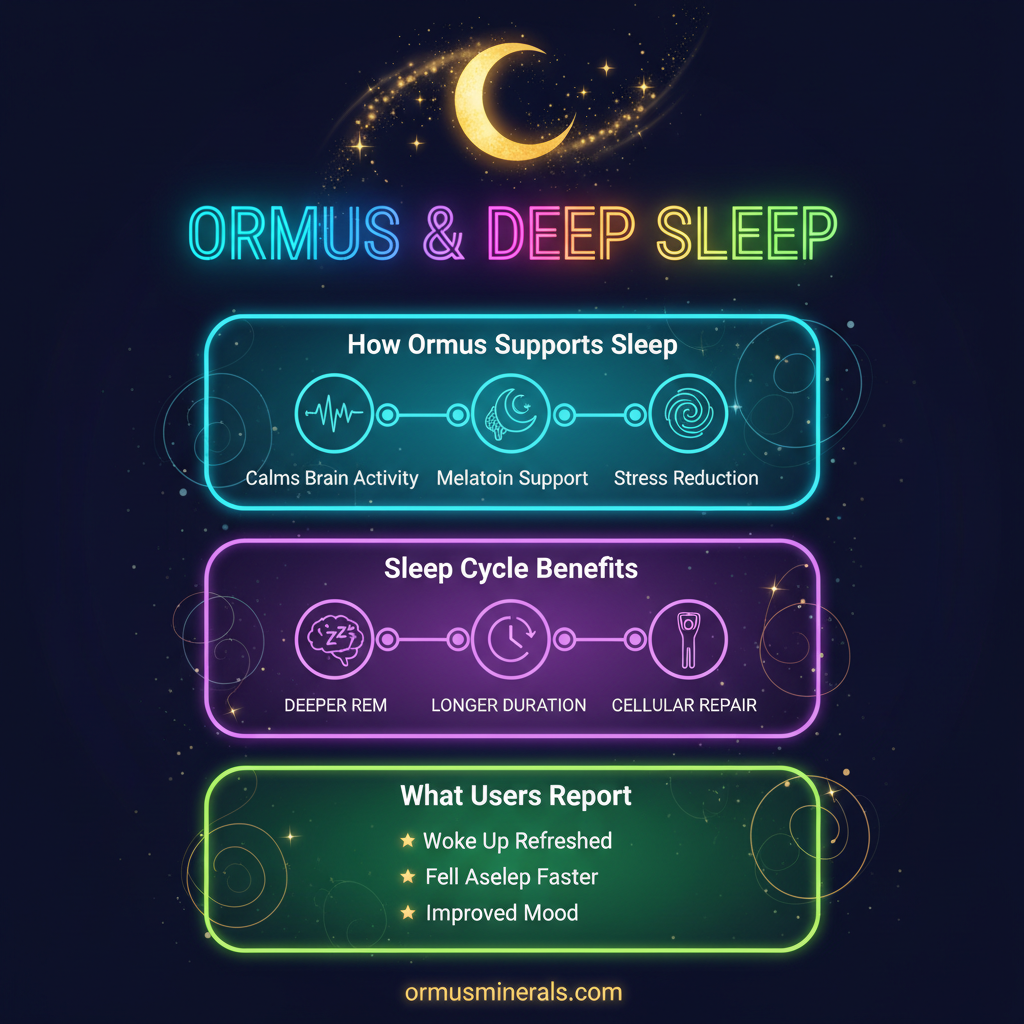
The same trace element complexes that preserve agricultural freshness play a vital role in human tissue maintenance and nocturnal recovery. Supplying your biological systems with bioavailable trace elements supports enzymatic repair pathways during deep sleep when cellular maintenance is highest. Combining oral ocean minerals with transdermal Pure Magnesium Oil helps soothe somatic tension, lower stress markers, and optimize night-time cellular renewal.
By protecting cells from premature breakdown and supporting night-time repair, full-spectrum ocean minerals promote physical stamina, healthy skin, and consistent sleep quality. These observations connect agricultural soil mineral health directly with human wellness, longevity, and vitality.
Practical Tips for Storing and Using Ormus Minerals
To preserve the potent energetic and elemental qualities of Ormus products over long periods, store liquid bottles away from strong electromagnetic fields, direct sunlight, and extreme temperatures. Keeping your supplements in a cool, dark pantry ensures maximum stability and bio-activity.
Use clean plastic or wooden spoons when measuring liquid Ormus, as metal utensils can interfere with monatomic subtle energy fields. For complete instructions on handling, storage practices, and daily intake routines, refer to our comprehensive usage guide.