
🎧 Listen to this article (full narration)
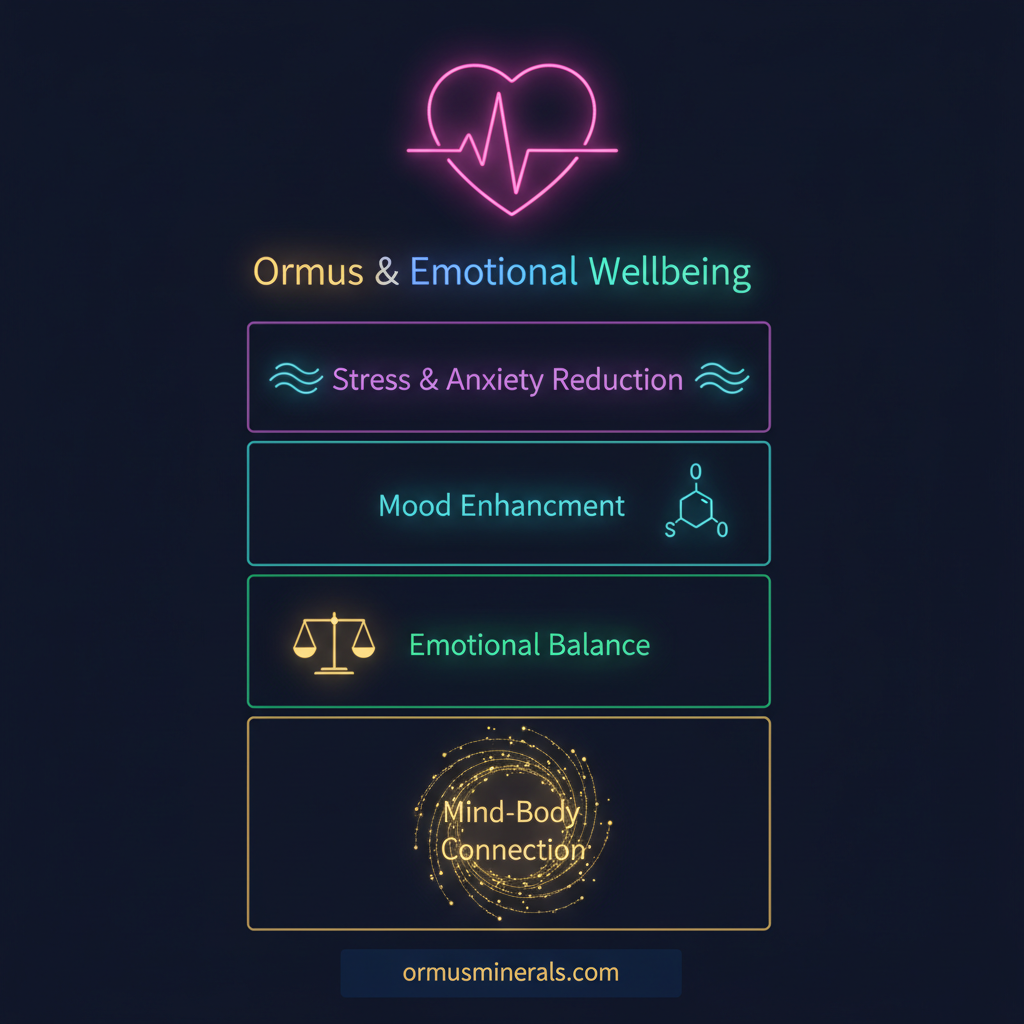

1. Ormus for Mood & Emotional Balance
Life today can feel like an emotional rollercoaster. Many people are juggling work, family, finances, health concerns, and an endless stream of information. It’s no surprise that mood swings, irritability, and emotional fatigue have become so common. In that landscape, people are increasingly searching for gentle, natural ways to support emotional balance. That’s where Ormus often comes into the conversation.

Ormus, sometimes called “ORMEs” or “m‑state minerals,” is believed to be a special state of minerals with unique energetic properties. While Ormus is not a pharmaceutical or a quick‑fix mood drug, many users describe it as a subtle yet meaningful support for their emotional state. They often speak about feeling more “like themselves,” less reactive, and better able to move through life with a calm inner center.
At its core, emotional balance isn’t about never feeling sad, angry, or fearful again. It’s about having the resilience to feel those emotions without being overwhelmed or thrown off course. Ormus users frequently report that it helps create a little more space between what happens and how they respond. Instead of snapping, shutting down, or spiraling, they feel a greater ability to pause, breathe, and choose a more constructive response.
This sense of inner space can be especially valuable for people who feel caught in constant highs and lows. When your mood swings, it can affect everything: your relationships, your work performance, your physical health, and even the way you talk to yourself. Some Ormus users find that, over time, they experience fewer sharp swings and more of a gentle, stable emotional baseline. They may still have hard days, but those days feel more manageable.
Another aspect that often comes up in Ormus stories is the idea of “emotional clarity.” Many people live with buried emotions, unprocessed stress, and old memories that quietly shape their daily reactions. Some users feel that Ormus encourages these deeper layers to surface gently, bringing more awareness to what they are carrying. As they become more conscious of these patterns, they can make new choices and gradually release what no longer serves them.
For people who are highly sensitive—emotionally, energetically, or spiritually—this can be both powerful and delicate. A common approach is to start with a small amount of Ormus and increase gradually, noticing the shifts in mood and emotional tone. Some report that their inner critic softens, they feel more self‑accepting, and they can face their emotions with more compassion instead of judgment.
It’s important to say clearly: Ormus is not a replacement for therapy, medication, or professional support when those are needed. Emotional and mental health challenges can be complex, and in many cases a holistic approach is best. That might include counseling, good nutrition, sleep, movement, and spiritual practice—alongside gentle tools like Ormus that support the whole system. Many people find that Ormus fits naturally into this broader self‑care picture.
Daily rituals can make a big difference in how effective a supplement or energetic tool feels. Some Ormus users choose to take their serving at the beginning of the day as part of a grounding routine. They might sit quietly, set an intention for emotional balance, and take Ormus with a glass of water. This intentional approach can deepen the experience and reinforce the idea that emotional health is worth prioritizing.
Others like to pair Ormus with journaling, breathwork, or meditation. When big emotions arise, they may take a moment to check in with themselves rather than numbing out or rushing past. Over time, this can build a new relationship with feelings—seeing them as messages rather than problems to be suppressed. For many, Ormus supports that shift by helping them stay more present and less overwhelmed as those feelings move through.
It’s also common for people around Ormus users to notice changes. Friends or family might comment that a person seems calmer, less edgy, or more patient. These external reflections can be helpful feedback that inner shifts are actually translating into behavior and relational patterns.
As with any wellness tool, individual experiences with Ormus vary. Some people notice changes quickly; others find that the effects build more slowly over weeks of consistent use. Starting slowly, paying attention, and allowing time for your system to adjust is key. Emotional balance is not a destination you arrive at once and for all, but an ongoing process of tending to your inner world.
For those who feel called to more natural, integrative ways of stabilizing mood and emotional energy, Ormus can be an intriguing companion. It is not about shutting emotions down, but about helping you move through life with a steadier heart, a clearer head, and a deeper sense of being anchored in who you really are.
2. Ormus for Stress Relief & Resilience
Stress is woven into modern life. Emails, deadlines, financial pressure, family responsibilities, and global uncertainty all contribute to a background hum of tension that rarely fully quiets. While we can’t eliminate stress entirely, we can change how our bodies and minds respond to it. Many people turn to Ormus as part of that shift—from simply enduring stress to becoming more resilient in the face of it.
Resilience is your capacity to bend without breaking. It’s the ability to feel pressure, meet challenges, and still return to a place of balance. Ormus users often report that when taken consistently, it helps them feel less frayed at the edges and more able to handle what life brings. They describe being less “triggered,” more grounded, and quicker to regain their center after a tough moment.
On a practical level, chronic stress affects sleep, digestion, hormones, immunity, mood, and even the way your brain processes information. It can lead to racing thoughts, irritability, fatigue, and difficulty focusing. While Ormus is not a medical treatment for stress‑related conditions, many people feel that it gently supports the energetic systems that underlie their stress response. They talk about feeling a quieter mind and a softer nervous system tone.
One of the ways Ormus appears to help is by supporting a sense of inner spaciousness. When you feel crowded on the inside—by worries, fears, and constant mental chatter—every small problem can feel huge. Ormus users sometimes notice that their internal “volume” drops a notch. Thoughts are still there, but they don’t dominate in the same way. This subtle shift can make it easier to respond thoughtfully instead of reacting from a place of panic.
Pairing Ormus with daily stress‑relief practices can deepen its impact. A simple ritual might look like this: take your Ormus in the morning, then spend five to ten minutes on slow breathing, stretching, or quiet reflection. As you do, you might ask, “What do I need today to stay centered?” Over time, this signals to your body that you are safe, supported, and allowed to relax, even if the outer circumstances haven’t changed.
Some people use Ormus as part of a midday reset. During a long workday, for example, they might take a small serving, step away from screens, and stand outside or near a window. Taking a few moments to reconnect with their body and the present moment often helps them return to tasks with more clarity and less pressure.
Resilience also has a physical component. When you are run down, under‑rested, and undernourished, stress hits harder. Ormus users frequently pair it with better hydration, more mineral‑rich foods, gentle movement, and improved sleep hygiene. In that context, Ormus feels like an amplifier for healthy habits, helping the whole system move toward balance.
It’s important to have realistic expectations. Ormus is not a magic button that removes all stress from your life, nor does it replace mental health support when needed. Instead, think of it as a subtle ally that can help you strengthen your inner foundation. With a more stable energetic base, you may find it easier to make better choices: saying no when necessary, setting boundaries, and prioritizing what truly matters.
Stories from Ormus users often include phrases like “I feel more like myself again,” “I can handle things better,” or “I don’t get knocked off course as easily.” These are signs of shifting from a stress‑dominated state into a more resilient one. When your baseline changes in this way, you respond differently to everything—from unexpected bills to difficult conversations.
Building resilience is an ongoing practice. It includes rest, nutrition, movement, connection, purpose, and spiritual or inner work. Ormus can be woven into this larger tapestry as a daily reminder to choose calm over chaos, centeredness over reactivity. Taken consistently and paired with self‑supportive choices, it may help you move through life with a calmer nervous system, a clearer perspective, and a stronger sense that you can meet whatever comes your way.
3. Ormus and Immunity
A strong immune system is one of your greatest allies in staying well. It’s working constantly behind the scenes—responding to the environment, managing everyday exposures, and helping your body maintain balance. In times of increased health concern, many people look for ways to support their immune system naturally. Ormus has become part of that conversation for some, as a subtle tool in a broader wellness approach.
Ormus is not an immune drug or a cure for illness. Instead, users often describe it as an energetic support that helps their body function more harmoniously. When the body is in a more balanced state, the immune system may be better able to do what it’s designed to do. People who take Ormus regularly often pair it with other fundamental immune‑supporting habits: sleep, whole foods, hydration, movement, and stress reduction.
Immune health is interconnected with nearly everything you do. Chronic stress, poor sleep, nutrient‑poor diets, and a constant stream of stimulants can all wear down your defenses. Some Ormus users notice that as they take it, they naturally feel drawn toward better choices. They might drink more water, choose calmer evenings, or commit to nourishing meals. Whether this is purely psychological or also energetic, the result is the same: a lifestyle more aligned with immunity.
Many people believe that Ormus supports the body’s own intelligence rather than forcing a particular response. From that perspective, a more orderly internal environment allows the immune system to prioritize and respond more effectively. Some users describe fewer “crashes,” quicker recovery from feeling run down, or a sense of staying more resilient during times when others around them are getting sick. These are personal experiences, not guarantees.
For those facing frequent stress or irregular schedules, this can feel especially important. Travel, shift work, parenting, and caring for others can all strain immunity. Taking Ormus as part of a daily self‑care ritual may send a clear signal to your body that its well‑being matters. That inner message alone can influence how you rest, eat, and move—which are key factors in immune strength.
Ormus is often combined with other supportive tools such as vitamin C, zinc, herbal formulas, and mineral‑rich foods. People who feel drawn to energy‑based approaches may also include practices like grounding, breathwork, or gentle movement such as yoga. In that broader context, Ormus can feel like the “glue” that helps these efforts integrate, supporting both physical and subtle layers.
It’s also worth acknowledging that immune challenges can be complex. Some individuals live with chronic conditions, autoimmune issues, or long‑term health journeys. In these cases, Ormus should never replace medical guidance. Instead, it may serve as a personal ally that supports emotional stability, spiritual resilience, and a sense of inner strength while working alongside professional care.
Listening to your body is central. If you choose to use Ormus for immune support, starting with a modest amount and observing how you feel over several weeks is wise. Keep notes on your energy levels, mood, sleep, and general sense of well‑being. Over time, you may see patterns that help you understand how Ormus fits into your unique immune story.
Ultimately, supporting immunity is about building a lifestyle where your body feels supported rather than constantly depleted. Good food, fresh air, sunlight, movement, connection, and rest are foundational. Ormus can be another thread woven into that fabric—a subtle, energetic companion as you create a life where your immune system can do its best work.
4. Ormus for Grounding, Centering & Balance
In a world of constant notifications, rapid change, and information overload, feeling grounded and centered has become a rare experience. Many people move through their days feeling scattered, anxious, and disconnected from themselves. Ormus is increasingly used by those who want to reclaim a sense of inner stability and balance in the midst of outer chaos.
To be grounded is to feel rooted in your body and present in the moment. To be centered is to feel aligned with your own truth and values, not tossed around by every external demand. Balance emerges when your physical, emotional, mental, and spiritual aspects are working together instead of pulling in different directions. Ormus users often describe subtle shifts in all three areas.
One of the first changes some people notice with Ormus is a feeling of “landing” more fully in their body. Instead of living entirely in their head—planning, worrying, replaying—they begin to experience more sensations in the present: the feeling of their feet on the ground, the rhythm of their breath, the texture of everyday experiences. This embodied awareness is a core part of grounding.
For people who tend to be highly “in their head,” creative, or spiritually focused, grounding can be challenging. They may find themselves easily spaced out, forgetful, or detached from practical realities. Ormus, taken with intention, can support a more integrated state where spiritual or intuitive awareness is balanced with practical presence. Users often pair Ormus with grounding practices like walking barefoot on the earth, slow stretching, or spending time in nature.
Centering is about coming home to yourself. When you feel centered, you have access to your inner wisdom and can make choices from a place of alignment. Ormus users sometimes describe a clearer sense of what is truly right for them, even if it goes against external expectations. They feel less pulled by outside noise and more guided from within.
This can show up in simple ways: being able to say no without guilt, pausing before reacting to conflict, or noticing when a habit or relationship is no longer in alignment. With Ormus as part of their routine, some people feel they have more bandwidth to notice these inner signals and act on them, instead of ignoring them until they become crises.
Balance is not a static state; it’s a dynamic process of adjusting and readjusting. Life brings changing seasons—busy times, restful times, times of challenge, and times of ease. The goal is not to hold everything perfectly still, but to move through these rhythms without losing your center. Many Ormus users report that during hectic or emotionally intense periods, they can return to a balanced baseline more quickly.
Rituals can deepen this experience. For example, you might take Ormus in the morning, then place a hand on your heart and another on your lower belly, taking a few breaths while silently affirming, “I am grounded. I am centered. I am safe.” Repeating such a practice over time can reshape your nervous system’s baseline response to the world.
Evening rituals are also powerful. Taking a small serving of Ormus before winding down, then reflecting on the day—what felt in alignment, what felt off—can help you integrate experiences and release what you don’t want to carry into tomorrow. This simple act of review and reset supports ongoing balance.
It’s important to note that being grounded and centered doesn’t mean being numb or indifferent. You will still feel emotions and have challenges. The difference is that you are less likely to be swept away by them. You can feel deeply while remaining connected to your inner anchor.
For people who feel overwhelmed by global events, personal responsibilities, or spiritual sensitivity, Ormus can offer a subtle but meaningful shift. Combined with mindful choices and simple daily practices, it may help you quiet the noise, discover your center, and experience the kind of grounded, steady presence that turns everyday life into a more peaceful, intentional journey.
5. Ormus for Calm Energy, Focus & Burnout Support
Many people feel trapped between two unsatisfying states: wired and tired. Stimulants like caffeine and sugar can push you into a temporary burst of energy, followed by a crash that leaves you more depleted than before. Over time, this pattern can contribute to burnout—emotional exhaustion, lack of motivation, brain fog, and a sense of running on fumes. Ormus offers a different possibility: calm, steady energy that supports focus and long‑term resilience.
Users often describe the energy they feel from Ormus as “clean” or “clear.” Instead of a jolt, they experience a gentle lift that supports mental clarity and sustained attention. This can be especially helpful for people whose work or creative projects require deep focus, but who don’t want to rely on harsh stimulants or energy drinks.
Calm energy means you feel awake and engaged without being jittery or anxious. This state allows your nervous system to remain in a healthier range, where digestion, immunity, and cognitive function can operate more efficiently. Ormus users sometimes notice that they can work longer without feeling mentally “fried,” and that they recover more quickly after intense periods.
Focus is a precious resource in an age of distraction. Constant switching between tasks, notifications, and screens fragments attention and leaves many people feeling scattered. By supporting a clearer mental state, Ormus may help you stay with one thing at a time a little more easily. Some users pair Ormus with focused work blocks—setting a timer, turning off distractions, and working in concentrated bursts, followed by short breaks.
Burnout develops when your energy is continually drawn out faster than it is replenished. It’s not just about working hard; it’s about working hard without adequate rest, nourishment, meaning, or boundaries. While Ormus cannot fix a toxic work environment or deep life misalignment, it may provide extra support as you begin to make changes. Feeling a bit more resilient can make it easier to set boundaries, say no, and prioritize rest.
Many people use Ormus as part of a larger burnout‑recovery plan that includes improved sleep, time in nature, gentle exercise, and emotional support. In that broader context, Ormus can feel like an ally that helps stabilize your energy as you rebuild. Some users notice fewer afternoon crashes, more consistent motivation, and a greater capacity to follow through on tasks without feeling drained.
Morning routines are a powerful way to harness Ormus for energy and focus. You might take it with a glass of water, then spend a few minutes stretching or breathing before opening your phone or computer. Setting clear intentions for the day—such as your top three priorities—can align your energy and reduce the scattered feeling that fuels burnout.
It’s also helpful to listen for early warning signs of energy imbalance: irritability, brain fog, increased reliance on caffeine, or a feeling of dread at the start of the day. When these signals appear, some Ormus users choose to adjust: they might reduce stimulant intake, add restorative practices, or take a lighter schedule where possible. Ormus can support these shifts by offering a sense of inner steadiness as you recalibrate.
At its best, calm energy is not about doing more for the sake of productivity. It’s about having enough clear, stable energy to do what truly matters to you—and still have something left for your relationships, your creativity, and your inner life. Ormus can play a role in this vision by supporting mental clarity, gentle stamina, and resilience against the chronic depletion that leads to burnout.
Every person’s experience is unique, so approaching Ormus with curiosity and self‑observation is key. Start slowly, notice how your energy, focus, and mood change over time, and adjust your routine accordingly. In partnership with healthy habits and conscious life design, Ormus may help you move from surviving on adrenaline to thriving with calm, sustainable energy.
6. Ormus for Sleep & Deep Recovery
Rest is not a luxury; it is a biological necessity. Yet deep, restorative sleep has become rare for many people. Busy schedules, evening screen time, chronic stress, and racing thoughts all contribute to shallow sleep and frequent waking. Over time, lack of genuine rest erodes your physical health, mental clarity, and emotional stability. Ormus is increasingly used by people who want to support more natural relaxation and deeper nightly recovery.
Sleep is a complex process involving hormones, nervous system shifts, temperature changes, and brain‑wave patterns. Ormus is not a sedative or sleep medication, but many users report that it helps them relax more fully, quiet their minds, and drift into sleep more easily. Some also describe a feeling of being more restored upon waking, even if their total hours of sleep haven’t dramatically changed.
One reason Ormus may be helpful is its influence on overall balance. When your system is chronically stressed—stuck in “fight or flight”—it is harder for your body to transition into the rest‑and‑repair state required for deep sleep. Ormus users often talk about a calmer internal environment: reduced mental chatter, softened emotional tension, and a greater sense of safety. This internal shift can open the door to better sleep.
A simple way to incorporate Ormus into your sleep routine is to take a small amount in the late afternoon or early evening, several hours before bed. Some people find that taking it too close to bedtime feels gently stimulating, while earlier use helps their system wind down gradually. As always, starting with a small serving and observing your response is wise.
Pairing Ormus with sleep‑friendly habits can greatly enhance results. Helpful practices include dimming lights an hour before bed, reducing screen exposure, keeping your bedroom cool and dark, and engaging in calming activities such as reading, gentle stretching, or breathwork. Ormus can serve as a ritual marker—when you take it, you signal to your body that it’s time to shift gears.
Many users report changes not only in how quickly they fall asleep, but in the quality of their dreams and the depth of rest. Some describe more vivid, meaningful dreams and a sense of emotional processing occurring at night. Others feel that they wake less often, or that when they do awaken, they can return to sleep more easily.
It’s important to remember that chronic insomnia can have many contributing factors: hormonal imbalances, mental health conditions, pain, medications, and more. Ormus should not replace professional evaluation in these cases. Instead, it may be a gentle adjunct that supports relaxation, overall balance, and emotional processing while you also address underlying causes.
Daytime choices strongly influence nighttime sleep. Caffeine, heavy late‑night meals, constant stimulation, and unprocessed emotions all follow you into bed. Ormus users often find that as they feel more balanced during the day—emotionally and energetically—sleep improves as a natural consequence. The less your nervous system is constantly activated, the more easily it can let go at night.
For people in seasons of intense responsibility—caring for children, working multiple jobs, navigating major life changes—perfect sleep may not be possible. Even then, Ormus can help make the rest you do get deeper and more nourishing. Small pockets of true relaxation can sustain you through demanding times far better than shallow, restless sleep.
Approach Ormus as part of a broader commitment to honoring your need for recovery. Give yourself permission to slow down in the evenings, say no to unnecessary late‑night obligations, and create a bedroom environment that feels like a sanctuary. Over time, as your body learns that it is safe to rest, Ormus may help support deeper, more restorative sleep that ripples out into every area of your life.
7. Ormus for Vitality & “Life Upgrade”
There are seasons when simply getting by isn’t enough. Many people reach a point where they want more than survival—they want to feel truly alive again. Words like “vitality,” “radiance,” and even “life upgrade” begin to resonate. For some, Ormus becomes part of that shift from a flat, depleted existence into a more vibrant, engaged way of living.
Vitality is more than high energy. It is a combination of physical strength, emotional brightness, mental clarity, and spiritual aliveness. Ormus users often describe improvements in several of these areas at once. They may notice more sustainable energy, greater enthusiasm, a clearer mind, and a renewed desire to participate in life rather than just watch it pass.
One of the most notable themes in Ormus stories is a sense of “remembering” themselves. After long periods of stress, illness, or emotional struggle, some people feel they have lost touch with who they are. As they work with Ormus, they report reconnecting with old passions, creativity, and a deeper sense of purpose. This feels less like adding something new and more like uncovering what was always there.
The idea of a “life upgrade” is not about perfection or pretending problems vanish. It’s about incremental shifts that, over time, change how you relate to your body, relationships, and daily choices. With more internal energy and clarity, you may find yourself taking better care of your health, setting clearer boundaries, and saying yes to opportunities that align with your deeper values.
People often pair Ormus with other upgrade‑style practices: improved nutrition, movement they genuinely enjoy, breathwork, meditation, time in nature, creative expression, and conscious community. In this context, Ormus can feel like a catalyst that helps these practices integrate and gain momentum. Little by little, a new baseline of well‑being emerges.
Vitality also includes emotional and spiritual aspects. Many Ormus users speak of feeling more hopeful, more connected, and more open to life’s possibilities. They may still have challenges, but they meet them with more inner resources. This expanded capacity can transform how you move through both ordinary days and extraordinary events.
Of course, it’s important to maintain discernment. Ormus is not a magic potion that erases all difficulties. Health conditions, life circumstances, and deeper traumas still require care, support, and often professional help. Ormus is best seen as a supportive companion—something that can help you access your own inner strength and wisdom more readily as you do the work of healing and growth.
If you feel called to use Ormus for a “life upgrade,” consider creating a simple container for your journey. Set an intention for how you want to feel in three or six months. Take Ormus consistently, track your experiences in a journal, and gently adjust your lifestyle toward what nourishes you. Celebrate small wins: more consistent energy, a clearer mind, softer self‑talk, and moments of unexpected joy.
Over time, these small shifts can add up to a very real change in how you experience your life. Vitality is not reserved for a lucky few. It is a state that can be cultivated, moment by moment, choice by choice. With Ormus as one of your tools, you may find that your inner light grows brighter, your sense of possibility expands, and your everyday life begins to feel more like the life you were meant to live.
8. Ormus for Spiritual Awareness & Meditation
For many, the journey with Ormus is not just physical or emotional—it is deeply spiritual. Across different traditions and personal paths, Ormus is often seen as a bridge between the material and subtle realms, a companion for those who seek deeper awareness, expanded consciousness, and a more intimate connection with the divine or their own higher self.
Spiritual awareness can mean many things: feeling connected to something larger than yourself, sensing guidance, experiencing inner peace, or perceiving subtle energies. Ormus users frequently report that it amplifies these intuitive and spiritual experiences. Meditation becomes richer, insights more frequent, and the boundary between inner and outer worlds feels more permeable.
Meditation, at its core, is a practice of presence. It invites you to sit with yourself—thoughts, emotions, sensations, and all—without running away. Many people struggle with a busy mind that refuses to quiet. Some find that taking Ormus as part of a pre‑meditation ritual helps ease them into a more receptive state. They describe their thoughts slowing down, their breath deepening, and their awareness dropping from the head into the heart or body.
Others experience more vivid inner imagery, symbolic dreams, or moments of direct knowing during or after meditation sessions. These experiences can be inspiring, though they should be approached with grounded discernment. Ormus can open doors to subtle perception, but integration—bringing insights into everyday life—is just as important as peak experiences.
A common theme in Ormus‑supported spiritual practice is the strengthening of intuition. Many users feel they can more easily sense what is right for them, distinguish between fear and true guidance, and navigate decisions with greater inner certainty. This can show up in simple ways: choosing nourishing relationships, aligning work with purpose, or sensing when to rest versus when to act.
Ormus is also often associated with the pineal gland and what many traditions call the “third eye.” Symbolically, this center is linked with inner vision, clarity, and spiritual perception. Some people feel that Ormus helps “clear” this center, leading to more vivid inner experiences and a stronger sense of connection to subtle realms. In chakra‑based systems, Ormus is sometimes said to support both the third eye and crown chakras, relating to insight and connection to higher consciousness.
Ritual can deepen your relationship with Ormus in this realm. You might take it before meditation, prayer, or contemplative walks, holding an intention such as, “Help me see clearly,” or “Help me connect with truth and love.” Over time, this repetition builds a kind of energetic pathway in the psyche: when you take Ormus, your whole system understands that it’s time to turn inward.
At the same time, it’s vital to remain grounded. Spiritual opening without grounding can feel destabilizing. This is why many Ormus users pair spiritual practices with grounding ones—walking in nature, caring for the body, connecting with community, and engaging in meaningful work or service. These practices help integrate higher awareness into a balanced human life.
Not everyone will have dramatic spiritual experiences with Ormus. For some, the shifts are quieter: a subtle increase in inner peace, a softer heart, a stronger sense of being guided through daily challenges. These understated changes are just as profound as visions or peak moments, and often more sustainable.
If you are drawn to Ormus as a spiritual ally, approach it with respect and humility. Set clear intentions, stay curious, and be willing to let go of rigid expectations. Let your own experience—not hype—guide how you relate to it. As you do, you may find that Ormus becomes a trusted companion on your path, helping you listen more deeply, see more clearly, and live with a greater sense of connection to the mystery at the heart of life.
If you’d like, I can next tailor each article to a specific Ormus Minerals product (e.g., internal Ormus vs. Blessed Skin Cream vs. colloidal silver) with gentle calls to action for each page.