
Quick Summary
An authentic ormus products is one whose label, ingredients and sourcing can be checked against evidence, since ormus is a marketing term rather than a regulated category. Buyers can test authenticity by reading the ingredient list, checking label details, requesting a lot-specific certificate of analysis, comparing cost per serving, and verifying the seller.
- Look for specifically named source materials, such as Dead Sea salt or Atlantic Ocean water, rather than vague natural minerals.
- Confirm the label shows a lot or batch number, serving size, directions and a dietary supplement statement.
- Request a lot-specific certificate of analysis matching the batch number on the bottle you are buying.
- Compare cost per serving or per milligram, since formats like powder, capsules and liquids cannot be compared by sticker price.
- Verify the seller's legal identity, return policy and FDA disclaimer before purchase, because badges and reviews are not regulatory approval.
Table of Contents
- What Makes an Ormus Product Authentic
- 1. Read the Ingredient List and Source Materials
- 2. Check Label Details, Batch Numbers and Directions
- 3. Ask for a Certificate of Analysis and Third-Party Testing
- 4. Compare Format, Concentration and Price Against Known Benchmarks
- 5. Verify the Seller, Return Policy and Product Claims
- Side Effects, Safety and Evidence Limits to Know
- Choosing a Trusted Ormus Supplement to Try Next
- Frequently Asked Questions
What Makes an Ormus Product Authentic
Last Updated: November 13, 2026
Ormus is a marketing term rather than a regulated category, so an authentic ormus products is one whose label, ingredients and sourcing can be checked against evidence. At Ormusminerals, we think the practical test is simple: can a buyer verify what is in the bottle, how it was made and who stands behind it? This guide walks through five ways to identify authentic ormus products, from reading the label to verifying the seller.
Authenticity claims in this category are hard to prove. Ormus is generally described as a powder or liquid derived from mineral salts, but the term does not have a single agreed chemical definition. That gap is why the checks below focus on documentation rather than promises. Buyers should expect to rely on paperwork and transparency rather than on proof of any special state of matter.
Use these five checks to sort credible products from weak ones.
1. Read the Ingredient List and Source Materials
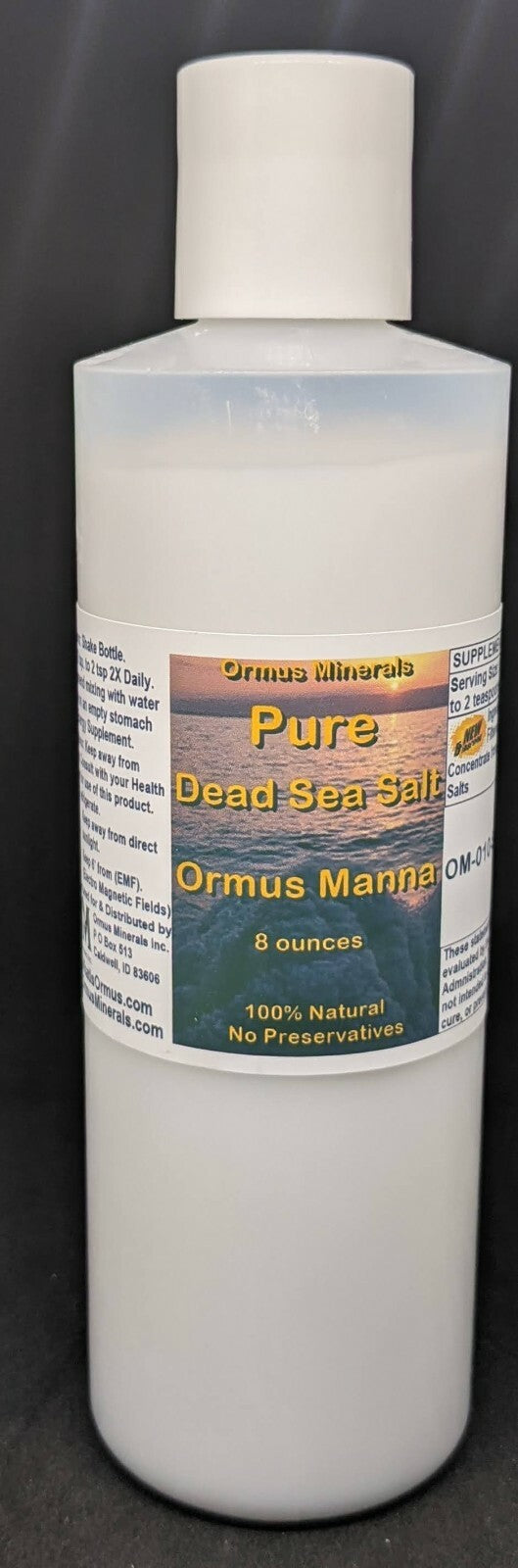
Start with the ingredient panel. A credible product names its source materials specifically, such as Dead Sea salt or Atlantic Ocean water, rather than vague phrases like "natural minerals." The Ormusminerals liquid concentrates list Dead Sea salt, Atlantic Ocean water and other salts, which gives a buyer a concrete starting point. To understand whether liquid mineral forms are actually absorbed by the body, read whether liquid mineral supplements are bioavailable.
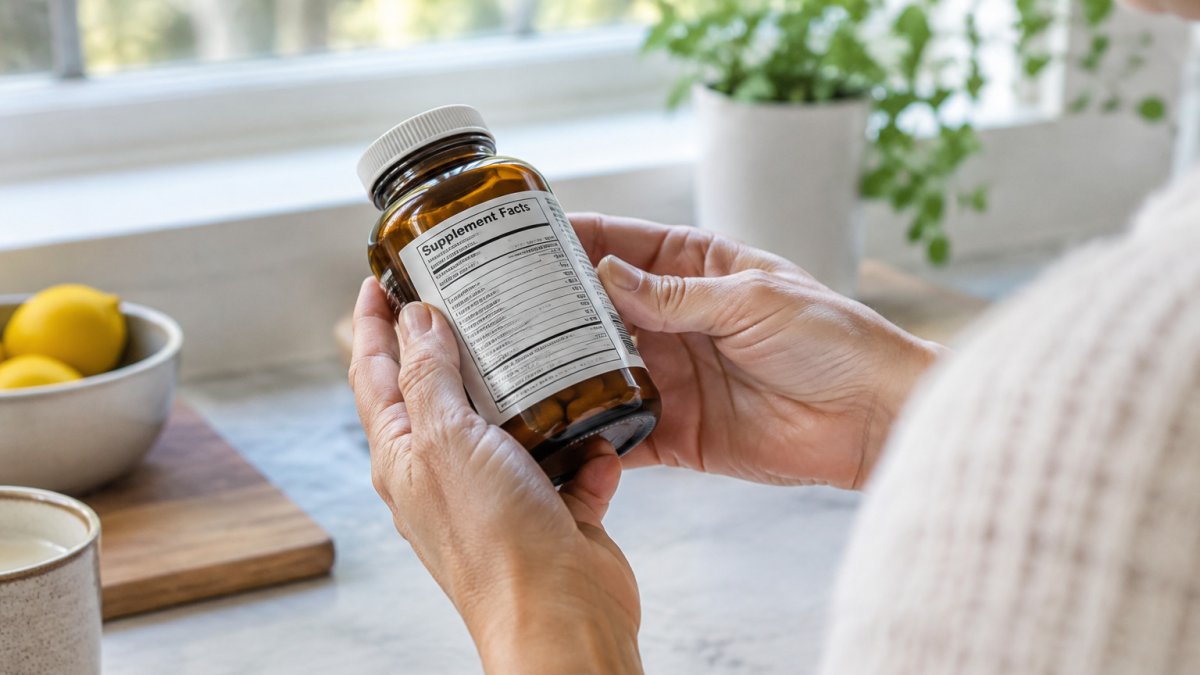
Compare that against the claims. If a label promises a long list of rare elements but names no origin for any of them, ask the seller for a breakdown. Official dietary supplement reference materials can help when judging label completeness.
Watch out: a long, impressive-sounding ingredient list does not prove purity. Check whether the source materials are named at all.
2. Check Label Details, Batch Numbers and Directions
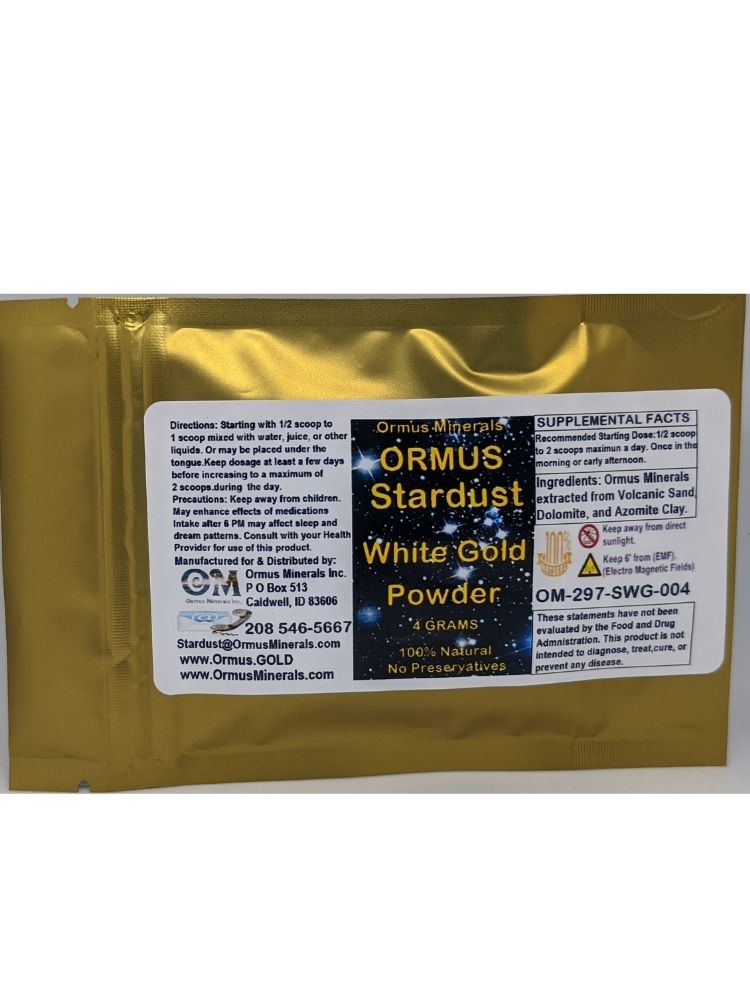
Authentic products carry consistent label information. Look for a lot or batch number, a clear net volume, a serving size with directions, and a statement that the product is a dietary supplement. The Ormusminerals powder listing, for example, gives a specific serving of 1/8 teaspoon (approximately 250mg) with directions to take it once daily and a storage instruction to keep it cool and dry, away from direct light.
Vague or missing directions are a warning sign. So is a label that makes disease claims. A product that omits a statement that it has not been evaluated by the FDA, or replaces it with treatment promises, deserves scrutiny (the FDA).
3. Ask for a Certificate of Analysis and Third-Party Testing
A certificate of analysis (COA) is the single most useful document a buyer can request, but only if it is lot-specific and readable. A COA is a laboratory report tied to one production batch.
Ask the seller in writing for the COA for the exact lot you are buying, not a sample COA from a prior run. A common pattern is that sellers post a generic COA on the product page while the bottle in your hand carries a different lot.
When the COA arrives, read it in this order:
- Identity. Look for a test that confirms the material is what the label says. For a mineral product, that usually means elemental analysis by ICP-MS (inductively coupled plasma mass spectrometry) or ICP-OES, reported in parts per million or milligrams per kilogram. If the COA reports only "ORMUS" or "M-state" with no elemental breakdown, it has not established a chemical identity, those are marketing terms, not analytical results.
- Contaminants. Heavy metals are the main concern for salt-derived mineral products. A useful COA reports lead, arsenic, cadmium, and mercury against a stated limit, typically in mg/kg or ppm. Compare the reported result to the limit, not just to a pass/fail checkbox. A result of "pass" with no number is weaker than a number you can read.
- Microbiology. For liquids, look for total aerobic plate count, yeast and mold, and tests for E. coli, Salmonella, and Staphylococcus aureus. A liquid concentrate with no microbiological testing is a gap worth asking about.
- Methods and limits of detection. The method name (for example, EPA 200.8 for trace metals by ICP-MS) and the limit of detection tell you whether the lab could actually see a contaminant at a meaningful level. A method with a detection limit above the safety threshold cannot clear the product.
Third-party testing is stronger than an in-house report, but "third-party" is not a protected term. Check that the laboratory named on the COA is independent of the seller and, where possible, accredited. Independent certification programs exist, and their directories can show whether a specific product or facility is listed.
Watch out: a COA proves what was tested on one batch on one date. It does not prove the product is safe for you, effective, or that the "ORMUS" or "monatomic" framing has a verified chemical meaning.
If a seller cannot or will not supply a lot-specific COA, that is itself the answer. A documented refusal is more informative than a vague promise that testing is "done in-house."
4. Compare Format, Concentration and Price Against Known Benchmarks
Ormus products come in several formats, including powders, capsules and liquid concentrates, and each is measured differently. A 7-gram jar of powder, a 120-count capsule bottle and an 8-ounce liquid bottle cannot be compared directly by sticker price. To see how full-spectrum minerals differ from standard supplements, read full-spectrum minerals versus standard supplements. Work out the cost per serving or per milligram instead. If you are wondering why some mineral supplements fail to deliver results, see why mineral supplements aren't working.
For example, the Ormusminerals White Powder Gold 7-gram jar is listed at $15.00, while the 120-count capsule bottle is listed at $75.00. Those figures are only useful if you know how many servings each contains. Be wary of any product priced far below comparable items with no explanation of concentration, since very cheap products often cut corners on sourcing or testing.
5. Verify the Seller, Return Policy and Product Claims
Seller verification is where most buyers stop at a logo and a contact form.
Step 1, Confirm a legal business identity. Look for a business name, a physical mailing address (not just a city and state), and a customer service email or phone number.
Step 2, Read the return policy before you buy. A usable policy states the window (for example, 30 days), who pays return shipping, whether opened bottles are eligible, and how refunds are issued.
Step 3, Check ingredient disclosure against the label image. The listing text and the label photo should match.
Step 4, Separate evidence from testimonials. Testimonials describe one person's experience and cannot establish that a product contains what it claims or that it works.
Step 5, Audit the health claims. Advertising for supplements should be truthful, and a compliant listing typically carries a disclaimer that statements have not been evaluated by the FDA and avoids disease claims.
Watch out: a marketplace listing, a "verified" badge, or a large review count is not regulatory approval.
A seller that passes all five checks, traceable entity, readable return policy, consistent disclosure, honest separation of testimonials from testing, and compliant claims, is the one worth asking for a lot-specific COA. If any step fails, the product fails the authenticity test before you ever open the bottle.
The five-step seller check reduces to a few concrete signals a buyer can confirm before purchase.
| Step | What to check | Pass signal |
|---|---|---|
| 1. Legal identity | Business name and physical address | Traceable legal entity |
| 2. Return policy | Window, return shipping, opened bottles | Stated window and clear refund terms |
| 3. Ingredient disclosure | Listing text matches label image | Source materials named consistently |
| 4. Evidence | Testing run on this product and lot | Independent, lot-specific lab results |
| 5. Health claims | Disclaimer present, no disease claims | FDA-evaluation disclaimer included |
Side Effects, Safety and Evidence Limits to Know
Authenticity and safety are separate questions. Even a genuine mineral supplement can cause problems if it is taken in excess or alongside medication. Mineral supplements can interact with prescription drugs, so anyone with a medical condition or who takes regular medication should speak with a doctor or pharmacist first.
Be honest about what the evidence shows. Documentation can confirm what a product claims to contain, but it cannot prove that ormus forms behave in the body as marketing describes. Scientific research on specific monatomic or "M-state" claims is limited, so treat any promised health effect with caution and rely on evidence from recognized sources. For an honest look at what these elements are said to do and what the science supports, see M-State elements: uses, claims and scientific reality. Verification tells you whether a product is what its seller says it is. It does not tell you whether it will work for you.
Choosing a Trusted Ormus Supplement to Try Next
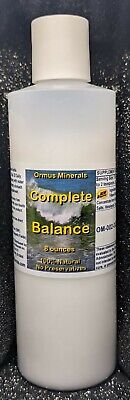
Once you have applied these five checks, you are in a better position to choose. Start with the ingredient list, confirm the batch paperwork, compare cost per serving, and verify the seller before you buy. For general guidance on evaluating supplement quality before deciding, see how to choose high-quality supplements. Ormusminerals offers several formats, including Ormus White Powder Gold, the Pure Dead Sea Ormus Minerals concentrate, and the Complete Balance Ormus 8oz liquid, each with its listed ingredients and directions. Read the label, ask for documentation, and start with a single product to see how it fits your routine.
Frequently Asked Questions
How can you tell whether an Ormus product is authentic?
No single test settles it, but you can check several things. Look for a full ingredient list naming the source materials, such as Dead Sea salt and Atlantic Ocean water, rather than vague wording. Confirm a batch or lot number is printed on the label, and ask the seller for a certificate of analysis tied to that batch. Check that the price and format match what the brand publishes. Products from Ormusminerals list their sizes, directions and ingredients openly on each product page, which makes side-by-side checking easier. Documentation shows what the seller claims; it does not prove the product's effects.
What ingredients should an Ormus supplement list?
A transparent label names the product's form and its source materials. For Ormusminerals' liquid concentrates, the listed ingredients are ORMUS concentrate from Dead Sea salt and Atlantic Ocean water, plus other salts. The White Powder Gold listing names White Powder Gold (M-State Gold) as its only ingredient, and the capsule version adds a vegetable cellulose capsule. Be cautious with any product that lists only a vague term like monatomic gold with no source, no concentration information and no batch number.
Should an Ormus product have a certificate of analysis?
Yes. A certificate of analysis from an independent laboratory is one of the most useful documents a buyer can request, because it reports measured results for a specific batch rather than general marketing language. Ask for the certificate for the lot you are buying and check that the batch number matches the label. Be aware that a certificate shows what was measured in that test, not whether the product improves mental clarity, sleep or recovery. Ask the company directly before you buy whether laboratory certificates are available for the batch you are considering.
What should you check before buying Ormus online?
Before you order, confirm the exact product name, format and size, since the same formula is sold as powder, capsules and liquid concentrate at different prices. Read the directions and storage instructions, and note whether the seller states that the product is not evaluated by the Food and Drug Administration, which is standard for dietary supplements. Check the return policy and shipping terms, and review whether the seller's price is consistent with the sizes listed. Ormusminerals offers free U.S. shipping on orders over $50 and lists its prices on each product page.

0 comments